How to Search for PDFs on Google (3 Methods)
Ever found yourself desperately in need of a specific PDF, and you just can't seem to locate it through a Google search? You're not alone.
See Google search results for other locations using Google Advanced Search, Google Ads Preview Tool, VPN services, SEO rank trackers, or Chrome DevTools coordinates. Each method lets you view location-specific SERPs for competitor analysis and local SEO optimization.

To see Google search results for other locations, use Google Advanced Search (Settings → Advanced Search → Region), the Google Ads Preview Tool, a VPN service, SEO rank tracking tools like SEOmator, or Chrome DevTools with custom latitude/longitude coordinates. These methods let you view how your keywords rank in different cities, countries, or regions without physically being there.
The discrepancy in Google search results by country or region isn't an accident. It's a precisely engineered mechanism that provides users with relevant, localized information. For businesses, this creates opportunities for more targeted and effective marketing strategies.
Let's explore how to check Google search results for other locations so you can optimize your SEO efforts and understand your customers' search experience—even if they're halfway around the globe.
Your choice of method for viewing location-specific Google results should align with your goals. Are you expanding your business to a new region? Are you an SEO consultant evaluating local businesses? Or are you simply curious about how search results differ worldwide?

Your reasons will guide which method works best. Typically, businesses check location-specific results for:
According to BrightLocal's 2024 Local Consumer Review Survey, 98% of consumers used the internet to find information about local businesses in 2023, making location-based SEO more critical than ever.
Local search ranking is crucial for businesses, especially small and local enterprises. Google factors in location data when ranking websites to ensure users get the most relevant—and geographically close—results first.
If you run a café in Boston, you want your website to appear when locals search for "best café" or "coffee shop nearby." Without local optimization, your site might show up for someone in San Francisco who won't visit anytime soon.
Understanding Google's location-centric results starts with recognizing the importance of localizing your keyphrases. When a user types a search, Google's algorithm doesn't just analyze the main keywords—it also considers the geographic location where the query originated.
When users search terms like "restaurants near me" or "best salon in town," Google must provide results that are both relevant and within the user's vicinity. This is where localized keyphrases become essential. By incorporating location-specific phrases into your keyword strategy, you improve your chances of appearing in relevant local searches. For example, "best florist in New York" is more effective than just "best florist."
Related: 7 Must-Have SEO Tools for Small Businesses (Free & Premium)
Viewing Google search results by country or region is essential for understanding your business's reach in different geographical areas. Here are five proven methods:
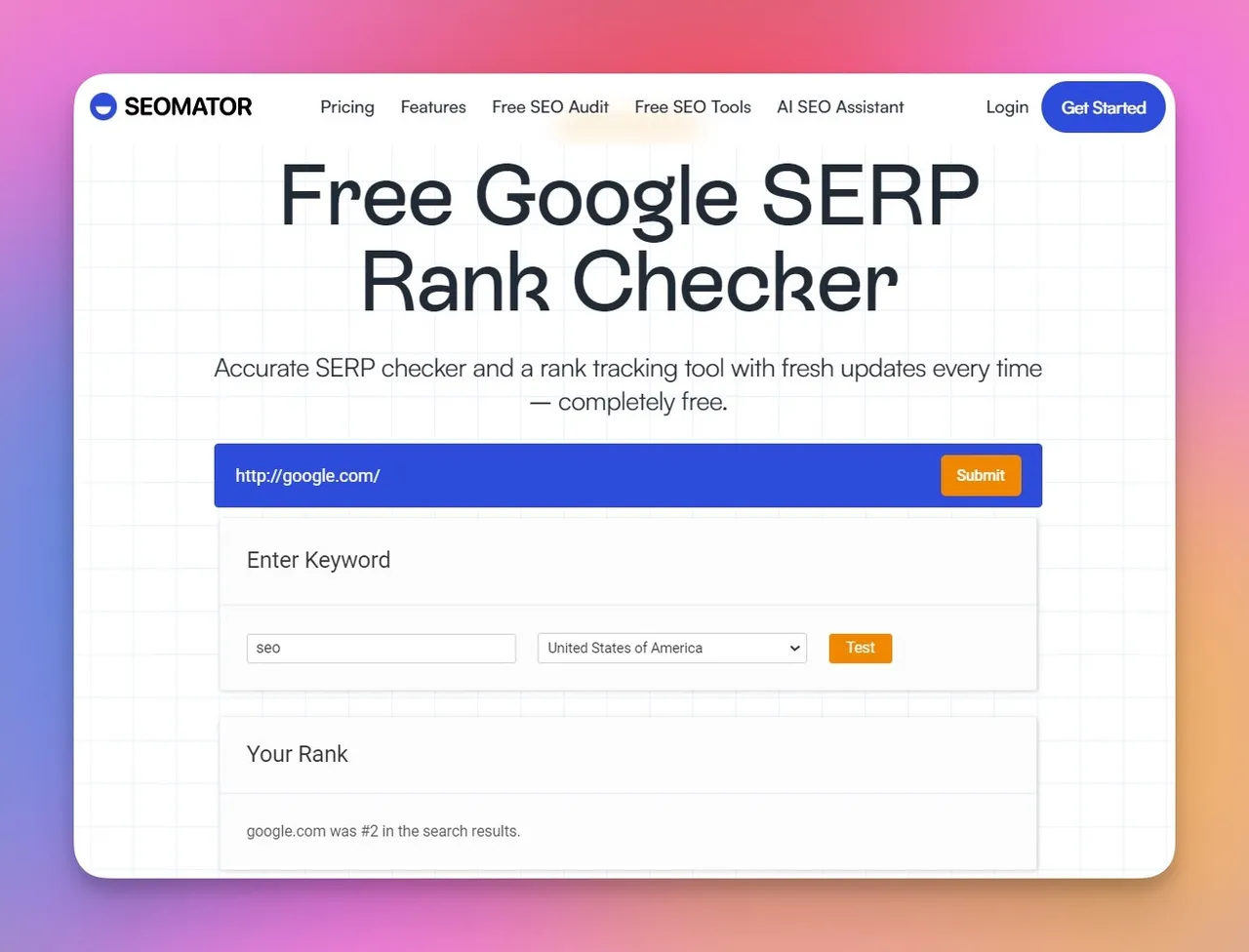
For comprehensive SEO evaluation, online tools like SEOmator offer location-specific rank tracking. With SEOmator's Free Google SERP Rank Checker, you simply set your preferred locations, input your keywords, and let the tool handle the tracking.
The generated report provides a complete picture of your website's performance across various geographical areas—no VPN or technical setup required.
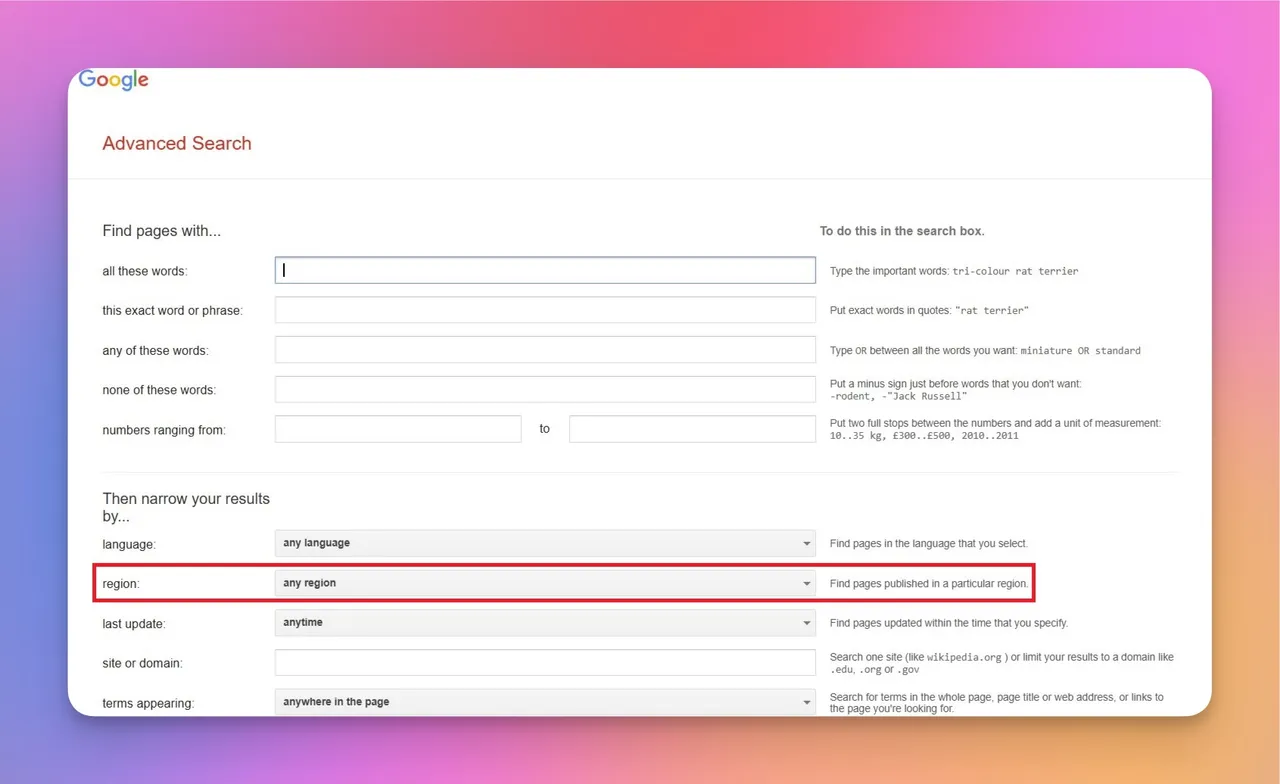
Google Advanced Search is a time-saver for SEO experts and marketers who need quick location-specific results.
This method is free, requires no tools, and works directly through Google.
A Virtual Private Network (VPN) masks your actual IP address by routing your traffic through a server in a different location. This effectively shows you Google Search results from that location.
Content creators and digital marketers often use VPNs to get an authentic view of different markets. Keep in mind that VPNs may slow your connection slightly.
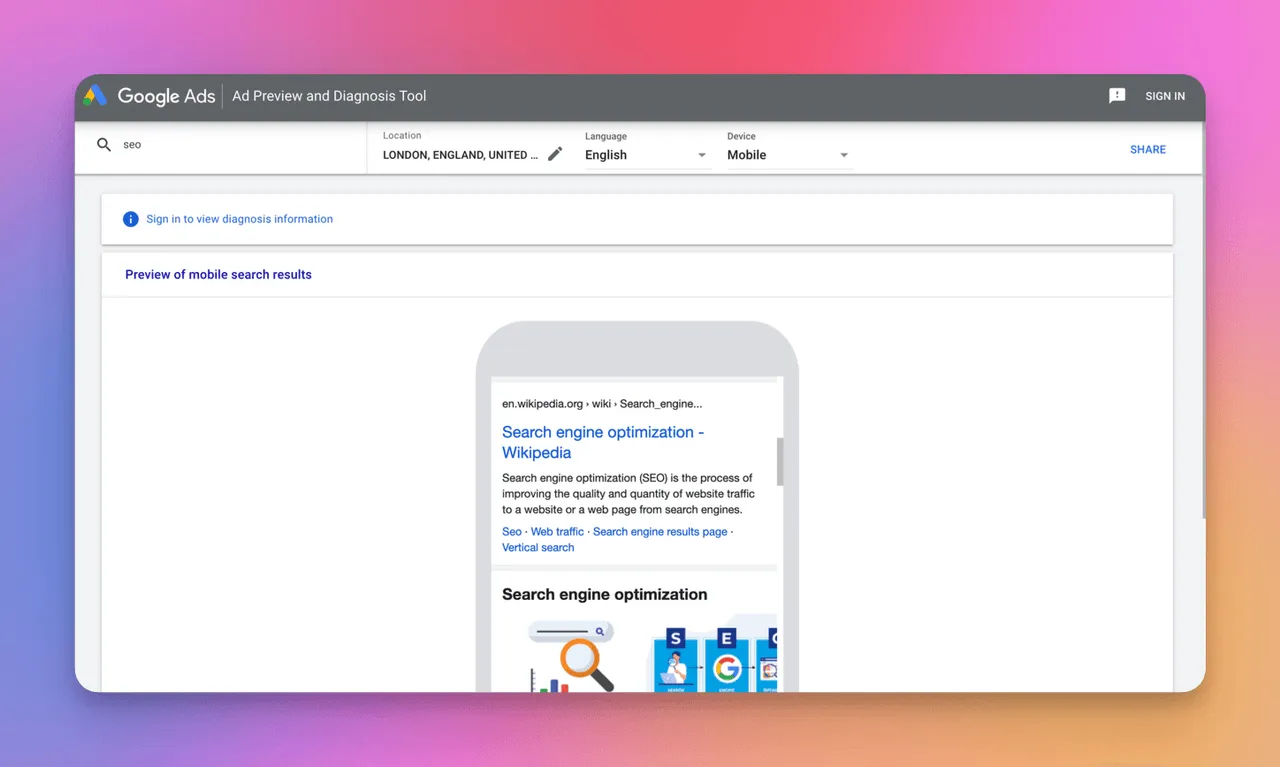
The Google Ads Preview Tool lets you view Google Search results from different countries without affecting your behavioral data.
This tool is particularly useful because it shows ad results without increasing impression counts—perfect for competitive research.
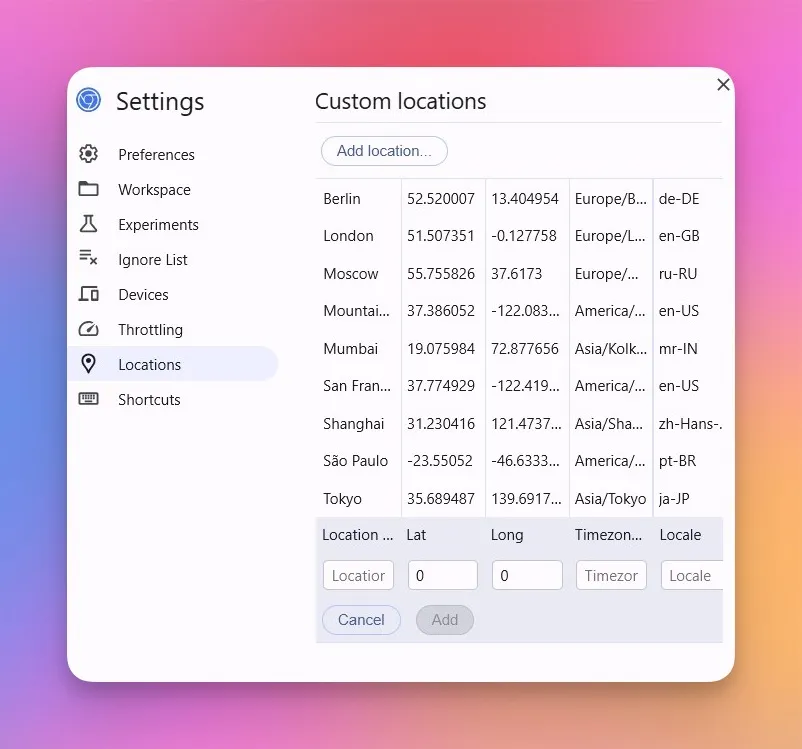
For tech-savvy users, Google Chrome's developer tools provide precise location simulation using specific coordinates.
This method allows hyper-specific testing at the city or even street level, which is invaluable for local businesses targeting specific neighborhoods.
Your choice depends on your requirements, technical comfort level, and the depth of information you need.
| Method | Best For | Skill Level | Cost |
|---|---|---|---|
| Google Advanced Search | Quick country-level checks | Beginner | Free |
| SEO Rank Tracking Tools | Ongoing monitoring, multiple locations | Beginner | Free/Paid |
| VPN/Proxy | Authentic browsing experience | Intermediate | Paid |
| Google Ads Preview | Ad research, no impression tracking | Beginner | Free |
| Chrome DevTools | Precise city/street-level testing | Advanced | Free |
For beginners needing a quick glimpse into location-specific results, Google Advanced Search or the Google Ads Preview Tool work well. If you manage multiple businesses or locations, SEO tools that automate SERP tracking are essential. For advanced users requiring pinpoint accuracy, Chrome DevTools with latitude/longitude is the most precise option.
Yes. Use Google Advanced Search to filter by country, the Google Ads Preview Tool to specify any location, or Chrome DevTools to enter exact latitude/longitude coordinates. All three methods are free and don't require VPN software.
Google personalizes search results based on the user's geographic location to provide the most relevant local information. A search for "pizza delivery" in New York will show different restaurants than the same search in Los Angeles because Google prioritizes nearby businesses.
Chrome DevTools with latitude/longitude coordinates provides the most precise location simulation, allowing you to test specific neighborhoods or streets. For country-level testing, Google Advanced Search and VPNs are equally effective.
Yes, using a VPN to view search results from different locations is legal in most countries. VPNs are legitimate privacy tools used by millions for secure browsing. However, always check local regulations in your jurisdiction.
For active SEO campaigns, check at least monthly. If you're entering a new market, check weekly initially. SEO rank tracking tools can automate this process and alert you to significant ranking changes.
Related Articles:
SEOmator plans and pricing
Most of this cluster ends in the same question: what does the tooling cost? Here is every plan, side by side.
SEOmator plans and pricingEver found yourself desperately in need of a specific PDF, and you just can't seem to locate it through a Google search? You're not alone.

Learn 9 proven methods to detect what CMS any website uses in 2026. Compare top tools like SEOmator, TechnologyChecker.io, Wappalyzer & BuiltWith with accuracy data and sales intelligence features.