


· 16 min read
What is SEO? How it works, tested on 20 real sites
We ran a 251-rule audit on 20 well-known homepages: none scored 100 and the median site failed 13 rules. Learn what SEO is, how it works, and audit yours.
Type filetype:pdf after your keywords to get only PDFs. We re-ran every search in this guide on Google on 31 Oct 2026: what works, and 4 that fail.

Mert Özeren · Customer Success Specialist, SEOmator
On the customer side of B2B SaaS since 2020: support, retention and renewals

How we know this
Full method ↓ Written up by Mert Özeren
To search for PDFs on Google, type your search words followed by filetype:pdf, for example search engine optimization filetype:pdf. When we ran that search on 31 October 2026, 7 of the 8 results we could download were real PDFs; without the operator, none were. Add site:, quotes or a minus sign to narrow it further.
We re-ran every search in this guide against live Google that day and downloaded each result to see what it really was. Most still work as described. Four common versions don't: a space after the colon, a search made only of operators, the old + sign, and OR between two file types. The table has the working query for each job.
| What you want | Type this into Google | What came back on 31 Oct 2026 |
|---|---|---|
| Only PDFs on a topic | search engine optimization filetype:pdf | 7 of 8 downloadable results were PDFs (0 of 7 without the operator) |
| PDFs from one site | site:archive.org filetype:pdf shakespeare | 10 of 10 on archive.org; 9 of 10 titles name the topic |
| PDFs, minus one site | search engine optimization filetype:pdf -site:openreview.net | 0 of 10 from openreview.net |
| PDFs containing a phrase | search engine optimization filetype:pdf "technical seo" | Phrase in 5 of 5 PDFs we could read (5 of 7 without quotes) |
| PDFs without a word | SEO strategies filetype:pdf -basic | "basic" in 0 of 6 PDFs (4 of 7 without the minus) |
| A phrase in the title | intitle:"seo audit" filetype:pdf | 10 of 10 titles, 10 of 10 PDFs |
| Recent PDFs | "seo audit" filetype:pdf after:2025-01-01 | 10 of 10 dated 2025 or later |
| Old PDFs | "seo audit" filetype:pdf before:2016-01-01 | 9 of 10 dated before 2016 (see the date caveat) |
| Doesn't work: a space after the colon | search engine optimization filetype: pdf | 5 of 8 PDFs; shared 1 of 10 results with the right query |
| Doesn't work: operators with no search words | -site:example.com filetype:pdf | 0 results |
| Doesn't work: two file types with OR | keyword research (filetype:pdf OR filetype:pptx) | 9 of 9 PDFs, no slide decks |
A PDF (Portable Document Format) is a type of file created by Adobe. It is used to share documents that keep the formatting exactly the way it was intended to look. So, regardless of the device or software you use to view it, the formatting stays the same.
As a result, the main benefit of PDF is preserved formatting. You can be sure that what you see on your screen is what others will see on theirs. This is especially important for documents where layout and formatting matter, such as professional reports or brochures.
Another advantage of PDF is universality. A PDF can be opened by any device with a PDF reader, which makes it a great way to share documents with others. There are several free online PDF readers, so you don’t have to worry about them having the same software as you.

Whether it's a research article, a specific eBook, or a user guide, these contents usually come in PDF which makes them difficult to locate using traditional search methods.
Here's where Google search operators come in. These are like special codes you can add to your Google searches to fine-tune your results and find exactly what you're looking for.
There are several helpful Google Search Operators that can enable you to refine and direct your search with increased precision. One rule applies to all of them, and Google's own search help spells it out: no space between the operator and the term. site:nytimes.com works; site: nytimes.com doesn't.
The filetype operator is one of the most potent tools that is extensively used in PDF search. It narrows your search results down to specific document types.
Let's say you need a PDF on "Search Engine Optimization". In the Google search bar, type: Search Engine Optimization filetype:pdf.
When you hit enter, your search results will be tailored to display only available PDFs related to Search Engine Optimization.

In essence, using the term 'filetype:pdf' after your search phrase instructs Google to search only for PDF files. This technique can be used with any type of file by replacing 'pdf' with the desired file extension (i.e., doc, xls, ppt).
filetype:pdf searches in our 31 October 2026 check, 77 of the 86 unique results we could download were real PDFs (89.5%). Most of the misses were academic publishers whose PDF address opens a landing page for visitors.It still works. On 31 October 2026, search engine optimization filetype:pdf returned 10 results; we downloaded 8, and 7 of them were real PDF files. The eighth was a JSTOR page that Google listed as a PDF but that opens as an ordinary web page. Two servers refused our download.
Two details decide whether you get that result.
filetype: pdf is no longer the operator; Google reads "pdf" as an ordinary word. In our check it shared just 1 of its 10 results with the correct query, and 3 of the 8 pages we could open were web pages, Scribd and Slideshare among them.ext:pdf is the other one. Google accepts it as a looser alias: 7 of 8 downloadable results were PDFs, but it returned a different set, with only 1 result in common with filetype:pdf. If you want the list this guide describes, use filetype:.
The 'site' operator helps you search a specific website or domain for the information you need. Sometimes, you might need a specific PDF from a particular website or domain.
Suppose you need a PDF from the website archive.org. You can use Google to run a specific domain search by typing site:archive.org filetype:pdf.
It will return all the PDF documents from the website archive.org.

The operator pair still works: on 31 October 2026 all 10 results were on archive.org. What came back has changed, though.
site:archive.org filetype:pdf now surfaces spam. In our check, 8 of the 10 titles advertised pirated films, adult videos, a sports-streaming site or a game-cheat download. Don't open those. Add a topic word instead: site:archive.org filetype:pdf shakespeare returned 10 archive.org results, and 9 of the 10 titles named Shakespeare.You can also use this operator to exclude PDF files from specific domains.
What if you want to exclude PDF files from a particular domain? There's a way to do that too.
Put a minus sign in front of site: and keep at least one search word in the query. For instance, search engine optimization filetype:pdf -site:openreview.net returned 10 results in our check and none from openreview.net, whose paper had sat at #7 without the exclusion.
Older versions of this guide suggested typing only -site:example.com filetype:pdf. Don't: that query returned zero results on 31 October 2026, because Google needs at least one word to search for.
Adding or excluding words from your search results is another powerful tool when searching for PDFs on Google.
To force a term to appear, wrap it in quotation marks. A search for Search Engine Optimization filetype:pdf "technical seo" returns only PDFs containing that exact phrase.
We checked that against the text of each file. With the quotes, the exact phrase appeared in 5 of the 5 PDFs we could read; without them, in 5 of 7. Two of the quoted results weren't PDFs at all but spam pages whose addresses end in ".pdf", a gap Google's own documentation explains (see the FAQ below).
If you have read older guides, you may have met a + operator described as doing this job. It no longer works. Google retired + as a search operator in 2011, when Google+ claimed the symbol, and quotation marks took over. In our check, +seo returned 8 of the same 10 results as plain seo. Our Google search operators cheat sheet covers which other operators still function and which have been quietly retired.
Conversely, you can remove items from your search result by adding a '-' sign before the particular word. For instance, SEO Strategies filetype:pdf -basic will return PDFs related to "SEO Strategies" but will exclude results that include the word "basic".
That one held up in the full text too. Without the minus sign, 4 of the 7 PDFs contained "basic" somewhere; with it, none of the 6 PDFs we could read did. So the exclusion covers the whole document, not only the title and snippet.
Through the addition and exclusion of specific words, you tailor your search to net the most relevant PDF documents.
The three operators above find most PDFs. When the first page is still too broad, these three filters cut it down, and all of them combine with filetype:pdf.
intitle:"seo audit" filetype:pdf returned 10 PDFs, and all 10 titles contained "SEO audit". On this phrase the plain quoted search also kept it in every title (7 of 7), yet the two searches shared no results, so intitle: hands you a different list. It pays off on broad phrases: in our July 2026 test of all 41 operators, it lifted the share of titles containing the phrase from 67% to 100%.
Both take a year or a full date (we used YYYY-MM-DD), and Google's help describes them as filtering by when a document was last updated. "seo audit" filetype:pdf after:2025-01-01 returned 10 results, and Google dated all 10 in 2025 or 2026. The 5 files that carried their own date agreed.
before: filters by Google's date, which isn't always the file's. before:2016-01-01 kept 9 of 10 Google dates before 2016 (the tenth was 1 January 2016 itself), but only 2 of the 6 PDFs with a file date were created before 2016. Google also dated a 2024-25 university syllabus to 2011.So trust after: for "recent". Treat before: as a rough filter and check the date inside the document.
This is the one combination that let us down. keyword research (filetype:pdf OR filetype:pptx) should mix PDFs and PowerPoint decks. It returned 9 PDFs among the 9 files we could open and no slide decks, even though keyword research filetype:pptx on its own found 6 PowerPoint files.
filetype: each. It costs ten seconds and you won't miss the second format.Yes. Google's Advanced Search form builds the query for you. Type your words, add a domain under "Site or domain" if you want one, then under "Then narrow your results by" open File type and pick Adobe Acrobat PDF (.pdf). The same block has a Last update menu (past 24 hours, week, month or year), a rougher version of after:. Both menus were on the form when we loaded it on 31 October 2026.
I'd send anyone who doesn't want to memorise syntax to this form first. It covers less than the operators, though. There's no field to exclude a site, to require a phrase in the title, or to set an exact date.
If you publish PDFs, the same operators double as a quick index check. site:yourdomain.com filetype:pdf lists the PDFs Google has indexed on your domain. Treat the count Google shows above the results as an estimate, not an index count.
site: search shows what Google has indexed, never what it skipped. Compare it with a crawl of your own site to find the PDFs you publish that Google hasn't picked up.If a PDF you expected is missing, the reasons are usually the same as for an HTML page; our guide to crawled but not indexed pages walks through them.
The run. On 31 October 2026 we tested 25 searches at SEOmator, sending each to Google through Serper, a Google search API, and kept the top 10 organic results of each: US English desktop results for 21 of them, google.de in German for 4. They cover every query this guide teaches, plus controls (the same words with the operator removed) and the common mistakes above.
The check. We didn't take Google's PDF label on trust. Serper returns many results as Google redirect links, so we resolved each one to its real address, then downloaded every result and counted it as a PDF only if the file starts with %PDF, the signature every PDF carries. For quotation marks and the minus sign we extracted each PDF's text and searched it. For before: and after: we compared Google's date for each result, and the date stored in the file, with the window. For site: we read the host of the final address.
The limits. It's one day and the top 10 only. Of the 180 unique results, 35 refused our download (paywalls, bot blocks, timeouts) and count as unverified, not as failures. Results differ by country, language and account, so yours may not match ours; our guide to seeing Google results for other locations shows how to compare. The control-query method matches the cheat-sheet test linked above, so the two sets of results can be read side by side.
Add filetype:pdf to your search words with no space after the colon, for example climate report filetype:pdf. In our 31 October 2026 check, 7 of the 8 results we could download for search engine optimization filetype:pdf were real PDFs. If you'd rather not type operators, Google's Advanced Search has a File type menu with an Adobe Acrobat PDF option.
Google's documentation on file types it can index says filetype: matches files of that type and URLs ending in that extension. So a web page whose address ends in ".pdf" can slip in, and so can a publisher whose PDF address sends visitors to a landing page. In our check, 9 of the 86 results we could download from filetype:pdf searches weren't PDF files: 5 landing pages from JSTOR, IEEE and Springer, a university repository page, 2 spam pages with ".pdf" at the end of the address, and 1 file we couldn't identify.
No. Operators stay in English on every Google domain, and Google's German help page uses filetype: too. On google.de, the translated Dateityp:pdf returned 2 PDFs in 10 results, mostly articles about PDF SEO, because Google read it as ordinary words.
Open it and press Ctrl+F (Windows) or Cmd+F (Mac) to search its text in the browser's PDF viewer or any PDF reader. If that finds nothing, the file may be a scan with no text layer, and you'll need a reader with OCR (text recognition) to search it.
The Internet is a goldmine of digital data with an infinite amount of information. However, retrieving specific documents like PDFs from this plethora of knowledge can be an uphill task.
To successfully search for the PDFs you need, you can use Google Search Operators like the filetype operator.
Also, there are several other operators to make it easy to refine your search on a macro or micro basis. Whether you're hunting for specific PDFs or excluding certain domains from your search, Google’s advanced search operators bring you one step closer to mastering the art of Google PDF search. Every query in the table at the top carries its test date, so you can see how fresh the advice is.
💡 Related Articles:
Who wrote it, what changed and how to tell us about a mistake.

Mert Özeren
Customer Success Specialist, SEOmator
On the customer side of B2B SaaS since 2020: support, retention and renewals
Mert Özeren is a customer success specialist at SEOmator, which he joined in September 2026. He has worked on the customer side of B2B SaaS products since 2020, covering support, retention, renewals and inbound sales, and is usually the person translating between the problem a user describes and what the engineering team needs to fix.
Based in Ankara, Türkiye, Mert has worked as a customer success specialist on Popupsmart and LiveChatAI at Next Yazılım Teknoloji since 2024, closing deals with brands including Kaspersky, UNICEF and Rakuten, and writes about content marketing and conversion optimization on the Popupsmart blog. Before that he managed customer relationships at forms.app and worked as a support engineer at PEAKUP. He holds a bachelor's degree from Hacettepe University.
Re-tested every search on live Google and added the results. Fixed the -site: example, which returned nothing, and the site:archive.org example, now mostly spam. Added intitle:, before: and after:, Advanced Search and an FAQ. Byline moved to Mert Özeren.Written by Mert Özeren
Removed the retired + operator; quotation marks now do that job.Written by Isabella Edwards
Updated.Written by Isabella Edwards
Published.Written by Isabella Edwards
Spot a mistake or a number that has gone stale? Tell us. We correct it and log the change in the History above. Report an error →
SEOmator plans and pricing
Most of this cluster ends in the same question: what does the tooling cost? Here is every plan, side by side.
SEOmator plans and pricing· 16 min read
We ran a 251-rule audit on 20 well-known homepages: none scored 100 and the median site failed 13 rules. Learn what SEO is, how it works, and audit yours.

· 15 min read
We ran all 41 Google search operators against live Google in July 2026. Only 12 still apply the filter they promise. Here's the tested cheat sheet.
· 12 min read
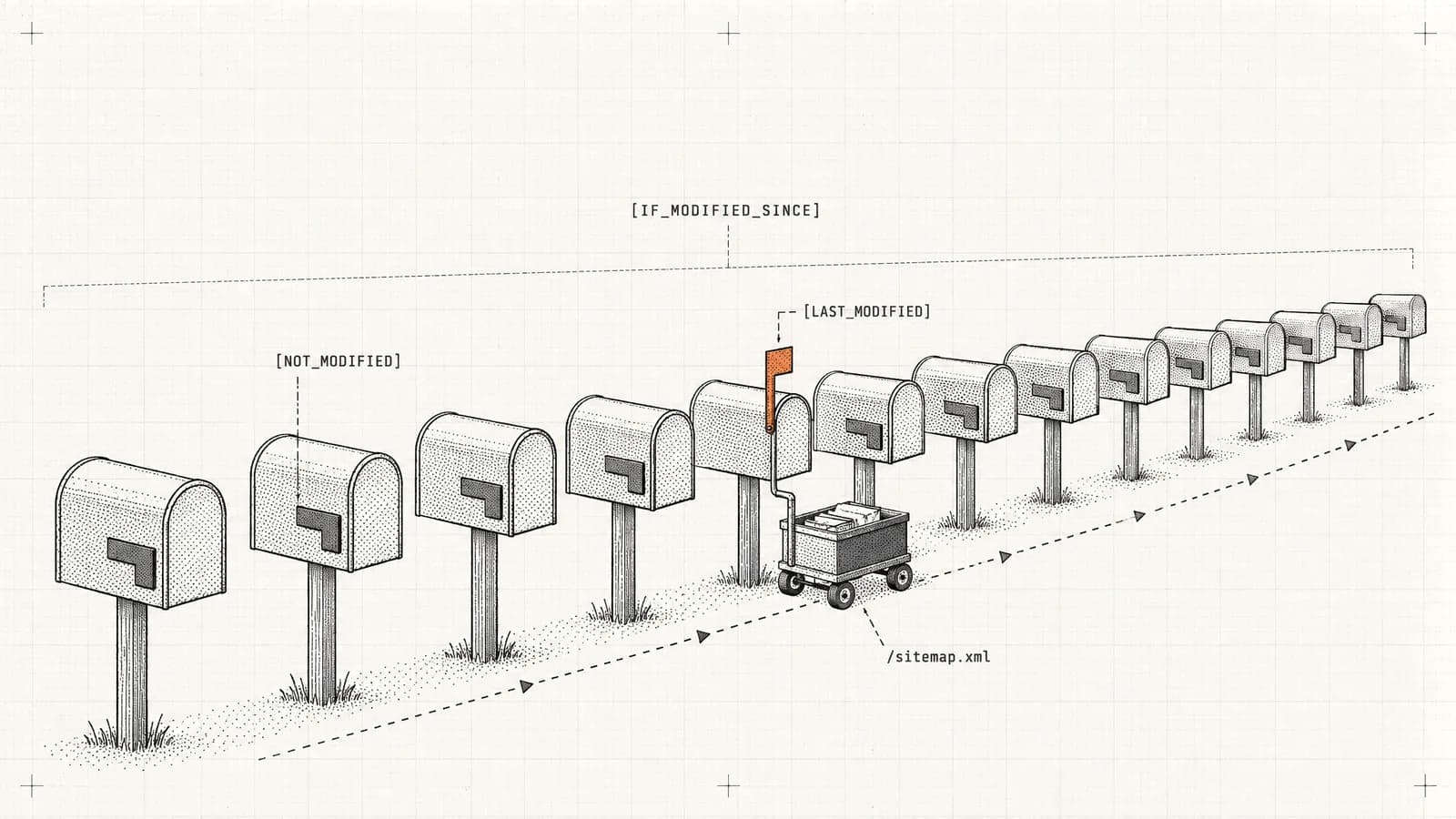
We re-requested 549 top homepages: 86.7% honored If-Modified-Since, only 58.1% If-None-Match. How Last-Modified and ETag work, and which one Google uses.


