


· 15 min read
SEO Myths Debunked: What the Data Really Shows
SEO isn't dead — it's evolving. We debunk the biggest SEO myths with 2026 data on AI Overviews, backlinks, keywords, and what actually moves rankings now.

Nick Sawinyh · Founder & CEO (2014–2026), SEOmator
Founded SEOmator in 2014 and led it as CEO until September 2026

Search algorithms are the mathematical formulas that determine how search engines like Google rank and display results. Since 1998, Google has evolved from simple keyword matching (PageRank) to AI-powered systems like RankBrain, BERT, and the 2024 AI Overviews, with over 4,500 annual updates reshaping SEO practices. Understanding this evolution is essential for adapting to future changes.
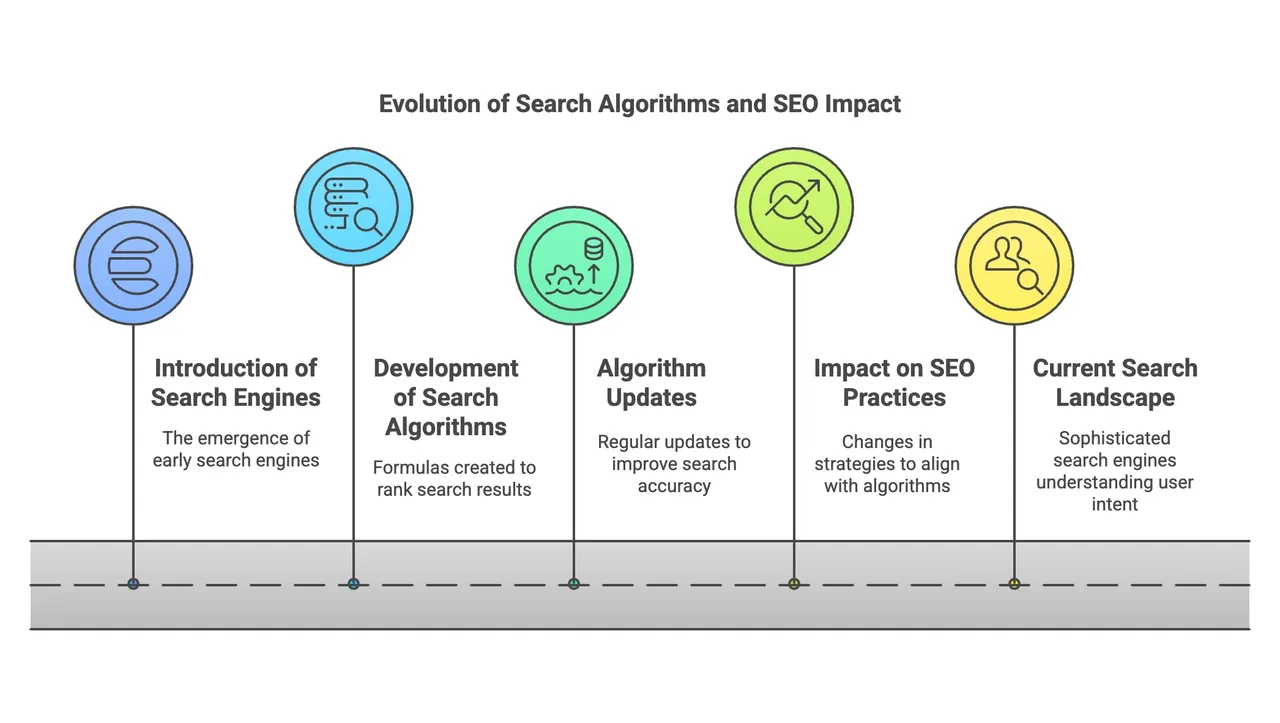
In my role as an SEO Algorithm Analyst with over six years of experience, I've witnessed how each algorithm update can make or break a website's visibility. The digital landscape has been in constant flux—each update reshaping how information is accessed and significantly influencing SEO practices. For SEO professionals, understanding this timeline isn't just about historical interest—it's crucial for developing strategies that align with current algorithms and anticipating future changes.
This comprehensive guide provides a data-driven timeline of significant search algorithm changes and analyzes their profound impact on SEO practices. I'm excited to show you what worked for me and how you can adapt to these ever-changing algorithms to maintain a competitive edge.
The foundation of modern SEO practices was laid during the formative years of search engines. Understanding this era provides valuable context for how far we've come.

Before Google revolutionized search, engines like Yahoo, AltaVista, and Lycos dominated the internet. Their algorithms were relatively primitive, primarily relying on:
Limitations and Challenges Faced:
According to Search Engine Journal, over 75% of websites in the late 1990s relied on keyword stuffing to improve rankings.
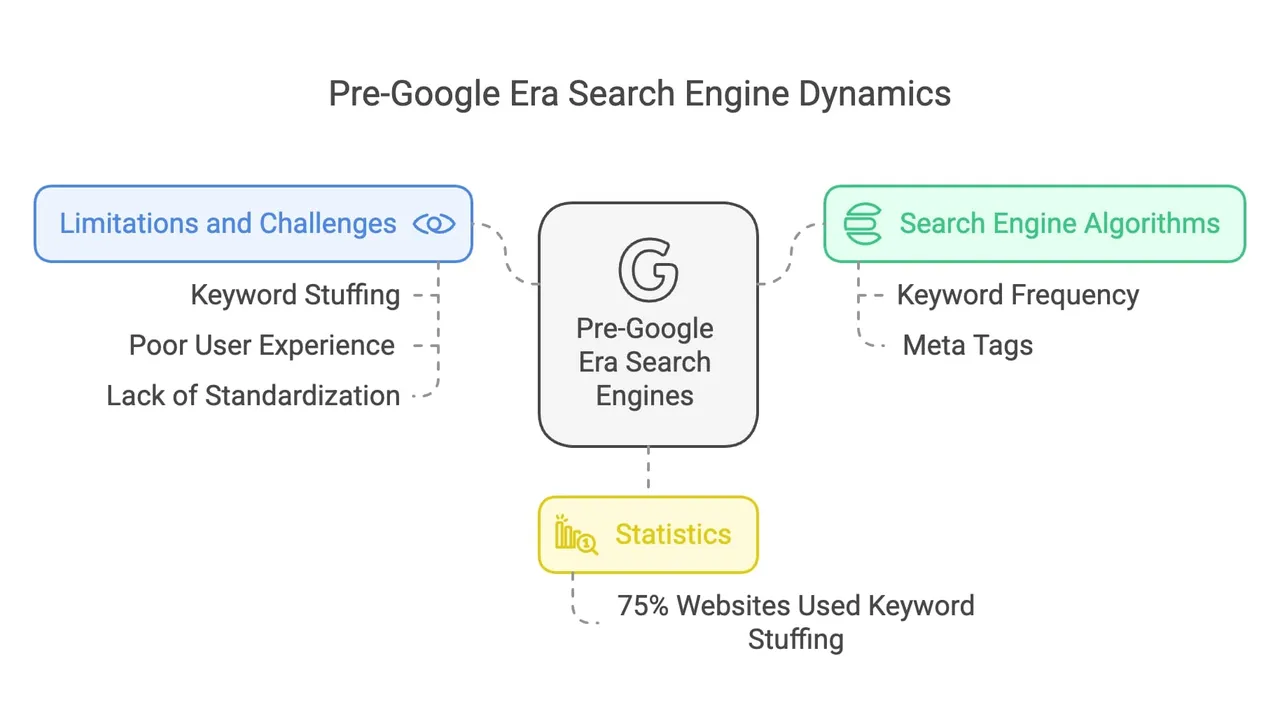
From my direct experience, these early tactics overshadowed genuinely valuable content, making it challenging for users to find reliable information. SEO was more about tricking algorithms than providing value.
The introduction of Google in 1998 marked a significant turning point in search technology. PageRank was Google's revolutionary algorithm that evaluated the quality and quantity of backlinks to a page, viewing links as "votes" of confidence.
Impact on SEO:
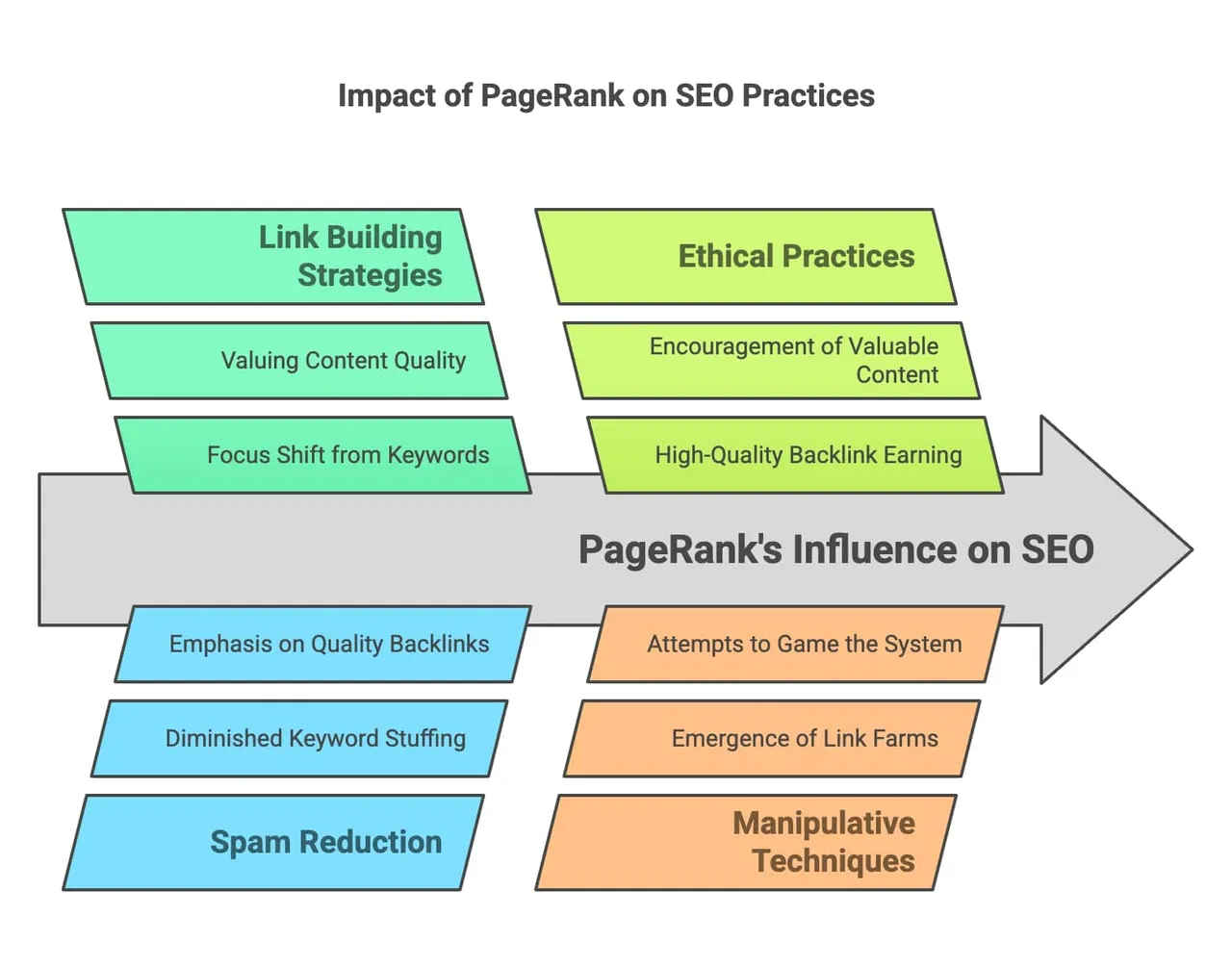
In my opinion, PageRank was a game-changer that pushed the industry toward more ethical SEO practices. However, it also spawned new black-hat techniques that search engines would need to combat.
As the internet expanded, search engines had to refine algorithms to provide users with the most relevant and high-quality results. Google led the way with several significant updates that reshaped SEO strategies.
Panda Update (2011)
The Panda update focused on evaluating the quality of website content, targeting thin content, duplicate content, and content farms.
According to Google Webmaster Central, Panda affected 12% of all search queries, with many websites experiencing traffic drops of up to 90%.
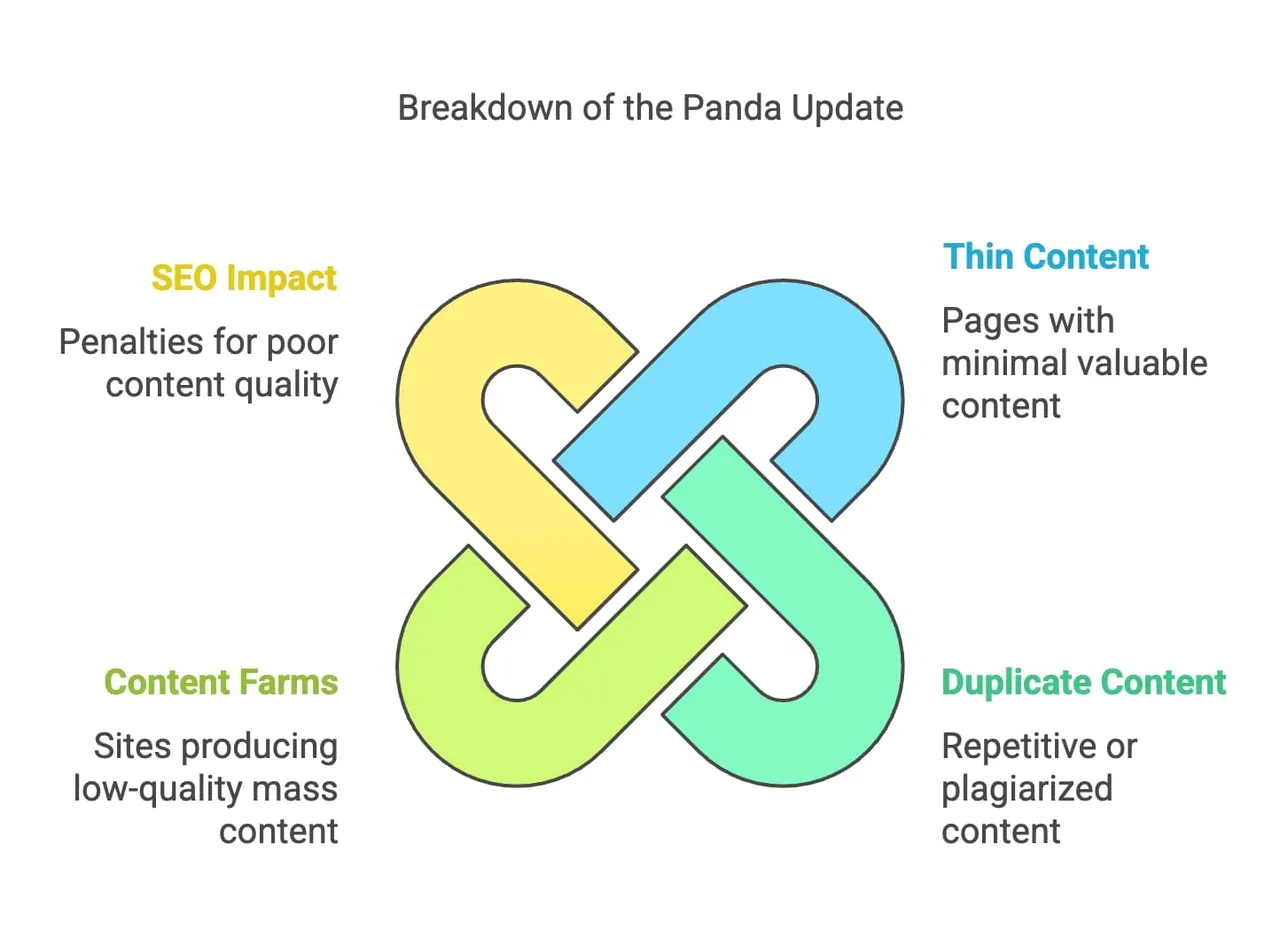
I have found that after Panda, investing in high-quality content became non-negotiable for SEO success.
Penguin Update (2012)
The Penguin update aimed to combat black-hat link-building techniques, targeting spammy links and link schemes.
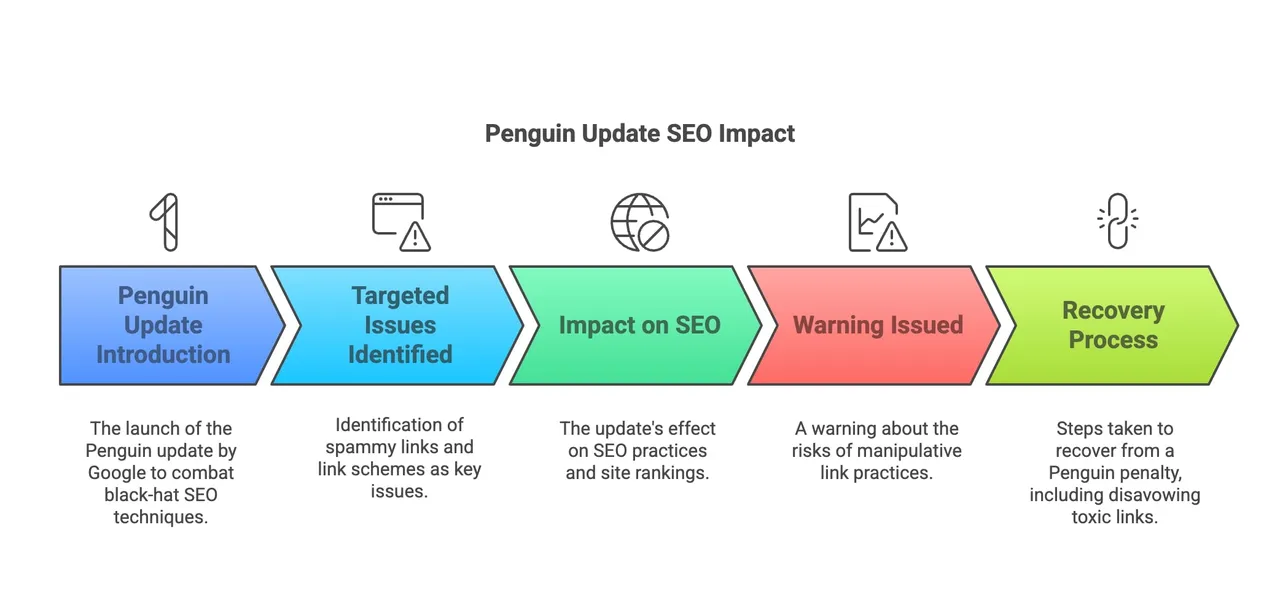
A challenge I've actually faced in my work was helping a client recover from a Penguin penalty by disavowing toxic backlinks and rebuilding their authority through genuine outreach. The process took six months but resulted in full recovery.
Hummingbird Update (2013)
Hummingbird was a significant overhaul of Google's core algorithm, enhancing semantic search capabilities and improving understanding of user intent.
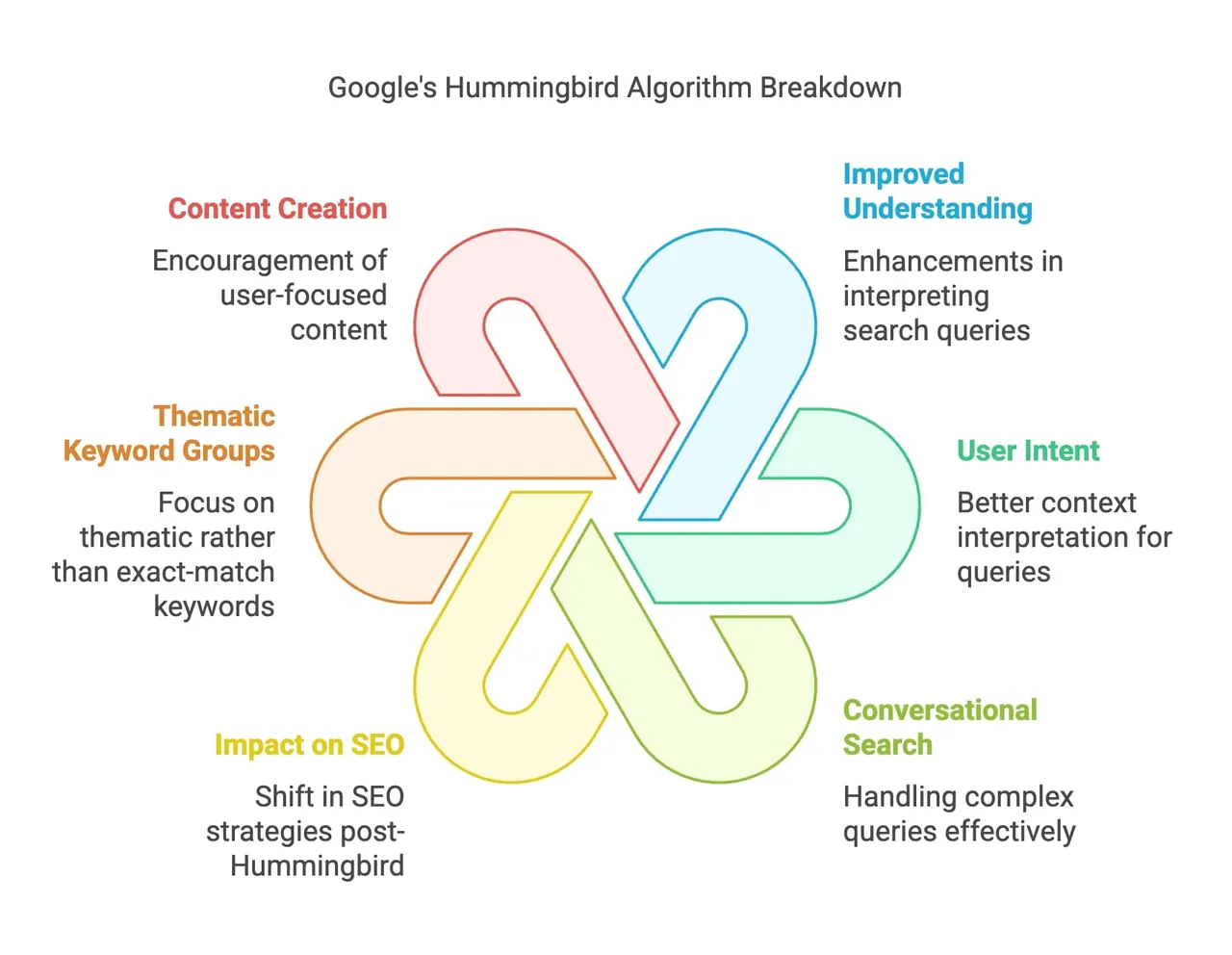
Based on my 6 years in this field, incorporating long-tail keywords and focusing on user intent became essential post-Hummingbird.
Mobilegeddon (2015)
Recognizing the surge in mobile device usage, Google introduced the Mobile-Friendly Update, dubbed "Mobilegeddon."
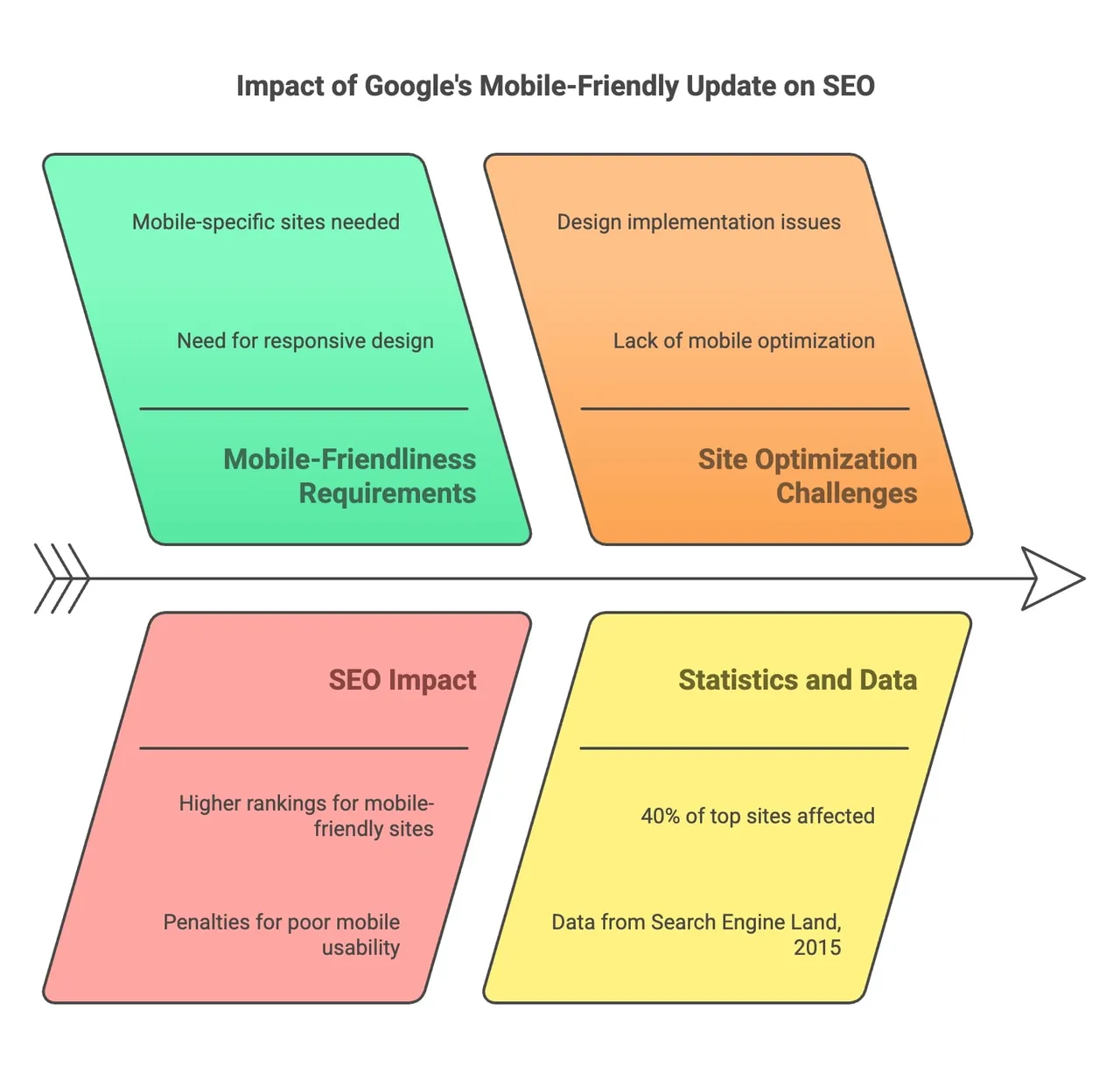
According to Search Engine Land, approximately 40% of top-ranking sites were affected due to lack of mobile optimization.
As search technology advanced, Google introduced more sophisticated algorithms incorporating artificial intelligence and deeper understanding of language patterns.
RankBrain (2015)
RankBrain marked Google's first integration of artificial intelligence into its search algorithms, using machine learning to process and understand search queries.
According to Google, RankBrain is now involved in processing every search and is considered one of the top three ranking signals.
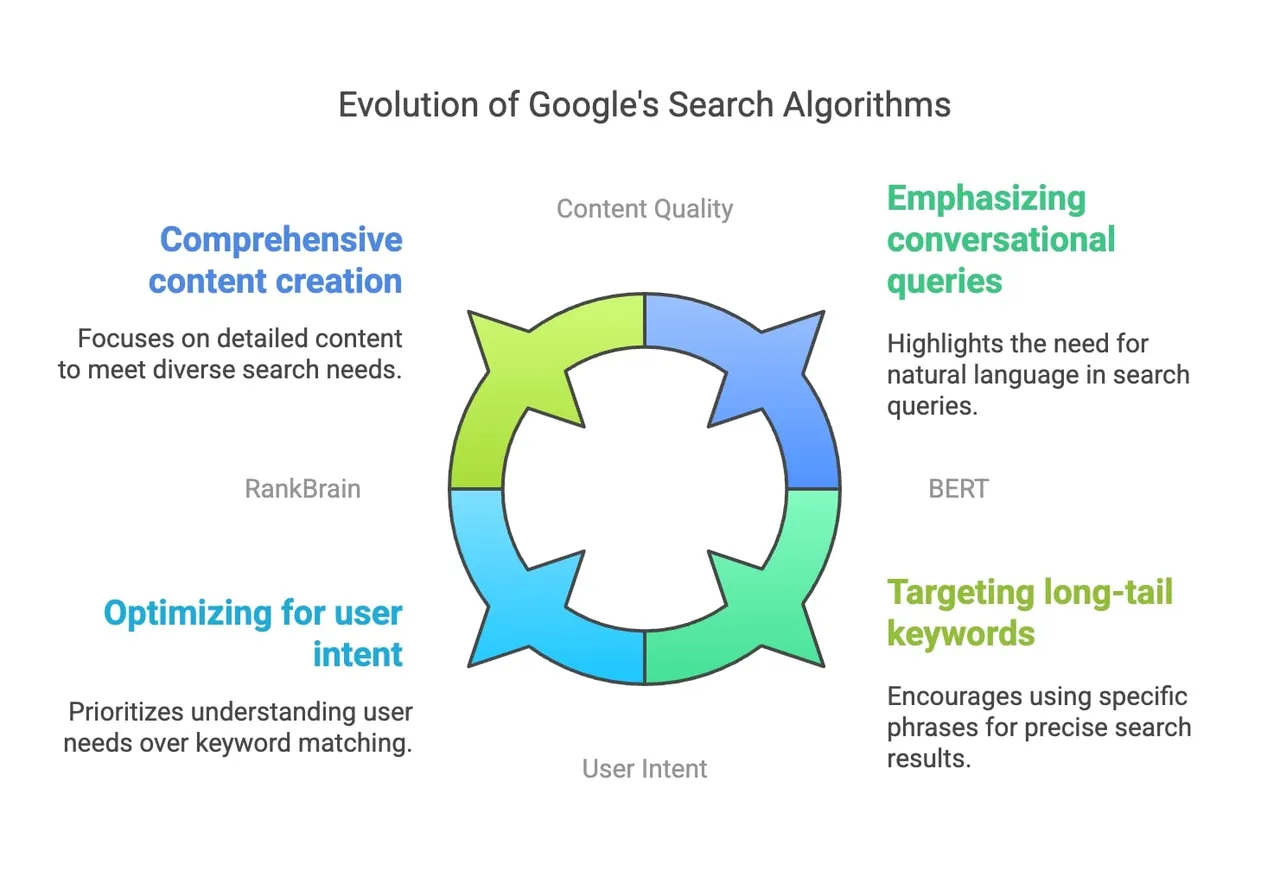
Based on my experience, sites prioritizing in-depth, user-focused content consistently perform better post-RankBrain.
BERT Update (2019)
The BERT (Bidirectional Encoder Representations from Transformers) update further enhanced Google's natural language processing capabilities.
An approach I use in my work is incorporating question-based headings and answering them thoroughly, aligning with how users naturally search.
Core Updates
Google's Core Updates are significant algorithm changes that affect search rankings globally, occurring several times per year with widespread effects.
According to Search Engine Journal, the March 2024 Core Update took 45 days to roll out and caused significant ranking shifts, particularly affecting AI-generated content.
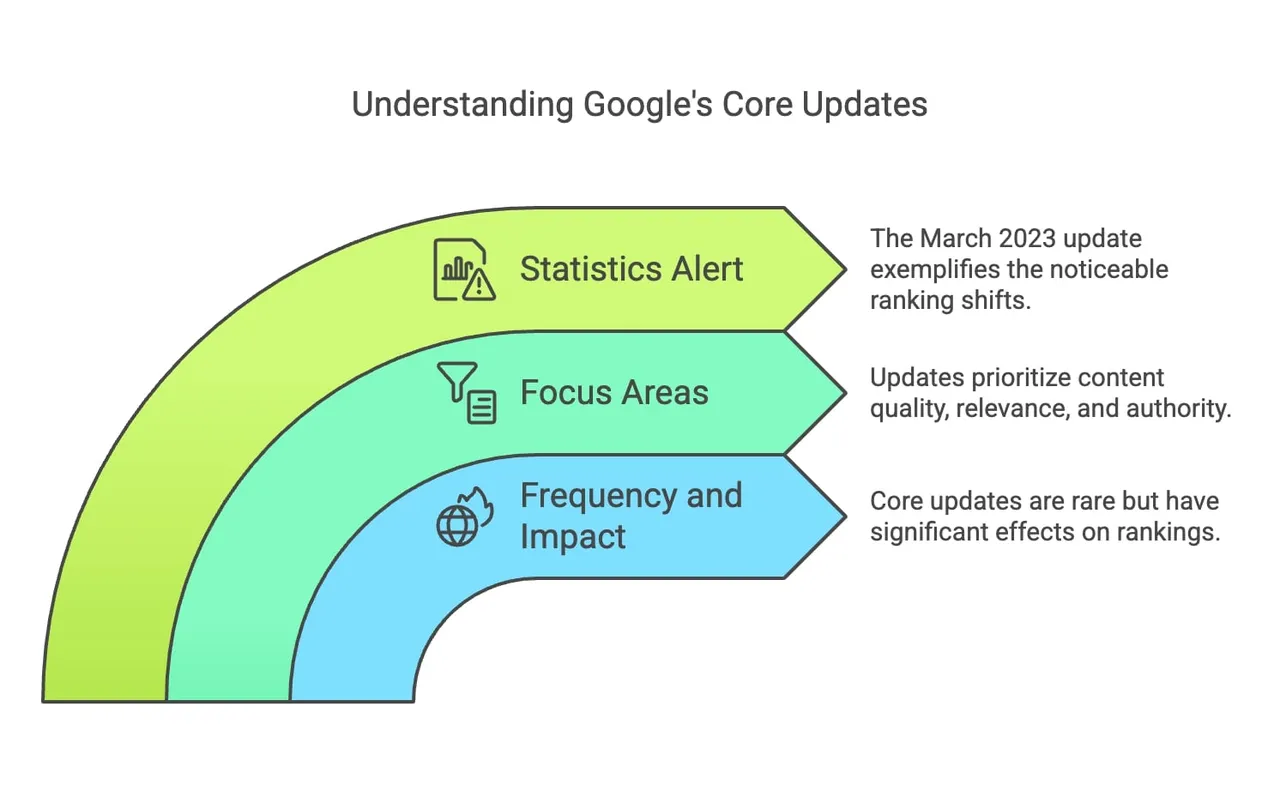
From my experience, it's crucial to monitor site performance during these updates to identify and address any negative impacts promptly.
E-E-A-T (Experience, Expertise, Authoritativeness, Trustworthiness)
E-E-A-T has become a cornerstone of Google's evaluation criteria, with "Experience" added in 2022 to emphasize first-hand knowledge.
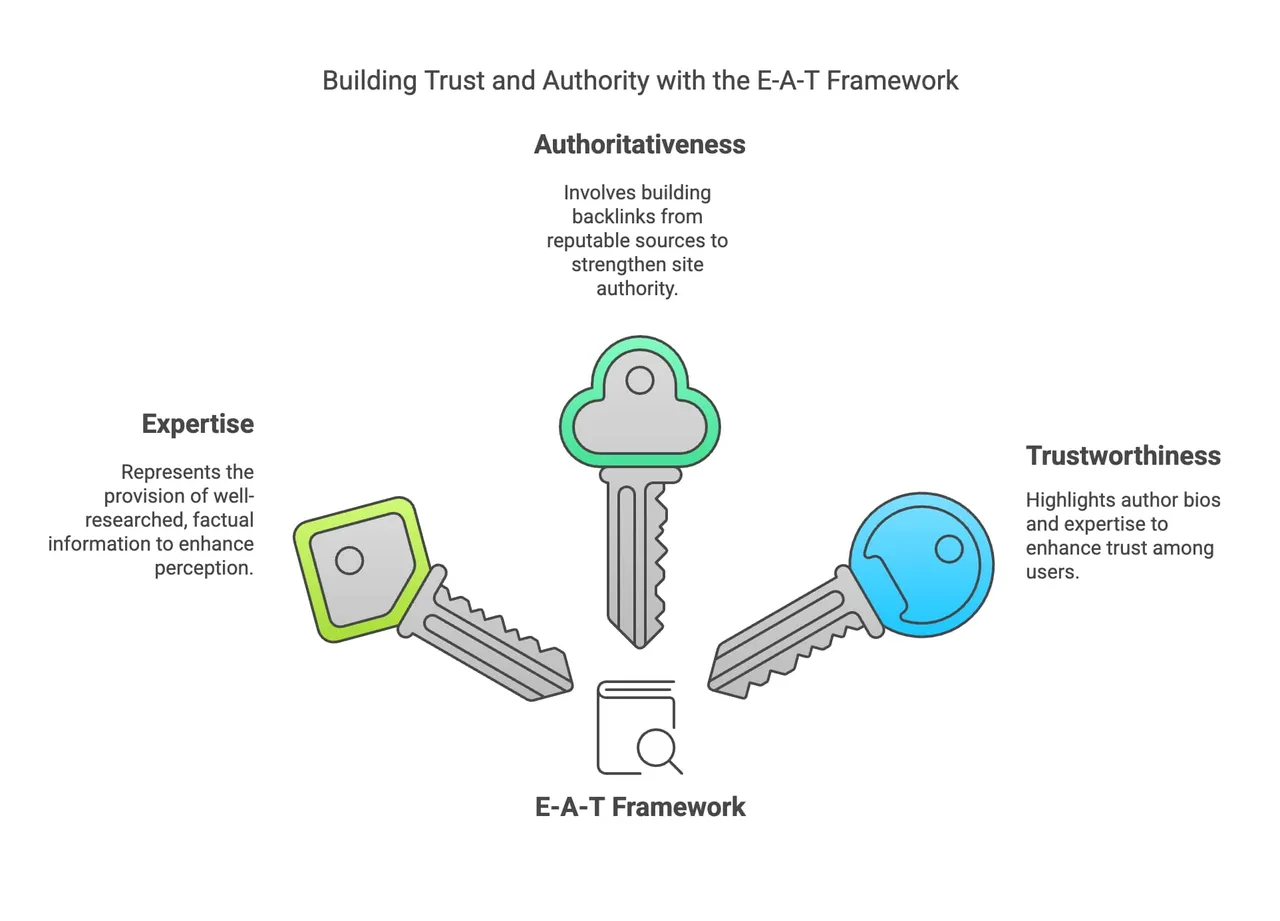
What I've learned is that demonstrating E-E-A-T through personal experience and verifiable credentials significantly boosts a site's credibility and rankings.
Anticipating future trends is essential for staying ahead in the SEO game. The continuous evolution of search algorithms means professionals must remain adaptable and forward-thinking.
Artificial intelligence and machine learning are playing an increasingly significant role in search algorithms.
According to Statista, the global voice assistant market reached $11.2 billion in 2025 and is projected to exceed $45 billion by 2030.
Google's AI Overviews (2024-2026):
The 2024 release of AI Overviews added AI-generated answers directly into search results, fundamentally changing SEO:
I personally believe that embracing AI trends and optimizing for Generative Engine Optimization (GEO) will be crucial for future SEO success. Every algorithm shift on this timeline rewarded the sites that adapted before the update landed rather than after, and GEO is the current version of that bet — you can audit your site's GEO readiness to see where you stand today.
Adapting to ever-changing algorithms requires proactive strategies.
Adaptive SEO Strategies:
Staying Informed:
A real situation I encountered involved a client losing traffic due to ignoring mobile optimization until after Mobilegeddon rolled out. The lesson: proactive adaptation beats reactive recovery.
Google updates its algorithms to improve the quality and relevance of search results. As the internet grows and user behavior evolves, updates are necessary to combat spam, enhance user experience, and adapt to technological advances like AI and machine learning. Google makes over 4,500 changes annually to maintain search quality.
Panda focuses on content quality and penalizes sites with thin, duplicate, or low-quality content. Penguin addresses unnatural link profiles and spammy backlinks. If impacted, evaluate your content quality, improve or remove low-quality pages, assess your backlink profile, and disavow toxic links while building high-quality ones.
E-E-A-T stands for Experience, Expertise, Authoritativeness, and Trustworthiness. It's a concept from Google's Quality Rater Guidelines that impacts how content is evaluated. Demonstrating E-E-A-T through first-hand experience, verified expertise, authoritative sources, and transparent content leads to better rankings, especially for YMYL (Your Money Your Life) topics.
Focus on continuous learning through reputable SEO sources, consistently produce high-quality user-focused content, maintain site health with regular technical audits, optimize for mobile and Core Web Vitals, and structure content for AI extraction. A solid foundation in best practices safeguards against negative impacts from updates.
Semantic search understands the intent and contextual meaning behind queries rather than just matching keywords. Enhanced by Hummingbird and BERT updates, it delivers more accurate results and handles conversational queries effectively. Optimize by writing naturally, covering topics comprehensively, and using related entities and concepts.
Voice search requires conversational content, question-and-answer formats, and featured snippet optimization. Visual search requires strong image SEO with descriptive filenames, alt text, and structured data. With voice assistant market projected to exceed $45 billion by 2030, adapting to these trends is essential for future visibility.
GEO is the practice of optimizing content for AI-powered search engines like Google AI Overviews, Perplexity, and ChatGPT Search. Unlike traditional SEO focused on ranking in link lists, GEO prioritizes machine comprehension, entity salience, and structured data to ensure content is cited in AI-generated responses.
Backlinks remain a significant ranking factor, but quality matters more than quantity. Focus on earning links from authoritative, relevant sites through valuable content that naturally attracts links. Avoid manipulative link schemes that can result in penalties. A diverse, natural link profile including editorial links and guest posts performs best.
Who wrote it, what changed and how to tell us about a mistake.

Nick Sawinyh
Founder & CEO (2014–2026), SEOmator
Founded SEOmator in 2014 and led it as CEO until September 2026
Nick Sawinyh founded SEOmator in 2014 and led it as CEO until September 2026. He built it to make technical SEO auditing accessible to teams without a dedicated SEO engineer, and the articles below are the ones he wrote here about search strategy, algorithm shifts, and what actually moves rankings — usually with the audit data to back it up.
Published
Spot a mistake or a number that has gone stale? Tell us. We correct it and log the change in the History above. Report an error →
SEOmator plans and pricing
Most of this cluster ends in the same question: what does the tooling cost? Here is every plan, side by side.
SEOmator plans and pricing· 15 min read
SEO isn't dead — it's evolving. We debunk the biggest SEO myths with 2026 data on AI Overviews, backlinks, keywords, and what actually moves rankings now.

· 16 min read
Bing crawls roughly 36 pages for every visitor it sends back; Google needs about five. We compared both engines on market share, AI search, ad costs, and our own crawler data.

· 11 min read
Learn 9 proven methods to detect what CMS any website uses in 2026. Compare top tools like SEOmator, TechnologyChecker.io, Wappalyzer & BuiltWith with accuracy data and sales intelligence features.


