

· 17 min read
SE Ranking Alternatives: 6 Tools Compared for 2026
AI Overviews hit ~34% of the SaaS comparison queries we track (July 2026). Compare 6 SE Ranking alternatives on verified August 2026 pricing and AI tracking.
AI Overviews hit ~27% of the queries we track (July 2026), and most legacy SEO suites don't measure them. Compare 10 Raven Tools alternatives on that gap.

Isabella Edwards · Technical SEO Content Manager, SEOmator
Leads technical SEO content at SEOmator: audits, Core Web Vitals and on-page fixes
The best Raven Tools alternative in 2026 depends on whether it measures AI search. AI Overviews now appear on ~27% of the queries we track (July 2026), up from ~19% in January 2026 — and on SaaS and comparison queries specifically, the rate is about 34%. These 10 tools are scored on that.
Because the results page changed shape, and most SEO platforms haven't caught up.
A 2024 shortlist judged tools on four things: rank tracking, backlinks, reporting, price. Those still matter. But a rank tracker reporting position 3 while a generated answer sits above the whole result is telling you a half-truth about the clicks you'll get. The question that separates 2026 tools from 2024 ones is whether the platform tells you if you appear inside the answer, not just underneath it. You can check which of your keywords trigger an AI Overview in about a minute.
I'll be blunt about where this shows up in my own work. When a client's traffic slips and their positions haven't moved, the first thing I look at now isn't the rank report. It's whether the queries that used to send clicks have grown an answer box.
That gap is the spine of this guide. Every entry below says what you keep, what you lose, and what you gain.
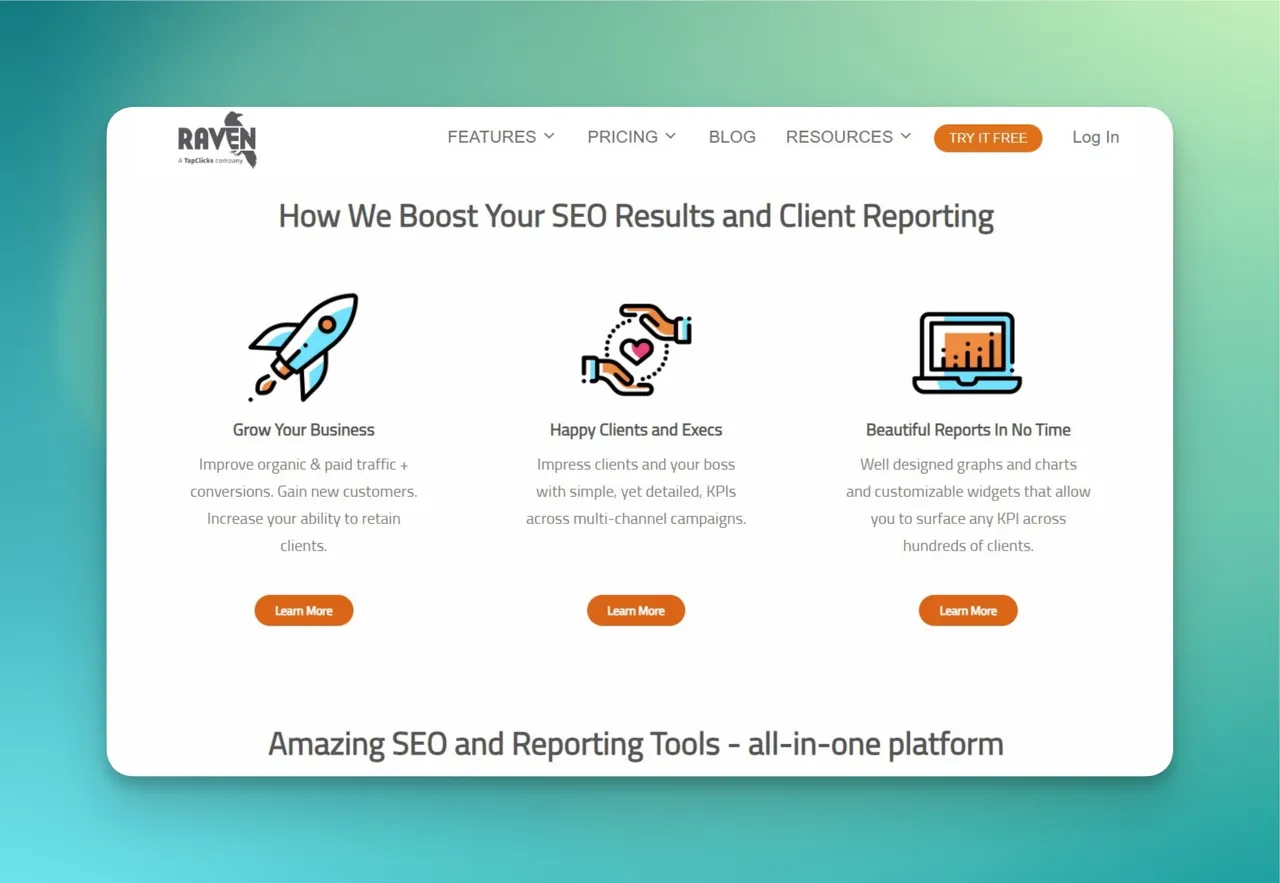
Raven Tools has been owned by TapClicks since April 2017, when the reporting company acquired it and folded it into a broader marketing-reporting suite. That's the honest explanation for a complaint you'll read in most review threads: Raven ships more slowly than the standalone SEO platforms it used to compete with, because it's now one module inside a bigger product.
This is context, not an obituary. Raven is live, sold, supported and still shipping. But if you've wondered why its feature set feels frozen in a particular era of SEO, ownership is a large part of the answer. Buy it for what it does today, not for what its roadmap might do next year.
Worth restating plainly, because every "what you keep, what you lose" line below is measured against it. Raven Tools is an all-in-one SEO platform that provides a suite of tools to manage and improve your online visibility. It combines several significant SEO tasks into one handy dashboard, which is what made it a go-to platform for many businesses and SEO experts.
Raven Tools offers features for:
Five capabilities, and every tool below covers at least three of them. The differences that matter are depth, refresh speed, and one column Raven's list doesn't have at all.
Raven runs six tiers, from $39/mo to $399/mo on annual prepay ($49 to $479 billed monthly), plus custom Enterprise. Every paid plan includes unlimited automated client reports and some white labeling — the part agencies are usually paying for.
| Plan | Price (annual prepay) | What you get |
|---|---|---|
| Small Biz | $39/mo | 2 domains, 2 users, 1,500 position checks, 50k page crawls/mo |
| Start | $79/mo | 20 domains, 4 users, 15,000 position checks, 400k page crawls/mo |
| Grow | $139/mo | 80 domains, 8 users, 20,000 position checks, 2M page crawls/mo |
| Thrive | $249/mo | 160 domains, 20 users, 25,000 position checks, 5M page crawls/mo |
| Lead | $399/mo | 320 domains, 40 users, 30,000 position checks, 7M page crawls/mo |
| Enterprise | Custom | Higher user, domain, keyword, crawl and backlink quotas |
Pricing verified on 2026-08-29 from Raven Tools' pricing page. Yearly prepay cuts up to 30% off the monthly rate. A free trial is available.
Hold that $39 entry price in mind. It's genuinely low for a platform with unlimited client reports, and it's the strongest argument for staying put.
Rarely one dealbreaker. Each business has specific needs, and sometimes a different tool offers better value or functions that align with your objectives. No tool is perfect, and Raven Tools, despite its many features, does have its constraints.
User interface complexity. For those who are new to the platform or have smaller teams, the learning curve can seem quite steep. An overwhelming interface might lead users to underutilize the advanced features that could otherwise significantly improve their SEO strategy.
Customization challenges. While Raven Tools is praised for its reporting capabilities, some users feel restricted by the level of customization available. Having the flexibility to tailor reports extensively can provide a significant edge, especially when the client deliverable is the product you sell.
Integration limitations. As many businesses run different marketing tools simultaneously, the ability to integrate cleanly can save time and avoid data silos. Raven Tools might not mesh as smoothly with some third-party applications, creating potential workflow hitches.
Pricing concerns. For startups or small businesses, the cost can be a constraint. With a variety of functions packed in, Raven Tools might not be the most cost-effective option if a minimal approach suffices, or if your focus is intense but narrow.
Two newer constraints show up in 2026 write-ups. According to Improvado's 2026 analysis, teams reaching Raven's limits most often cite restricted integrations, slower data refresh cycles, and limited AI-driven analysis. Refresh speed matters more than it used to, because AI answers get rebuilt far more often than a weekly report cadence assumes.
Recognizing these limitations paves the way for evaluating alternatives that might fit your business needs more closely.
Four criteria, applied the same way to every tool. A platform had to cover at least two of Raven's four core jobs — site audits, rank tracking, backlink analysis, competitor research. It had to publish pricing openly. It had to have a real review footprint on an independent platform such as Capterra, G2 or Software Advice. And we checked, tool by tool, whether AI-search visibility appears anywhere in its published plan features.
Be clear about what this is and isn't. We compared published feature sets, verified every price on 2026-08-29 against the vendor's own pricing page, and read third-party review platforms. We did not run all ten platforms side by side. A fabricated benchmark is worse than an honest comparison.
The AI-visibility criterion isn't a hunch, either. Among the 500,000+ people who ran our free tools in 2026, the AI visibility audit / LLM Checker grew 3.4× in monthly runs from January to July — the fastest-rising tool in the set.
Source: SEOmator crawling and analytics data, Jan–Jul 2026 (100K+ websites audited, 50M+ pages crawled, 1M+ keywords and prompts tracked monthly). Figures are for the sites and keyword sets we track, a panel weighted toward B2B SaaS; July 2026 covers Jul 1–21.
Raven sits at the top as the baseline, then the ten alternatives in review order.
| # | Tool | Best for | Starting price | Free tier or trial | Tracks AI visibility? |
|---|---|---|---|---|---|
| — | Raven Tools (baseline) | Agencies wanting SEO plus client reporting in one place | $39/mo annual | Free trial | Not listed in published plans |
| 1 | SEOmator | Solo SEOs and small agencies needing audits plus AI visibility | $39/mo annual ($49 monthly) | 37 free tools + 7-day trial | Yes |
| 2 | Semrush | In-house teams needing keyword and competitor depth | $117.33/mo annual | Free trial | Yes |
| 3 | Ahrefs | Link-led SEOs and consultants | $129/mo | No free trial | Yes |
| 4 | Moz | Beginners who want teaching alongside tooling | $49/mo | Free trial | Yes |
| 5 | SISTRIX | Competitor and visibility analysis, strongest in Europe | €119/mo | Free trial | Yes |
| 6 | Advanced Web Ranking | Agencies whose deliverable is the rank report | $139/mo | Free trial | Yes |
| 7 | Mangools | Small teams doing keyword research on a budget | ~$29.90/mo annual | No free trial | Not documented |
| 8 | SE Ranking | Rank tracking across many locations | $103.20/mo annual ($129 monthly) | 14-day trial | Unverified |
| 9 | Screaming Frog | Technical crawling and site audits | Free, then £199/licence/yr | Free 500-URL tier | No — it's a crawler |
| 10 | SEO Site Checkup | Non-technical owners wanting plain-language audits | $29/mo annual ($39 monthly) | Free trial | Yes, from the $69 tier |
"Yes" means an AI-visibility, AI Overview or prompt-tracking feature is named in the vendor's published plan features as of 2026-08-29. "Unverified" means we couldn't confirm it either way from published plans — a question for a sales call, not a No.
Choosing between SEO tools can be a daunting task with so many options available, each offering a unique approach to enhancing your SEO strategy. When looking for a Raven Tools alternative, it's important to examine tools that not only match its capabilities but potentially bring even more to the table.
Same shape for each: who it's for, what changes if you move off Raven, what it costs, when to skip it.
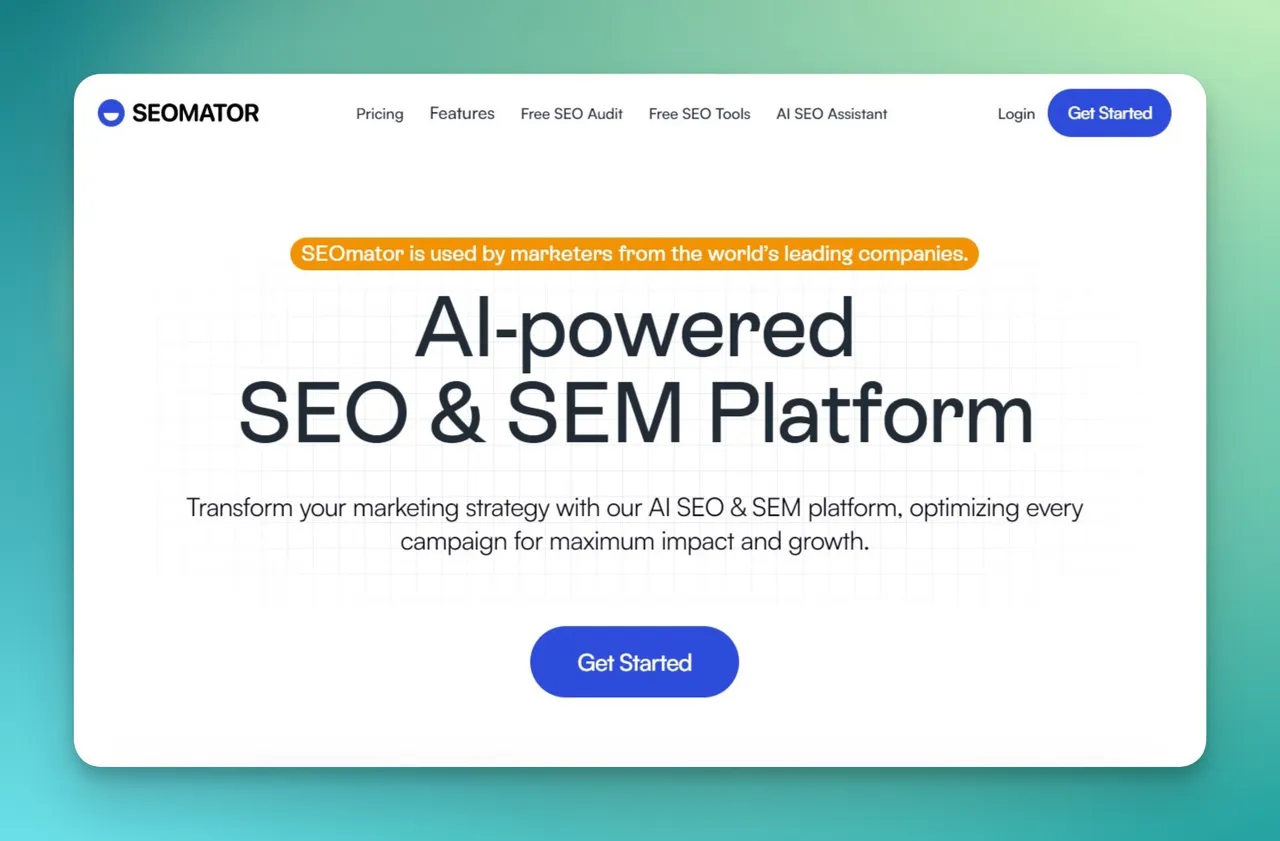
Best for: solo SEOs and small agencies wanting audits, rank tracking and AI-visibility checks without paying per client seat.
How it compares to Raven Tools: you keep site audits, rank tracking, backlink analysis and competitor research. You lose Raven's Textbroker content ordering and the depth of its agency report chrome. You gain AI-visibility measurement — AI Overview coverage, LLM citation checks, brand-mention share — which Raven's published plan features don't include.
SEOmator offers a wide array of free SEO tools, each tailored to address different aspects of SEO. You can research keyword ideas and check rankings, run in-depth SEO audits, monitor backlinks, conduct safe link building and link detox, social media analysis, competitor research, website audits and more. Many of the tools are interactive, allowing users to input their website URL or keywords to receive instant, customized advice and analytics. You can easily sign up to SEOmator's dashboard for free to access more features.
| Plan | Monthly | Annual (per month) | Built for |
|---|---|---|---|
| Lite | $49 | $39 | Solo SEOs and freelancers getting started |
| Standard | $99 | $79 | Growing teams running multiple projects |
| Advanced | $279 | $223 | Agencies and power users at scale |
Pricing verified on 2026-08-29 from SEOmator's pricing page. Annual billing saves 20%, with a 7-day free trial.
Pros: 37 free tools that run without an account, so you can test data quality before paying; AI-visibility tracking included rather than sold as an add-on; the entry tier undercuts Raven's Start plan for teams that don't need 20 domains.
Cons: the backlink index is smaller than Ahrefs' or Semrush's; no content-ordering marketplace like Raven's Textbroker hookup; white-label reporting isn't as deep as a reporting-first suite.
Skip it if: your main deliverable is a branded multi-channel dashboard covering PPC and social spend, not SEO. Otherwise, sign up free and check the data first.
📝 User Review: "A great on page SEO optimization tool with reasonable price"
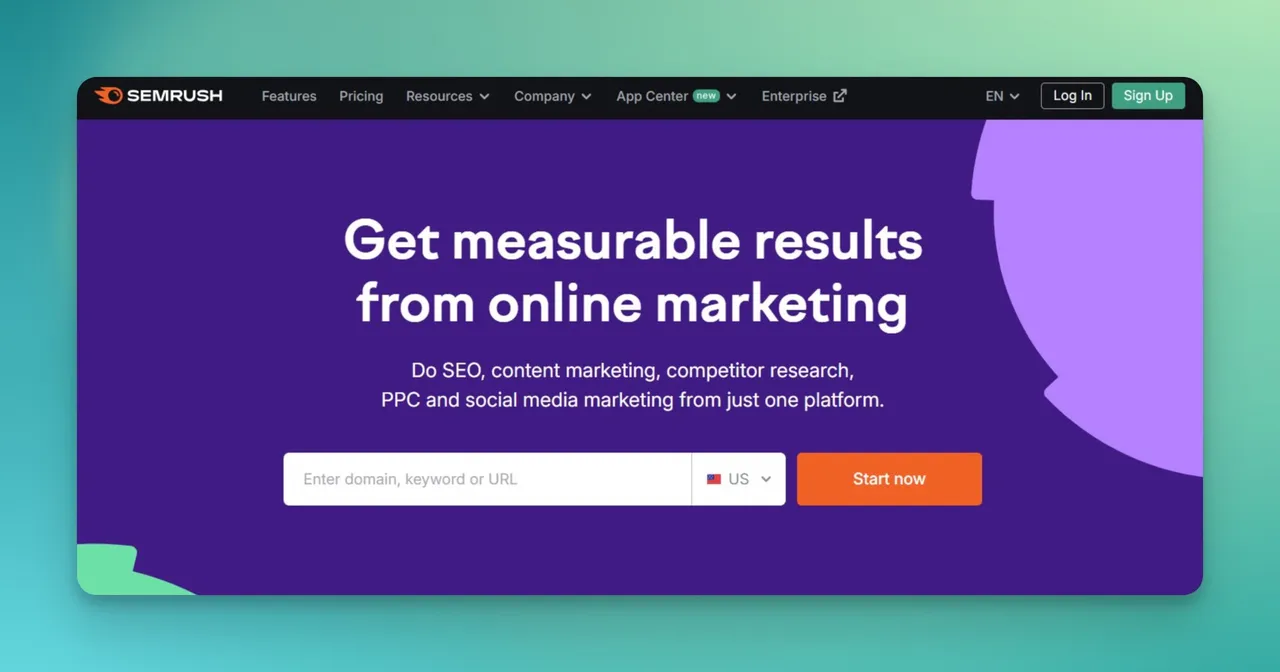
Best for: in-house marketing teams needing keyword, competitor and AI-visibility data in one subscription.
How it compares to Raven Tools: you keep every core job Raven does and gain a far larger keyword corpus plus prompt tracking. You lose Raven's low entry price and its agency-first report builder. According to DemandSage's head-to-head comparison, Semrush's keyword database holds 26.3 billion keywords against Raven's 1.4 billion — a gap you feel immediately in research work.
Semrush is a powerhouse in the SEO toolset arena, catering to various aspects of digital marketing beyond just SEO. It offers extensive keyword research, competitor analysis, site audit, backlink tracking, and social media management tools. It also has a rich and interactive user interface, which may feel intuitive to users once the density stops being overwhelming.
| Plan | Price (annual, per month) | Key features |
|---|---|---|
| SEO | $117.33 | 5 sites, 500 daily keywords, Position Tracking, Site Audit, AI search performance and sentiment |
| Starter | $165.17 | Adds MCP access, 50 daily tracked prompts, 1 AI brand domain, 300 AI visibility reports/day |
Pricing verified on 2026-08-29 from Semrush's pricing page. Monthly billing runs $139 and $199 respectively. A free trial is available.
Pros: the biggest research dataset here by a wide margin; AI visibility and prompt monitoring ship inside the standard plans; one platform covers SEO, PPC and content workflows.
Cons: roughly three times Raven's entry price; interface density is a real onboarding cost for small teams; shared credits mean heavy use hits ceilings sooner than the plan page suggests.
Skip it if: your budget tops out below $100/mo, or your team only needs rank reports. For the research head-to-head, see our Semrush vs Ahrefs breakdown.
📝 User Review: "Practical tool for digital marketing, equipped with a variety of features"
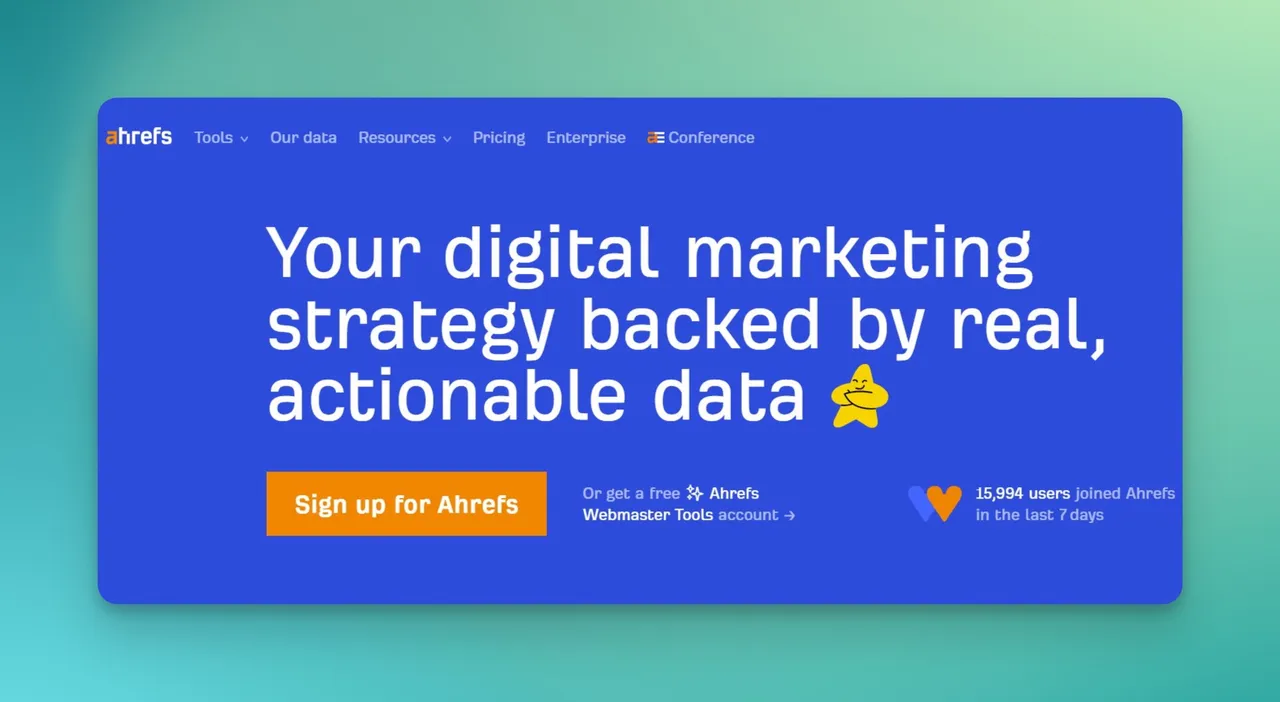
Best for: link-led SEOs and consultants whose day revolves around backlink data.
How it compares to Raven Tools: you gain a deeper link graph and a genuinely useful content research layer. You lose white-label client reporting entirely — Ahrefs is built for the practitioner, not the deliverable — and there's no free trial, so month one is a real commitment.
Ahrefs has earned a reputation amongst SEO experts, largely due to its strong focus on link-building and competitive analysis. With Ahrefs, you gain access to Site Explorer (for detailed backlink profiles and traffic analysis), Keywords Explorer, Content Explorer, and Rank Tracker. The tool is praised for its massive backlink index, making it a good choice for link-profile monitoring.
| Plan | Price/mo | Limits |
|---|---|---|
| Lite | $129 | 5 projects, 750 keywords, 5 tracked AI prompts, 100k crawl credits |
| Standard | $249 | 20 projects, 2,000 keywords, 10 AI prompts, 500k credits, Content Explorer |
| Advanced | $449 | 50 projects, 5,000 keywords, 20 AI prompts, 1.5M credits, Looker Studio |
| Enterprise | Custom | Custom quotas and controls, contact sales |
Pricing verified on 2026-08-29 from Ahrefs' pricing page. Annual billing saves up to 17%; extra seats are billed per user.
Pros: the link index is the reason people pay, and it holds up; Brand Radar adds AI-prompt tracking at every tier; historical data goes back two to five years on upper plans.
Cons: no free trial at all; one seat included, extras at $40–$80/mo each; tracked-prompt allowances are small on the entry plan.
Skip it if: client-ready white-label reporting is your primary output. That's the one job Raven does better.
📝 User Review: "Good suite of tools that cover all of the most common SEO-related tasks"
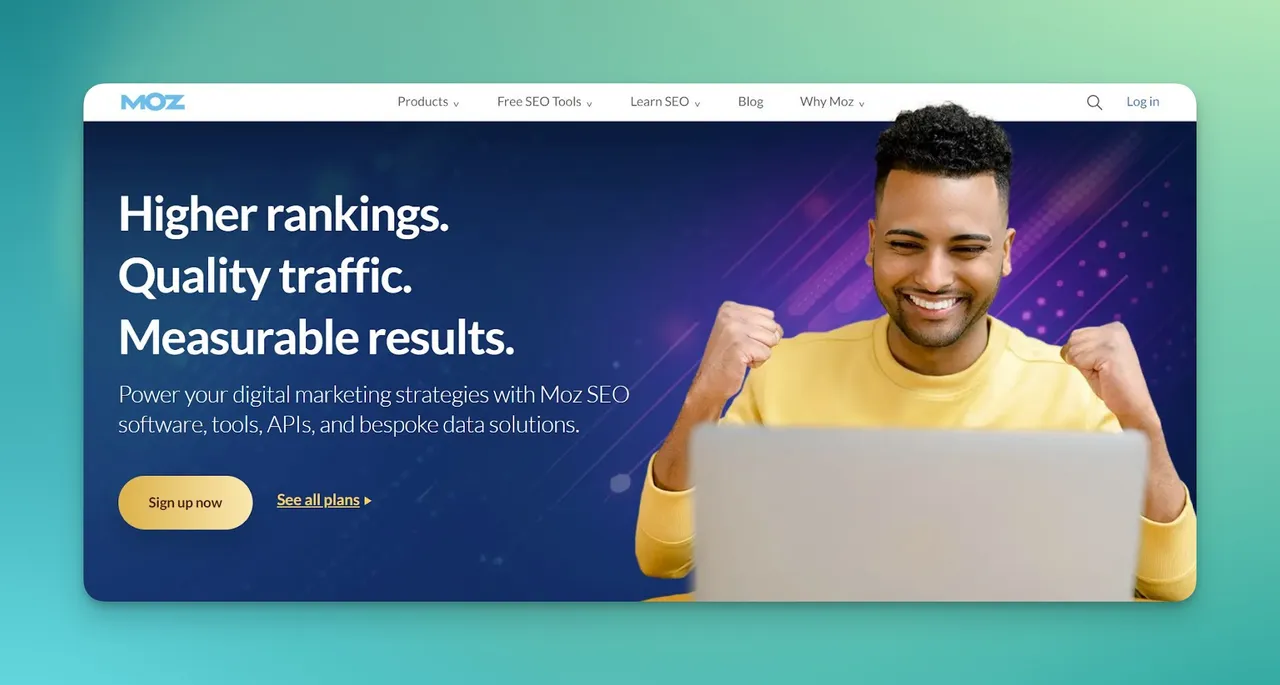
Best for: people learning SEO while doing it, where the teaching matters as much as the tooling.
How it compares to Raven Tools: you keep audits, rank tracking and link analysis at a similar entry price, and you gain AI Overview tracking plus a visibility dashboard. You lose Raven's client-report automation and its per-domain generosity — Moz's tracked-keyword quotas are tighter than they look.
Moz provides a friendly approach to SEO while being packed with well-known tools. Known for their Keyword Explorer, Link Explorer, and MozBar, the tools help in keyword management and site audits. On beginner-friendly guidance and community, Moz stands out with its extensive resources and active Q&A forums.
| Plan | Price/mo | Limits |
|---|---|---|
| Starter | $49 | Single website, entry-level plan |
| Standard | $99 | 1 user, 3 sites, 300 keywords/mo, 50 tracked prompts, 2 AI models |
| Medium | $179 | 2 users, 10 sites, 1,500 keywords/mo, 100 prompts, 3 AI models |
| Large | $299 | 3 users, 25 sites, 3,000 keywords/mo, 200 prompts, 50 content briefs |
| Enterprise | Custom | Contact sales |
Pricing verified on 2026-08-29 from Moz's pricing page. Yearly billing brings Standard, Medium and Large to $79, $143 and $239/mo for the first year.
Pros: the best free learning material of any tool here, which shortens onboarding for juniors; AI Overviews by keyword from the Standard tier; Domain Authority is a shared vocabulary clients already understand.
Cons: keyword quotas are monthly rather than daily, so heavy tracking runs out; the link index trails Ahrefs and Semrush; the yearly discount only covers the first year.
Skip it if: you need thousands of tracked keywords. The quota math turns against you quickly.
📝 User Review: "One of the best SEO tools with awesome learning resources"
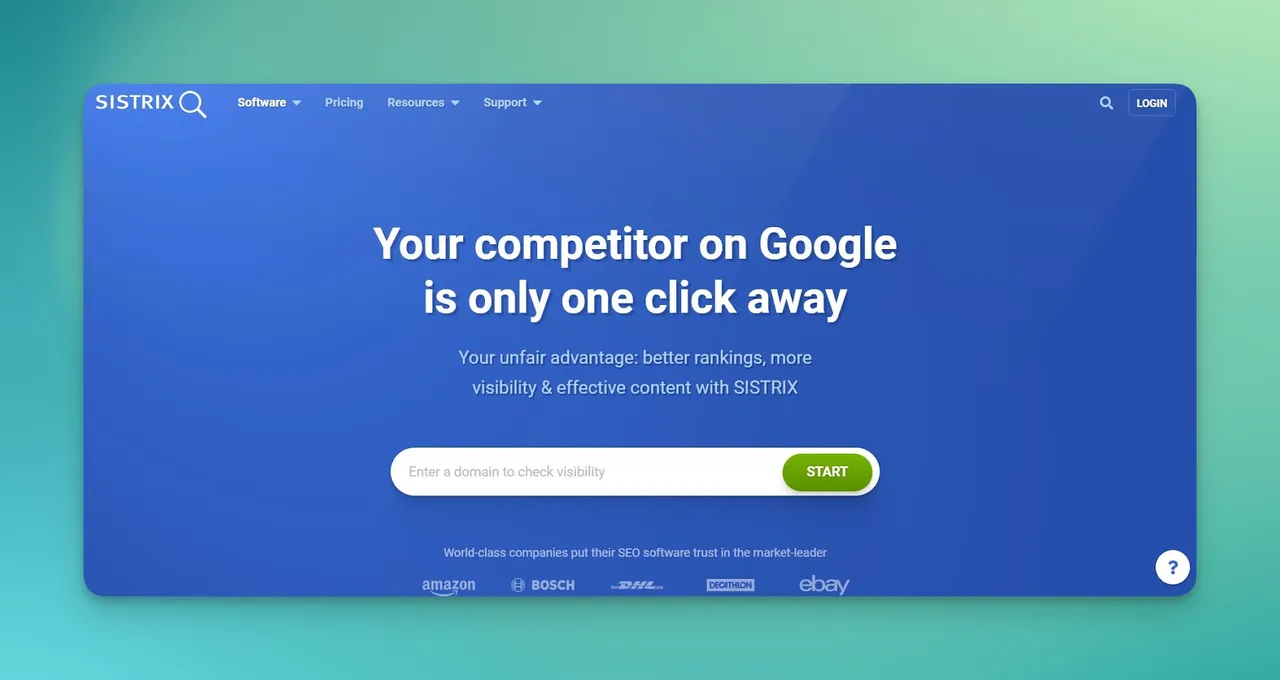
Best for: competitor and visibility analysis, especially for teams working German and other European markets.
How it compares to Raven Tools: you gain a longer historical record than anything else here, plus an AI Check for answer-engine visibility. You lose the client-reporting workspace, and the entry price is roughly three times Raven's.
SISTRIX is well known for measuring competitor performance, which makes it useful not just for tracking but for understanding what rivals changed and when. It provides the Visibility Index, one of the more dependable metrics for analyzing a site's search performance over time. It also allows in-depth tracking of competitor keyword strategies and uses historical data for future predictability.
| Plan | Price/mo | What's included |
|---|---|---|
| Start | €119 | Visibility Index, competitor analysis, on-page fixes, AI Check, 1 user |
| Plus | €239 | 3 users, content and text optimization, 27,900 prompt updates/mo |
| Professional | €419 | 6 users, 11+ years of history, API access, 55,800 prompt updates/mo |
| Premium | €799 | 12 users, roles and audit log, VIP support, 139,500 prompt updates/mo |
| Enterprise | Custom | Custom quotas, currencies and billing |
Pricing verified on 2026-08-29 from SISTRIX's pricing page. Prices are in euros, not dollars, quoted plus tax and cancelable monthly.
Pros: more than a decade of continuous index history, which no other tool here matches; prompt-update volumes are generous next to per-prompt allowances elsewhere; monthly cancellation, no annual lock-in.
Cons: priced in euros, so US teams carry FX risk; data depth is strongest in Europe and thinner elsewhere; no white-label client reporting.
Skip it if: your work is US-only and you're replacing Raven mainly for its reports.
📝 User Review: "From all available tools available out there, I will choose Sistrix"
Best for: agencies whose primary client deliverable is the rank report itself.
How it compares to Raven Tools: the closest like-for-like swap here for the reporting half of Raven's job. You keep white-label reports and get deeper SERP tracking plus AI citations and mentions. You lose Raven's backlink monitoring and content module — AWR is a tracking specialist, not an all-in-one.
Advanced Web Ranking (AWR) is packed with features aimed at giving you a competitive edge in tracking. It excels in the depth of its SERP tracking: local, mobile, and desktop included. This tool also offers white-label reports, so agencies can fully brand and customize the data they share with clients.
| Plan | Price/mo | Keywords and extras |
|---|---|---|
| Pro | $139 | 7,000 keywords, unlimited projects and users, AI visibility, SEO forecasting |
| Agency | $279 | 14,500 keywords, unlimited forecasts, hourly updates, Looker Studio, API |
| Enterprise | $699 | 35,500 keywords, cross-project reporting, BigQuery connector, migration help |
| Ent Plus 50k | $980 | 50,000 keywords, unlimited historical rankings, SSO, account manager |
Pricing verified on 2026-08-29 from Advanced Web Ranking's pricing page. Annual billing saves 10%. This is up from the $99 entry price quoted when this post first published.
Pros: unlimited projects and users on every plan, which changes the seat math for agencies completely; AI citations tracked alongside classic positions; hourly on-demand refresh at the Agency tier answers the refresh-speed complaint directly.
Cons: no backlink analysis, so you'll need a second tool; the $139 entry is well above Raven's $39; keyword caps, not feature gates, drive the pricing.
Skip it if: you want one platform covering audits, links and ranks together.
📝 User Review: "My go-to web ranking software in my SEO toolbox"
Best for: small teams and freelancers doing keyword research on a tight budget.
How it compares to Raven Tools: you gain a much simpler interface and a lower price. You lose most of what Raven does — no client reporting workspace, no auditing at Raven's depth, no backlink monitoring at scale. This is a deliberate downshift in scope.
Mangools offers a suite of tools built for SMEs focused on streamlined keyword research and rank tracking. KWFinder by Mangools is celebrated for its simplicity and effectiveness in uncovering keyword opportunities. It gives you a clear view of keyword difficulty, trends, and SERP metrics that matter for targeted campaigns. With SERPChecker and SERPWatcher, keyword research and tracking sit in the same workflow.
| Plan | Monthly | Annual (approx., per month) |
|---|---|---|
| Basic | ~$49 | ~$29.90 |
| Premium | ~$69 | ~$44.90 |
| Agency | ~$129 | ~$89.90 |
Prices are approximate: Mangools renders pricing in JavaScript, so figures were corroborated across review platforms on 2026-08-29 rather than read from the page source. Confirm current rates on Mangools' plans and pricing page. Annual billing is advertised at 35% off.
Pros: the gentlest learning curve here, which matters if non-specialists share the tool; the cheapest annual entry point on the list; an unusually readable SERP analysis view.
Cons: no free trial, so evaluation means paying first; AI-visibility features aren't documented in the published plans; it replaces maybe a third of what Raven does.
Skip it if: you need audits and reporting, not just keywords. Our guide to Mangools alternatives covers the step up.
📝 User Review: "A fully functional SEO tool with a much lower price tag."
Best for: teams tracking positions across many locations and devices.
How it compares to Raven Tools: you gain granular geographic tracking and a stronger research layer. You lose Raven's low entry point — Core is over three times the Small Biz tier — and plans scale on keyword volume rather than domains, which suits a different shape of agency.
SE Ranking is a competitive option for teams doing keyword research with a strong emphasis on rank tracking. It offers accurate position tracking, inspection of keyword difficulty, and extensive competitive research functionalities. It's touted for its in-depth, all-inclusive rank tracking interface, which helps in monitoring changes across different geographical locations.
| Plan | Monthly | Annual (per month) |
|---|---|---|
| Core | $129 | $103.20 |
| Growth | $279 | $223.20 |
| Enterprise | Custom | Contact sales |
Pricing verified on 2026-08-29 from SE Ranking's pricing page. Annual billing saves 20%, with a 14-day free trial. This is up from the $52 entry price quoted when this post first published.
Pros: location and device granularity few tools at this price match; a 14-day trial, longer than most here; pricing scales on keyword volume, so light-keyword agencies aren't penalized for having many clients.
Cons: the entry price jumped substantially since 2024; AI-visibility coverage isn't confirmed in the published plan features, so ask before signing; a lot of interface surface area for a tracking-led tool.
Skip it if: you're leaving Raven to spend less. This isn't the cheaper option.
📝 User Review: "Excellent, well priced SEO tool packed full of features"
Best for: technical SEOs who need a real crawler, not a dashboard.
How it compares to Raven Tools: you gain crawl depth Raven's site auditor doesn't reach — JavaScript rendering, custom extraction, crawl comparison, near-duplicate detection. You lose everything else: no rank tracking, no client reports, no backlink index, no AI visibility. Nobody switches from Raven to Screaming Frog. They add it alongside whatever replaces Raven.
Screaming Frog is a dedicated tool for site audits and finding critical SEO issues. As a desktop application, it runs thorough site health checks, identifying broken links, duplicate content, and HTML improvements. It offers deep crawling that uncovers technical and on-page errors that matter for site performance.
| Licence tier | Price | Limits |
|---|---|---|
| Free | £0 | 500 URLs per crawl, core checks, XML sitemap generation |
| 1–4 licences | £199 per licence/year | Unlimited URLs, JS rendering, crawl comparison, GA and GSC integration |
| 5–9 licences | £189 per licence/year | Same features, bulk discount |
| 10–19 licences | £179 per licence/year | Same features, bulk discount |
| 20+ licences | £169 per licence/year | Same features, bulk discount |
Pricing verified on 2026-08-29 from Screaming Frog's pricing page. Licences run one year and are per user. The free version is a permanent free tier, not a trial.
Pros: the free 500-URL tier is genuinely useful with no time limit; £199/year is the cheapest serious technical tooling here; custom extraction handles audits no hosted crawler will do for you.
Cons: it runs on your machine, so crawl size is bounded by RAM and storage; no scheduling, dashboard or client-facing output; the steepest learning curve on this list by a distance.
Skip it if: you need scheduled monitoring rather than on-demand crawls.
📝 User Review: "Best Tool for Technical SEO Audit"
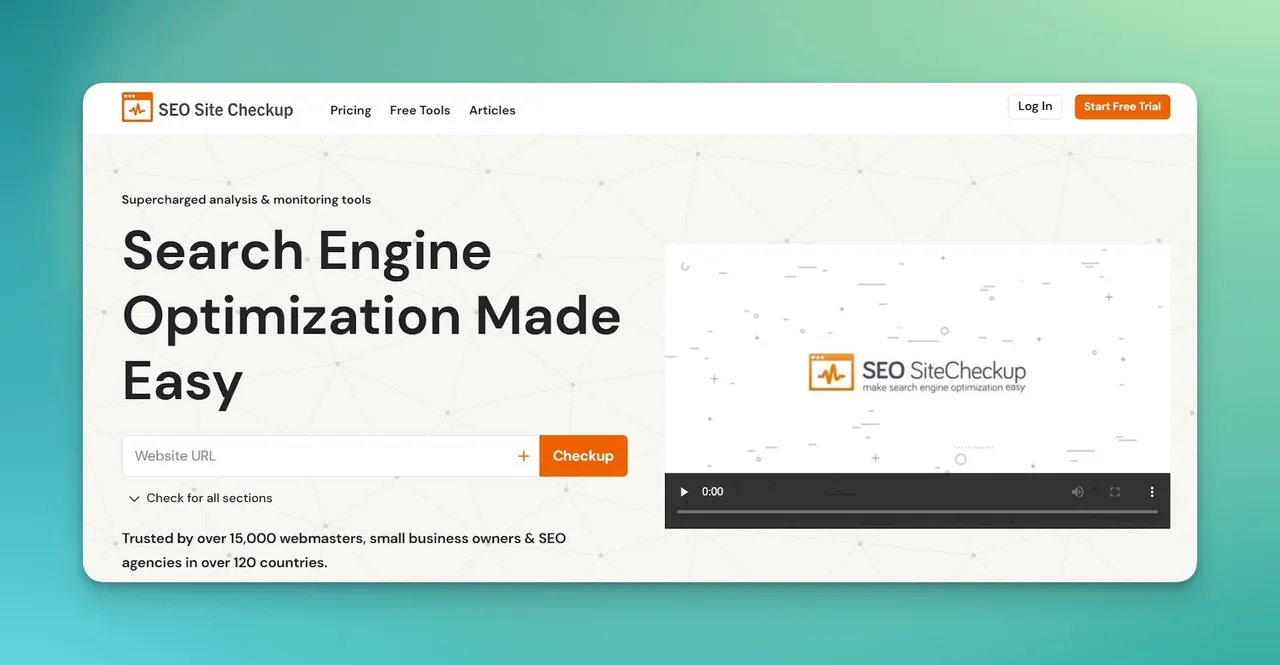
Best for: site owners and non-technical marketers who want audit findings in plain language.
How it compares to Raven Tools: you keep audits, basic keyword tracking and white-label reports at a lower price, and gain an LLM Visibility Checker from the $69 tier. You lose backlink monitoring, campaign structure, and domain quotas — this tool counts monitored sites in single digits.
SEO Site Checkup is a reliable tool for anyone focused on the on-page factors that decide whether a page can rank at all. It performs site audits and presents real-time SEO issues that could impact performance. Its ease of use makes it a favorite for those without deep technical know-how, providing actionable insights in simple terminology.
| Plan | Monthly | Annual (per month) | Limits |
|---|---|---|---|
| Basic | $39 | $29 | 3 sites, 50 URLs, 50 keywords, no AI visibility, no white label |
| Webmaster | $69 | $49 | 5 sites, 100 keywords, LLM Visibility Checker, white label, 3 seats |
| Professional | $129 | $99 | 15 sites, 300 keywords, LLM Visibility Checker, white label, 5 seats |
Pricing verified on 2026-08-29 from SEO Site Checkup's pricing page. Yearly billing saves 25%. This is up from the $29.95 entry price quoted when this post first published.
Pros: audit explanations written for humans, which cuts the time spent translating findings for clients; white label arrives at $69 rather than an enterprise tier; LLM visibility included below $100/mo, which is rare.
Cons: the Basic plan has no AI-visibility or white-label access, so the useful tier is really $69; monitored-site counts are low for an agency; no backlink analysis.
Skip it if: you manage more than 15 client sites. The quotas won't stretch.
📝 User Review: "Game Changer Tool For SEO"
Not every renewal should end in a migration. Four situations where staying wins:
You're already inside TapClicks. If Raven's data feeds dashboards your clients already read, replacing it means rebuilding that pipeline. The switching cost usually outweighs the feature gap.
Client reporting matters more than research depth. Unlimited automated client reports and white labeling from the $39 tier are hard to beat. Ahrefs and SISTRIX don't do this job at all, and Semrush charges considerably more before it does.
The $39 tier fits and you're not outgrowing it. Two domains, two users, unlimited reports, 50k monthly page crawls. Very little here matches that per-dollar coverage.
You report across PPC and social, not just SEO. Raven's home inside a broader reporting suite is an advantage when the deliverable spans channels.
Pick by the job you're hiring the tool for, not the longest feature list.
| Your job | Route to |
|---|---|
| Agency white-label client reporting | Advanced Web Ranking, or stay on Raven |
| Deep SEO research (keywords, links, competitors) | Semrush or Ahrefs |
| Rank tracking and nothing else | SE Ranking or Advanced Web Ranking |
| Technical crawling and site audits | Screaming Frog, paired with a hosted site crawler |
| Tight budget | Mangools, SEO Site Checkup, or SEOmator's Lite tier |
| AI-search visibility | SEOmator, Semrush, Moz or SISTRIX |
Stress-test that last row before committing. Around the two major model updates we detected in H1 2026, 17% of tracked brands saw their AI mention rate swing more than 20 percentage points within 14 days — and only 38% of the losers had recovered within 60 days. A quarterly check won't catch a swing like that. Cadence matters as much as the feature existing.
Start with a clear understanding of what you aim to achieve. The more specific your goals, the easier it will be to narrow down the right tools. Common objectives worth writing down before you open a single pricing page:
A systematic review of your SEO requirements might also reveal specialized needs such as social media integration, PPC campaign assessments, or a demand for detailed reporting and analytics, all of which play a significant role when deciding on the appropriate tool.
The fanciest tool is of little use if it's challenging to operate or lacks the support you need to get value from it. Check the interface with the person who'll use it daily, not the person approving the invoice.
On money, assess pricing models with scaling in mind. SEO tool pricing structures vary widely: some have flat monthly fees, while others tier by feature richness, keyword volume or number of users, and those three scale very differently. Consider both your current budget and future scalability. Starting with a basic plan and scaling up often makes financial sense for smaller teams, but only if the upgrade path doesn't cliff. And always look for free trials or demos — they're an invaluable opportunity to experience a tool's interface firsthand without financial commitment. For lower-cost picks, see our roundup of affordable SEO tools.
Migrate in four stages, and cancel nothing until the last one. Two to four weeks for a solo consultant, six to eight for a multi-client agency.
There isn't one answer, which is why the table above routes by job. For research depth, Semrush or Ahrefs. For rank reporting an agency can white-label, Advanced Web Ranking. For audits plus AI-search visibility near Raven's price, SEOmator.
Partly. Screaming Frog's free tier crawls 500 URLs per site with no time limit, and SEOmator runs 37 free tools without an account. Neither replaces Raven's client reporting, which no vendor gives away free.
The recurring reasons are interface complexity, limits on report customization, integrations that don't reach far enough, and price pressure at either end of the plan range. In 2026, two more: slower data refresh cycles, and no AI-search visibility measurement.
Advanced Web Ranking is the closest match for the reporting half of Raven's job, with unlimited projects and users on every plan and white-label reports throughout. If you need backlink analysis in the same subscription, Semrush covers more ground at a higher price.
Yes. Advanced Web Ranking includes it on every tier, SEO Site Checkup from its $69/mo Webmaster plan, and Semrush through its report builder. Ahrefs, Screaming Frog and SISTRIX don't offer client-facing white-label reporting at all.
Raven is cheap at the entry point and mid-market at the top. Its $39/mo Small Biz tier undercuts everything here except Mangools' annual rate and SEO Site Checkup's yearly Basic plan. Its $399/mo Lead tier sits below Ahrefs Advanced and AWR Enterprise. The value case is strongest at the bottom of the range.
For both jobs in one subscription: SEOmator, Semrush or SE Ranking. For tracking alone, Advanced Web Ranking has the deepest local, mobile and desktop coverage. For auditing alone, Screaming Frog for crawl depth or SEO Site Checkup for readable findings. Our rank tracker alternatives guide covers tracking-only gaps.
Mangools, comfortably. Its tools do fewer things and say so plainly. Moz comes second because its documentation and community fill the gaps. Screaming Frog is the hardest here, and Semrush the densest of the hosted platforms.
There's no one-click export into another platform. Keyword lists and backlink data move as CSV without much trouble; report templates and historical rank graphs don't move at all. Budget two to four weeks of parallel running, and export your history before you cancel.
Ahrefs has the deepest link index here, with Semrush close behind and stronger on competitor keyword overlap. SISTRIX wins on historical competitor visibility in European markets. For a backlink-tool comparison specifically, see our Majestic alternatives roundup.
Raven Tools still does one thing very well: cheap, unlimited, white-labeled client reporting inside a broader marketing suite. If that's the job you hired it for and it's still doing it, stay.
Switch when two or more core jobs are failing — and in 2026 the job most likely to be missing entirely is measuring whether you appear in AI answers.
Choosing the right SEO tool means weighing how its features align with your objectives and strategy requirements. Each of the above alternatives offers a unique blend, differing in specialty, price points, and usability. Take advantage of free trials where available, and test multiple platforms to determine the perfect fit for your SEO needs. Before committing to any of the ten above, export your Raven history, run one free SEO audit against your own site, and shortlist on the job rather than the feature count.
🔍 Related Articles
- 7 Must-Have SEO Tools for Small Businesses (Free & Premium)
Who wrote it, what changed and how to tell us about a mistake.

Isabella Edwards
Technical SEO Content Manager, SEOmator
Leads technical SEO content at SEOmator: audits, Core Web Vitals and on-page fixes
Isabella Edwards leads technical SEO content at SEOmator, turning crawl data, Core Web Vitals, and on-page signals into guidance teams can actually act on. She focuses on the practical side of search — auditing sites, fixing what holds rankings back, and explaining the reasoning behind each recommendation so non-specialists can follow along.
Published · Updated
Spot a mistake or a number that has gone stale? Tell us. We correct it and log the change in the History above. Report an error →
Compare SEOmator plans
You are already comparing tools. Here is ours, priced in public, next to what each plan actually includes.
Compare SEOmator plans· 17 min read
AI Overviews hit ~34% of the SaaS comparison queries we track (July 2026). Compare 6 SE Ranking alternatives on verified August 2026 pricing and AI tracking.
· 28 min read
Eight Mangools alternatives, every price re-checked on the vendor's own pricing page (2 Sept 2026), plus an honest AI-visibility column. Find your fit.
· 7 min read
Best Similarweb alternatives: SEOmator ($49/mo) for SEO audits, SpyFu ($9/mo) for PPC, Semrush ($139/mo) for all-in-one marketing, Ahrefs ($129/mo) for backlinks, and Mixpanel ($24/mo) for product analytics.


