

· 17 min read
SE Ranking Alternatives: 6 Tools Compared for 2026
AI Overviews hit ~34% of the SaaS comparison queries we track (July 2026). Compare 6 SE Ranking alternatives on verified August 2026 pricing and AI tracking.
Seven of nine SEO audit platforms offer white-label reporting — but almost never on the plan the roundups name. We checked every vendor's published pricing on 13 September 2026: the cost to unlock white label ranges from $50 to $1,089 a month, and two popular "white-label" tools do not offer it at all.

Isabella Edwards · Technical SEO Content Manager, SEOmator
Leads technical SEO content at SEOmator: audits, Core Web Vitals and on-page fixes
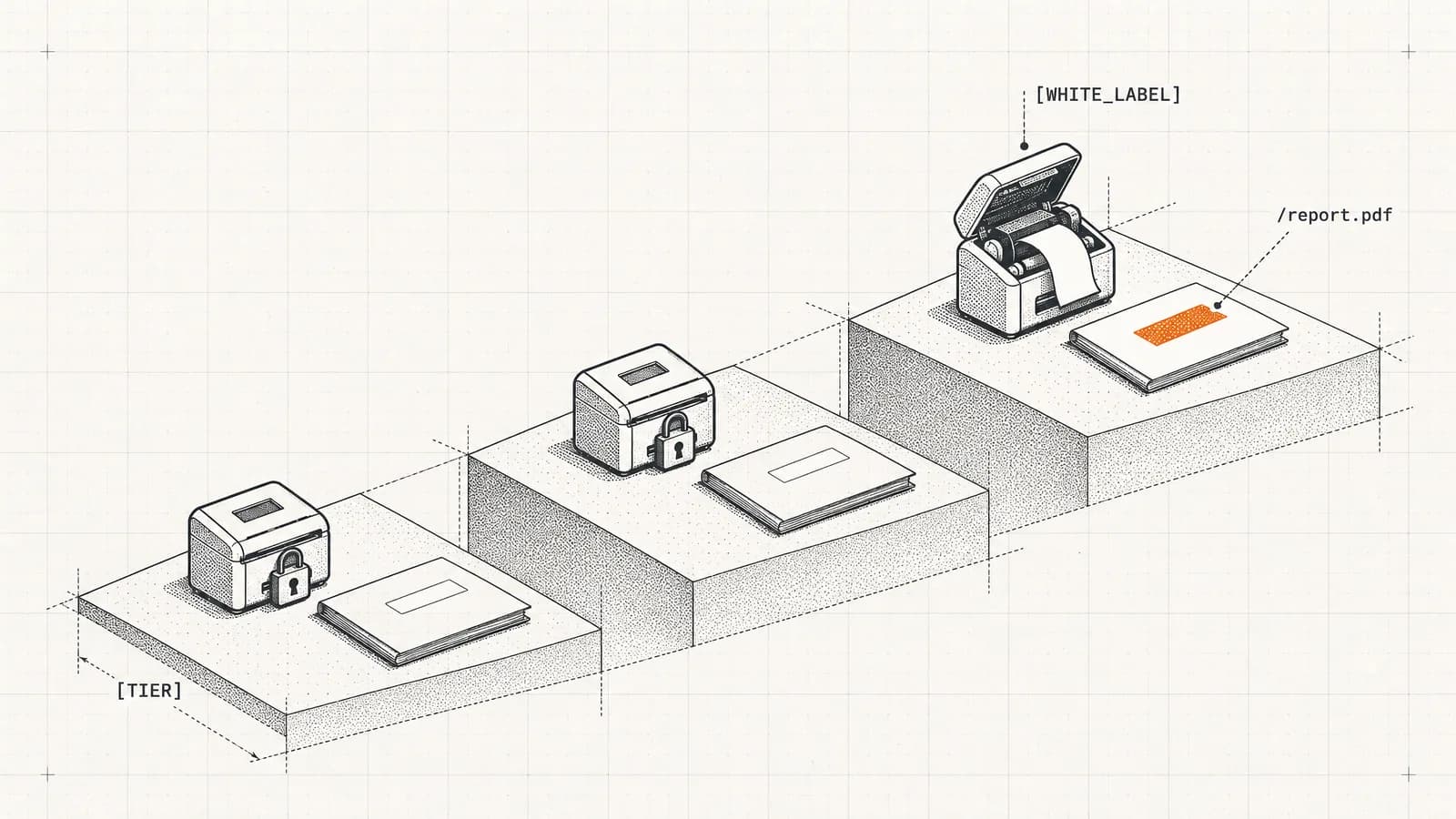
Most "best white label SEO audit tool" lists tell you which tools offer white-label reporting. That is the easy half, and it is not the half that costs you money. The expensive question is which tier unlocks it — because on almost every platform, white label sits one or two plans above the price the roundups quote.
So we checked. On 13 September 2026 we opened the published pricing page of all nine platforms below and read the feature matrix row by row. The result: seven of the nine offer white label, two do not, and the cost to unlock it spans $50 to $1,089 per month — a 22× range. On six of the nine, the tier that unlocks it is not the tier commonly cited.
The phrase covers three different things, and vendors use it for all three without distinguishing them. Before comparing prices, know which one you are buying:
seo.youragency.com and never see the vendor. Materially more expensive.Most agency workflows need level 1. Paying for level 2 when your clients only ever receive a PDF is the most common overspend we see in this category.
Verified against each vendor's published pricing page on 13 September 2026. "Cost to unlock" is the real monthly floor — the cheapest configuration that actually turns the feature on, including any mandatory base plan.
| Tool | Tier that unlocks it | Cost to unlock |
|---|---|---|
| SEO PowerSuite | Enterprise | $599 / year |
| Nightwatch | Professional | €159 / mo |
| SE Ranking | Agency Pack add-on | $172.20 / mo |
| Serpstat | Agency | $410 / mo |
| Surfer SEO | Enterprise | $999 / mo |
| JetOctopus | Ultra | $1,089 / mo |
| SEOmator | Agency terms | Not publicly priced |
| Morningscore | Not offered | — |
| Screaming Frog | Not offered | — |
Two things in that table are worth pausing on. Morningscore and Screaming Frog do not offer white label at any tier — Screaming Frog is openly a raw-data crawler and never claimed to, and Morningscore's pricing page lists no white-label row on Lite, Business, Pro or Premium. And SE Ranking's white label is not a plan at all, which is the single most common budgeting mistake in this category. More on that below.
Ordered by what it actually costs to switch white label on, cheapest first.
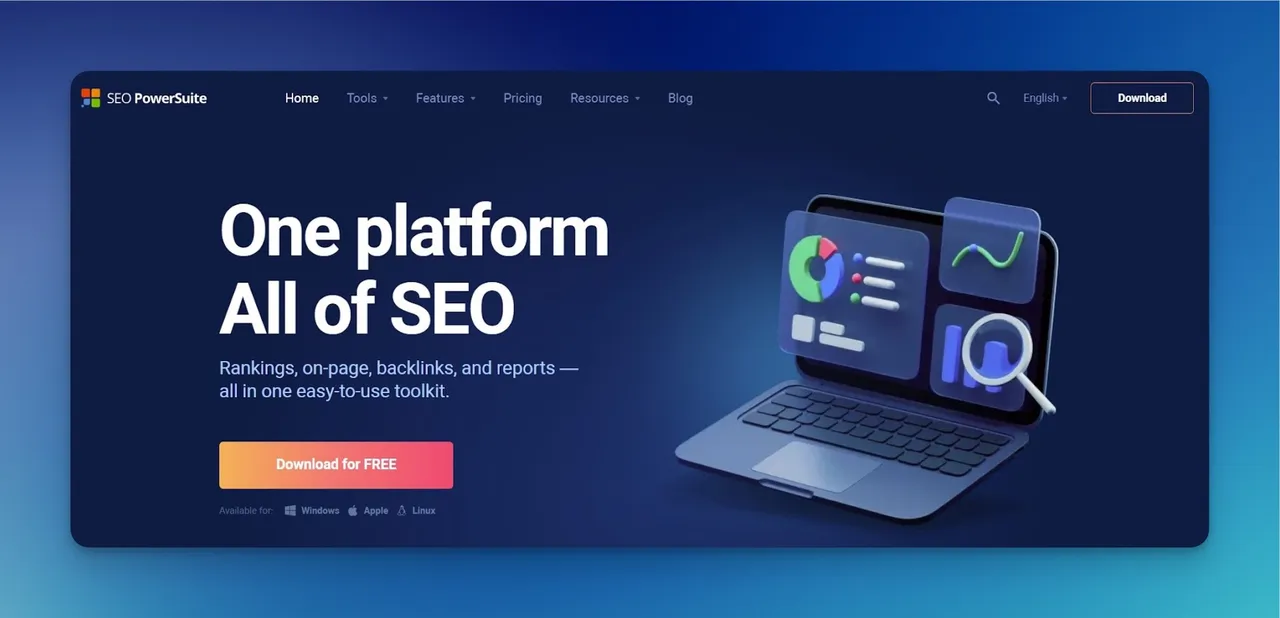
The cheapest genuine white label in this comparison, by a wide margin — roughly $50 per month when you annualise it, against $159–$1,089 for the cloud platforms.
The catch is the tier. SEO PowerSuite's feature matrix reads "All Professional features, plus: White-label SEO reports" — meaning white label is on Enterprise ($599/year), not on Professional ($349/year). Guides that list SEO PowerSuite as "white label from $349" are reading the wrong row. Max + at $899/year also includes it.
It is desktop software rather than SaaS, which cuts both ways for an agency: crawls are unlimited and client data never leaves your machine (which matters for healthcare, legal and financial clients), but there is no cloud dashboard to hand a client, and each workstation needs its own licence.
Verified 13 September 2026: Free $0 · Professional $349/yr · Enterprise $599/yr (white label) · Max + $899/yr. Two- and three-year terms reduce the effective annual rate.
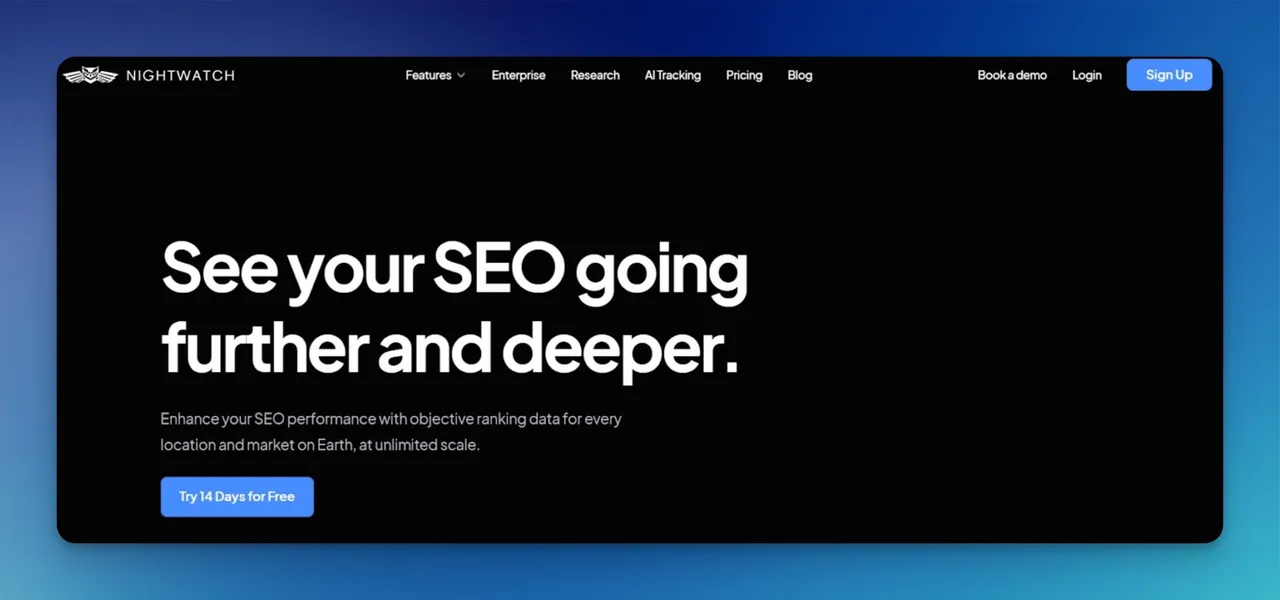
The cheapest cloud platform with white label, and the one whose tier naming is least misleading — white label appears on Professional (€159/mo) and stays available on Agency and Enterprise above it.
What it does not do is appear on Starter (€79/mo). If you have seen Nightwatch recommended as a ~$32/month white-label option, that figure does not correspond to any current plan, and the entry-level plan it roughly gestures at does not include the feature.
Nightwatch leans toward rank tracking and reporting rather than deep technical crawling, with genuinely strong location-level tracking. For agencies whose client deliverable is "here is where you rank this month, on our letterhead," it is the most economical fit in this list.
Verified 13 September 2026: Starter €79/mo (no white label) · Professional €159/mo (white label) · Agency €399/mo · Enterprise custom.
SE Ranking is the one to read carefully, because its white label is not included in any subscription plan. It is a separate Agency Pack add-on at $69/month, billed annually only, that you buy on top of a base subscription.
That changes the arithmetic completely. The cheapest base plan is Core at $103.20/month, so the real floor to get white-label reporting is $103.20 + $69 = $172.20/month — not the $149 or $69 figure that circulates in comparison posts, both of which describe only one half of the purchase.
What the Agency Pack buys is unusually complete for the price: "White label for platform and reporting" (so level 2, not just report branding), 30 client seats, unlimited scheduled reporting with AI summaries, plus Agency Catalog placement and a lead generator. If you need clients logging into your own domain rather than just receiving branded PDFs, this is the cheapest route to it in this comparison by roughly $800/month.
Verified 13 September 2026: Core $103.20/mo · Growth $223.20/mo · Enterprise custom · Agency Pack add-on $69/mo, annual billing only.
Serpstat gates white label behind its top published tier. The feature matrix reads "Everything in Team + White Label Reports, Data Engineer Consultation, Phone Support and more" — that is the Agency plan at $410/month, not the $149 mid-tier that older roundups name.
At that price you are buying an all-in-one platform — audits, rank tracking, keyword research, backlink analysis, PPC research — rather than a reporting feature. It only makes sense if you are consolidating several subscriptions into it. If white-label PDFs are the actual requirement, Nightwatch or SEO PowerSuite deliver the same client-facing outcome for a fraction of it.
Verified 13 September 2026: Individual $50/mo · Team $100/mo · Team x2 $169/mo · Agency $410/mo (white label).
Our own platform, so read this section with that in mind — and here is the honest version rather than the flattering one.
White-label reporting is available on agency terms, but it is not documented on our public pricing page, and it is not one of the features listed on Lite ($49/mo), Standard ($99/mo) or Advanced ($279/mo). All three published tiers carry an identical feature list — Google, YouTube and Bing rank tracking, SEO audit, keyword research, backlink checker, SEO checklists and PDF reports — and differ only on quotas and seats. Advanced is the tier positioned for agencies at scale, with 15 projects and 5 users. If white label is your deciding factor, you have to ask us, which is a worse buying experience than the vendors above and something we should fix.
What we would rather be judged on here is the audit engine itself, which is public and free to test: our free SEO audit tool runs without an account, and the same 251-rule engine has audited 100,000+ websites and crawled over 50 million pages across our network in 2026 (January–July). There is also a genuinely uncapped path for teams comfortable in a terminal — our open-source SEO audit CLI is MIT-licensed, runs 365 checks across 20 categories locally, and exits non-zero in CI so a bad release fails the build.
Verified 13 September 2026: Lite $49/mo · Standard $99/mo · Advanced $279/mo (agency tier). White label: available, not publicly priced.
Surfer's pricing page mentions white label exactly once, in the Enterprise tier at $999/month. It does not appear on Discovery ($49), Standard ($99), Pro ($182) or Peace of Mind ($299).
Worth being clear about what Surfer is, too: it is a content optimisation and SERP analysis tool, not a technical audit crawler. It will not find redirect chains, orphan pages or server errors. Listing it as a white-label audit tool conflates two different jobs. If you need on-page content scoring for writers, it is excellent at that; if you need a technical audit you can put your logo on, it is the wrong product at ten times the necessary price.
Verified 13 September 2026: Discovery $49/mo · Standard $99/mo · Pro $182/mo · Peace of Mind $299/mo · Enterprise $999/mo (white label). Prices shown billed yearly.
The most expensive white label in the comparison, and the only one where that is arguably reasonable — JetOctopus is an enterprise log-file and crawl platform built for sites in the millions of pages, where the crawler itself is the product.
White-label reports sit on the Ultra tier ($1,089/month), not on Pro ($549/month). Any guide quoting JetOctopus at "$276/month" is roughly half the current entry price and two tiers below white label.
For agencies whose clients are enterprise e-commerce or large publishers, the log-file analysis genuinely has no substitute at the lower price points. For anyone auditing sites under ~50,000 pages, it is not a close call — see more affordable SEO audit platforms instead.
Verified 13 September 2026: Pro $549/mo · Ultra $1,089/mo (white label) · Unlimited custom.
Morningscore is frequently listed as a white-label option for small agencies. Its pricing page shows no white-label row on any of its four plans — Lite $69, Business $99, Pro $159, Premium $299. The only place the phrase appears on the page is inside an FAQ question asking which other tools offer it.
That does not make it a bad product. Its gamified health scores and prioritised task lists are genuinely good at getting non-technical clients to act on recommendations, which is a real agency problem. But if your requirement is a branded client deliverable, it does not meet it, and the entry price is $69 rather than the $49 often quoted.
Verified 13 September 2026: Lite $69/mo · Business $99/mo · Pro $159/mo · Premium $299/mo. White label: not offered.
Screaming Frog has never claimed white-label reporting and still does not offer it. It is a desktop crawler that gives you raw data and expects you to do something with it — which, for a technical audit, remains unmatched at the price.
The agency cost is real but it is labour, not licence: you compile findings into a client-facing document yourself. Many agencies run Screaming Frog for the diagnosis and a cheaper platform purely for the branded report, which frequently costs less than one tool that does both.
One detail most roundups miss: the licence has volume discounts — £199 for a single licence falling to £189, £179 and £169 per licence as you buy more. For a team of four that is a meaningful saving nobody advertises.
Verified 13 September 2026: Free up to 500 URLs · £199/licence/year, discounted to £169 at volume. White label: not offered.
This comparison will age. The method will not, and it takes about four minutes per vendor:
If a comparison article does not name the specific tier, assume it has not been checked.
SEO PowerSuite's Enterprise edition at $599 per year — roughly $50 per month — is the cheapest genuine white-label option we found, provided desktop software suits your workflow. Among cloud platforms, Nightwatch's Professional plan at €159/month is the cheapest. Note that SEO PowerSuite's white label is on Enterprise, not on the cheaper Professional edition it is often confused with.
No. SE Ranking's white label is a separate Agency Pack add-on costing $69 per month, billed annually, which you purchase on top of a base subscription. With the cheapest Core plan at $103.20/month, the real cost to get white-label reporting is $172.20/month. In exchange it is the only tool here that white-labels the platform itself — clients log in under your domain — rather than only branding exported reports.
Morningscore and Screaming Frog. Screaming Frog is a raw-data desktop crawler and has never offered it. Morningscore's published pricing shows no white-label feature on Lite, Business, Pro or Premium, despite regularly appearing on white-label roundups. If you are running either, you are compiling the client-facing document yourself.
Most agencies need only branded PDFs — your logo and colours on an exported report. That is the cheapest form and is what most vendors mean by "white-label reports." Platform white label, where the tool runs under your own domain and clients log in without seeing the vendor, costs substantially more and is only worth it if clients use the dashboard directly rather than receiving reports.
Yes, with more manual work. Screaming Frog crawls 500 URLs free and Google Search Console provides indexing data, and SEOmator's free SEO audit tool runs without an account. Our open-source SEO audit CLI is MIT-licensed and runs 365 checks locally with no cap. You compile the client-facing document yourself, which is the trade — a few hours of labour per client against a subscription.
No, and it is worth saying plainly on a page comparing nine of them. A branded report built on a shallow crawl is still a shallow crawl. Match the crawler to the site first — a Shopify SEO audit needs theme-level checks a generic crawl flags but never explains — and treat white label as a presentation layer on top of a diagnosis you already trust.
Who wrote it, what changed and how to tell us about a mistake.

Isabella Edwards
Technical SEO Content Manager, SEOmator
Leads technical SEO content at SEOmator: audits, Core Web Vitals and on-page fixes
Isabella Edwards leads technical SEO content at SEOmator, turning crawl data, Core Web Vitals, and on-page signals into guidance teams can actually act on. She focuses on the practical side of search — auditing sites, fixing what holds rankings back, and explaining the reasoning behind each recommendation so non-specialists can follow along.
Published · Updated
Spot a mistake or a number that has gone stale? Tell us. We correct it and log the change in the History above. Report an error →
Compare SEOmator plans
You are already comparing tools. Here is ours, priced in public, next to what each plan actually includes.
Compare SEOmator plans· 17 min read
AI Overviews hit ~34% of the SaaS comparison queries we track (July 2026). Compare 6 SE Ranking alternatives on verified August 2026 pricing and AI tracking.
· 16 min read
AI Overviews hit ~27% of the queries we track (July 2026), and most legacy SEO suites don't measure them. Compare 10 Raven Tools alternatives on that gap.

· 11 min read
Seven SEO tools for small businesses, prices checked at each vendor on 1 October 2026: four free Google tools, Ubersuggest from $16/mo, Yoast $118.80/yr.


