The link building statistics that matter in 2026 aren't about volume. Across the AI Overviews we track, 91.3% of citations in H1 2026 went to pages already ranking in the organic top 20. The average quality backlink now costs $509, and 57.3% of the sites we audit are quietly wasting the link equity they already earned.
Key findings
- 91.3% of the Google AI Overview citations we tracked in H1 2026 pointed at pages already ranking in the organic top 20.
- $509 is the average price of one high-quality backlink in 2026, and 75% of buyers expect it to keep climbing.
- 66.31% of pages have zero backlinks. The 96.55% figure most roundups repeat measures zero search traffic, not zero links.
- 34% of SEOs now name digital PR their best-performing tactic, against 18% for guest posting.
- 57.3% of the sites we audit fail at least one critical Links check, with a median of 14 broken internal links each (H1 2026).
What are the most important link building statistics for 2026?
Three things moved between 2024 and 2026: links got more expensive, outreach got harder, and a second visibility surface started deciding who gets read. The numbers below are grouped by the decision each should change.
Backlinks and rankings: what the correlation still shows
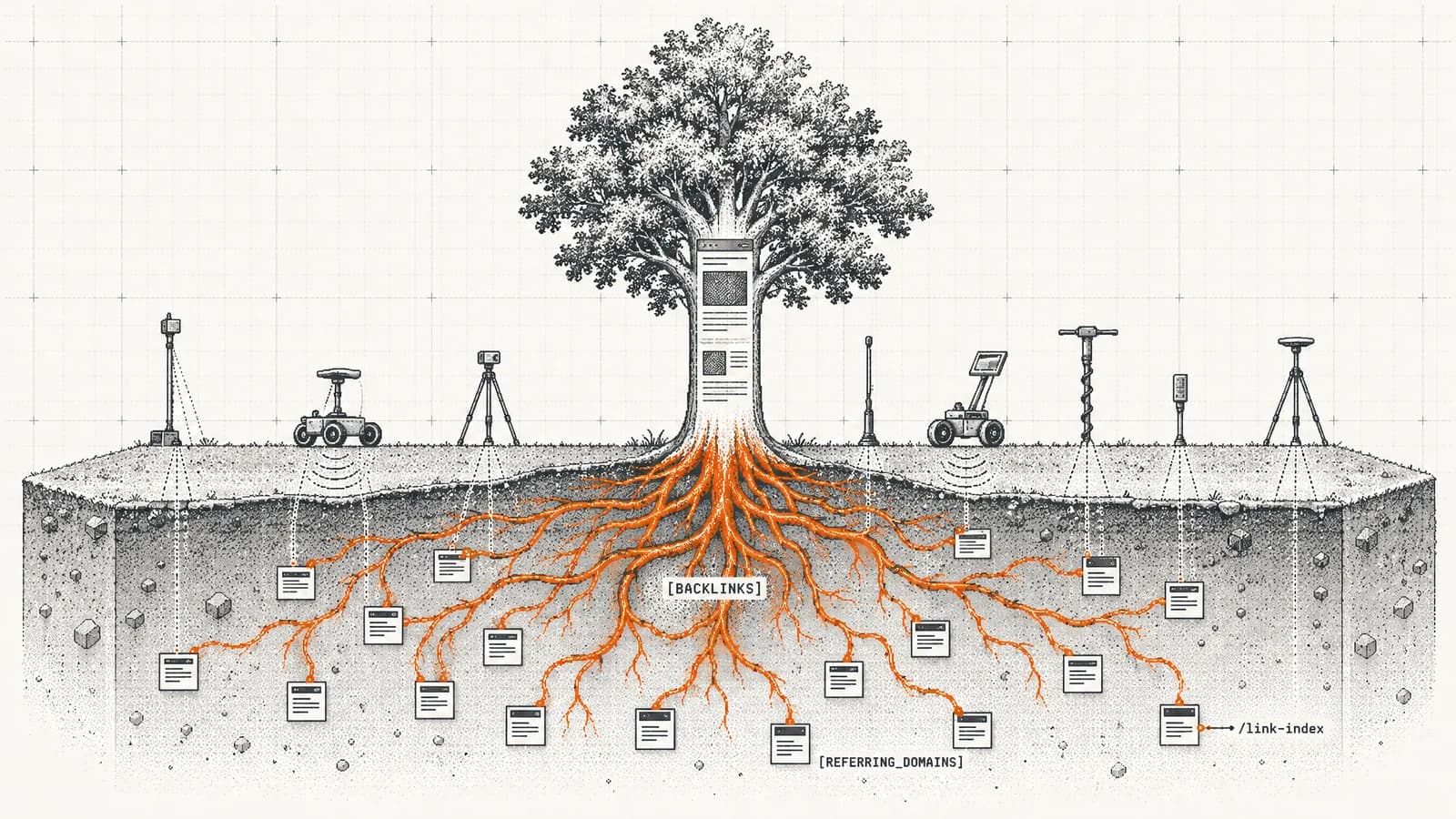
🔗 On average, the top-ranked page on Google has 3.8 times as many backlinks as pages ranking in positions 2 to 10. That figure comes from Backlinko's analysis of 11.8 million Google results, and it has survived every re-run I've seen since. The stronger version of the same finding: the number of referring domains pointing at a URL is still the single strongest measured correlate of SEO success. Distinct sites, not raw link count.
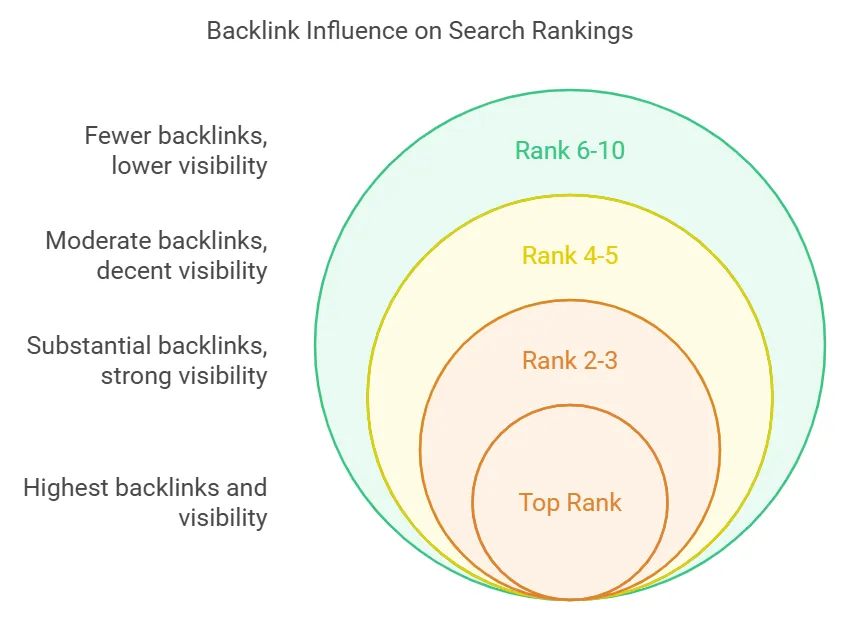
🔗 Sites with more than 30 backlinks pull at least 10,501 organic visits a month on average, per Ahrefs data compiled by Blogging Wizard. Thirty isn't a magic threshold, but it's roughly where a site stops being invisible.
🔗 Top-ranking pages keep accumulating followed links from new sites at 5% to 14.5% per month. Link building isn't a project you finish. Pages that stop earning links stop holding position. For the longer read on how those profiles change over time, see what the backlink data actually revealed in our previous analysis.
🔑Key Takeaway: Count referring domains, not backlinks. A hundred links from one blog network move less than eight links from eight real publishers, and every ranking correlation study since 2019 has said the same thing.
What separates a link that counts from one that doesn't
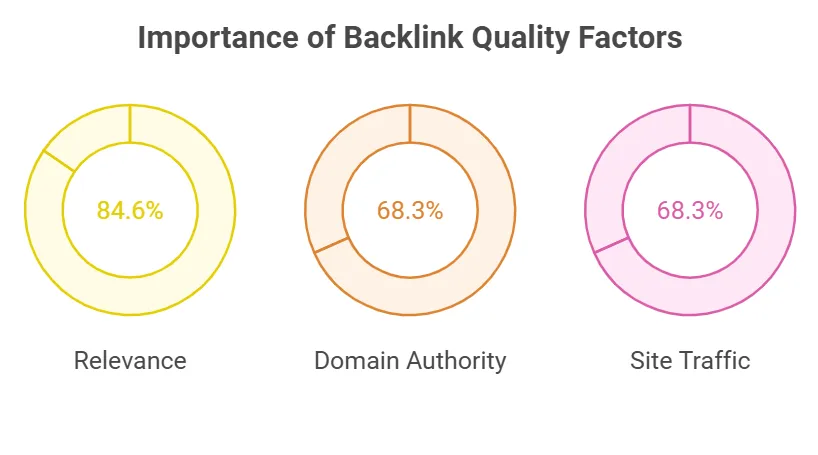
🔗 Relevance is the top quality factor, named by 84.6% of respondents, with domain authority scores and site traffic tied for second at 68.3% each, according to Editorial.Link's survey of SEO professionals.
🔗 94% of link builders say quality matters more than quantity (Authority Hacker's link building survey). A single backlink from a reputable website can outweigh numerous links from low-quality sources. That consensus is old news. What's changed is that the price gap between a relevant link and a filler link has widened enough that the trade-off is now a budget decision, not a philosophical one.
🔗 78.8% of marketers think nofollow links still influence rankings, and 80.9% see value in unlinked brand mentions — from Editorial.Link's survey of 518 SEO professionals, reported by MyCodelessWebsite. Unlinked mentions are the cheapest inventory in link building, because the publisher has already decided you're worth naming.
📌Pro Tip: Before you pitch a cold prospect, sweep the sites that already mention you without linking.
Why link building keeps getting harder
🔗 52.3% of digital marketing experts say link building is the hardest part of SEO (Authority Hacker). Enterprise teams report it lower at 41%, which tracks with having a PR budget.
🔗 94% of published content never earns a single external link (Backlinko, 900M+ pages), and 66.31% of all pages have zero backlinks at all (Ahrefs Content Explorer, roughly 1 billion pages). Those are two different measurements of the same problem: most content is invisible to the link graph entirely. LinkPanda's roundup is one of the few that reports the second figure correctly.
⚠️Common Mistake: You will see "96.55% of all web pages have zero external backlinks" in dozens of 2026 roundups. It's wrong. Ahrefs measured 96.55% of pages getting zero search traffic; the zero-backlinks number from the same body of research is 66.31%. Two findings, one conflated stat, copied for years.
🔗 Cold outreach reply rates fell from 8.5% to 3.43%. The 8.5% baseline came from Backlinko and Pitchbox's study of 12 million outreach emails; QuickSEO's 2026 data set puts the current rate at 3.43%. Follow-ups roughly double whatever your baseline is, which is now the difference between a campaign working and not.
🔗 Long-form content still out-earns short-form. Moz's analysis of 1 million articles found posts past 3,000 words consistently attract more backlinks, and Backlinko's content study puts the gap at 77.2%. Length isn't the mechanism, though. Being worth citing is.
Do backlinks still matter for AI search?
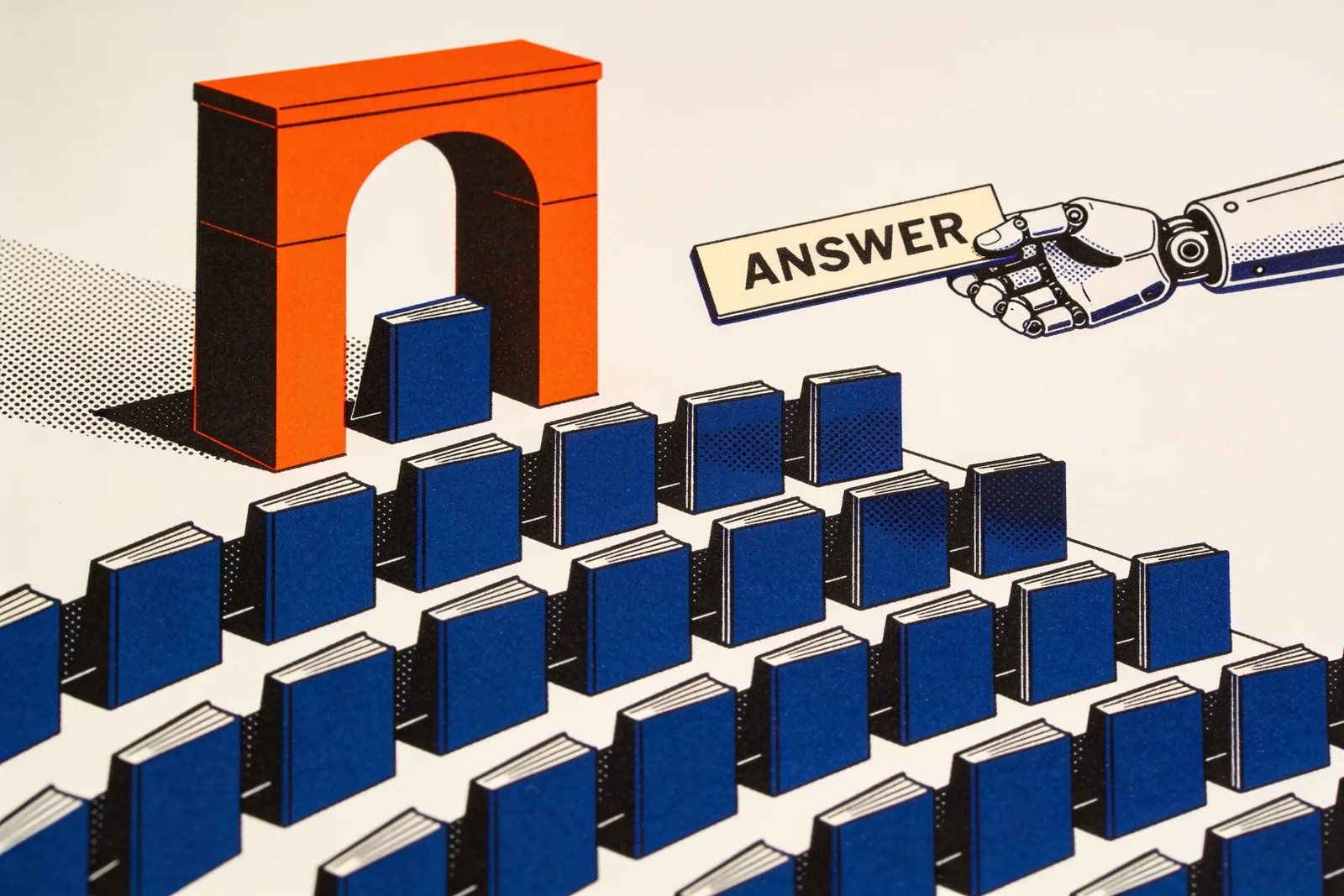
Yes, but not the way most 2026 roundups argue. Links rarely win an AI citation directly. They win the organic ranking that qualifies a page to be cited at all.
Every competing statistics page leads with the same finding. Ahrefs' study of 75,000 brands measured a 0.664 correlation between brand web mentions and AI Overview visibility, against 0.218 for backlinks. Read quickly, that says stop building links and start building mentions. Practitioners have half-absorbed it: Search Engine Journal reported that 73% of surveyed SEOs believe backlinks affect AI-search visibility, while Reporter Outreach's state-of-link-building survey found 74% believe it and only 19% have changed anything about how they build.
Measured separately, our own prompt tracking points at a mechanism the correlation alone doesn't show. When I look at where AI citations actually originate in the SERPs and answer engines we monitor, the pattern is boring in a useful way: the engines mostly cite pages that were already winning.
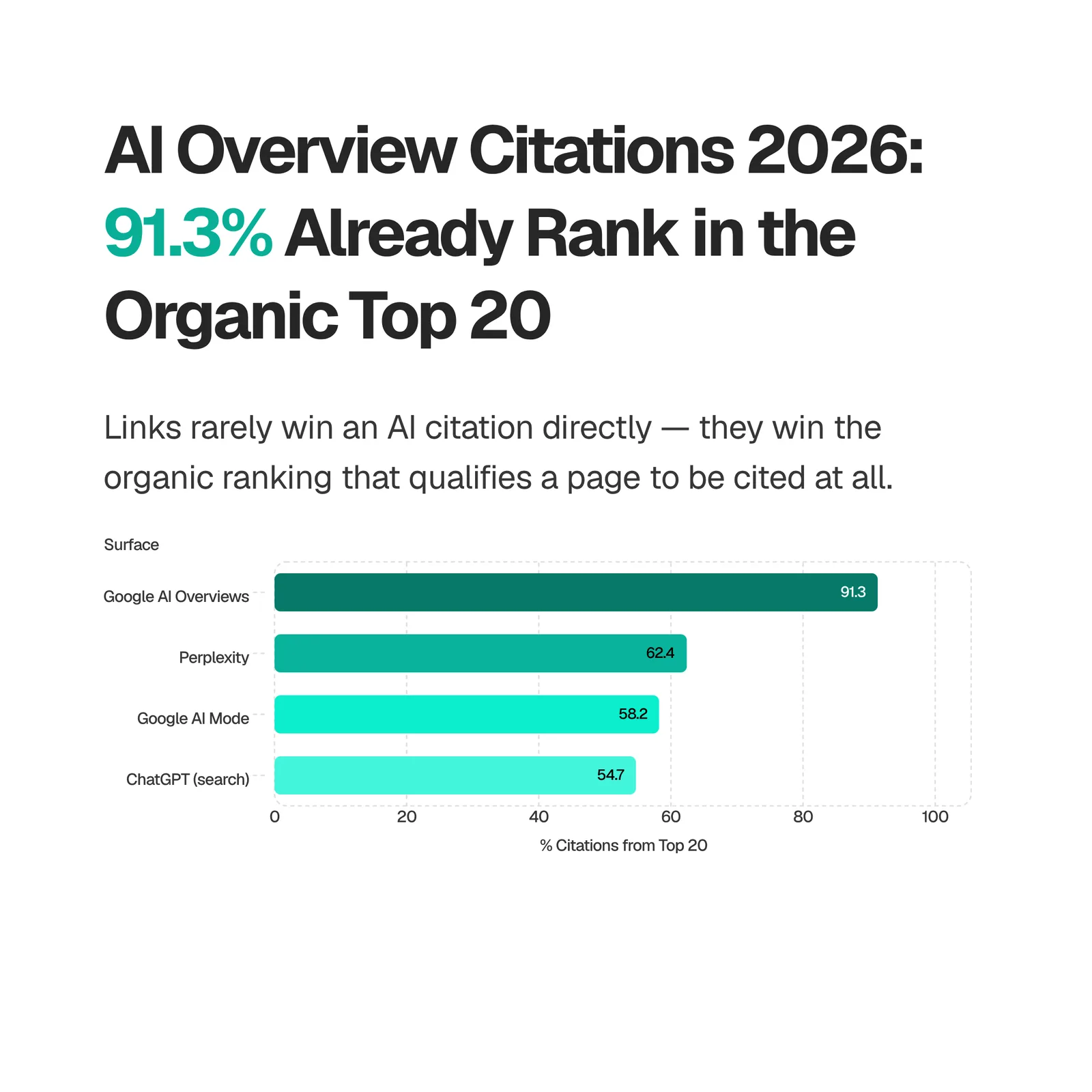
| AI surface (SEOmator panel, H1 2026) | Cited URLs already in organic top 20 | Cited URLs from beyond organic top 100 | Avg. cited URLs per answer |
|---|
| Google AI Overviews | 91.3% | 3.8% | — |
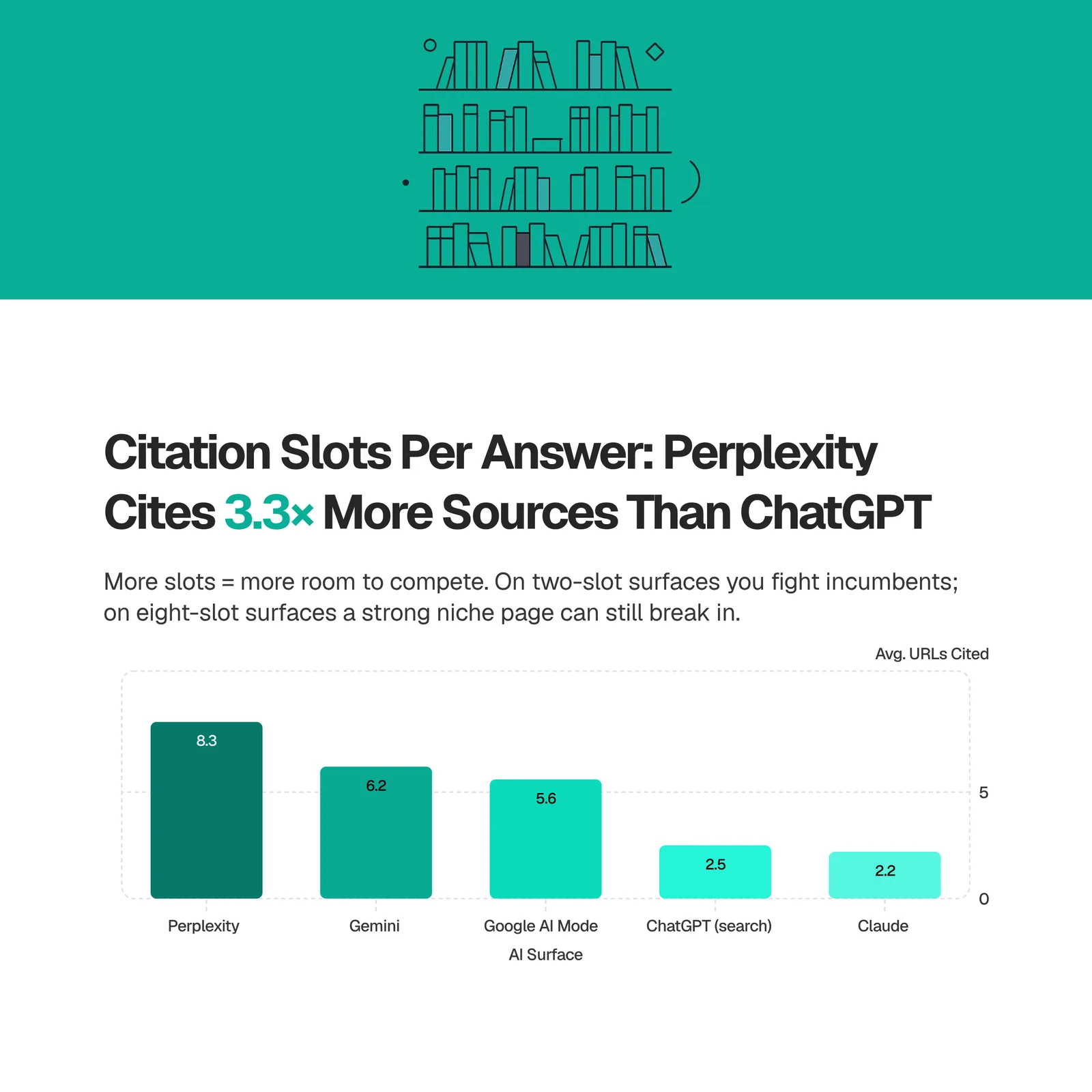
| Perplexity | 62.4% | 14.1% | 8.3 |
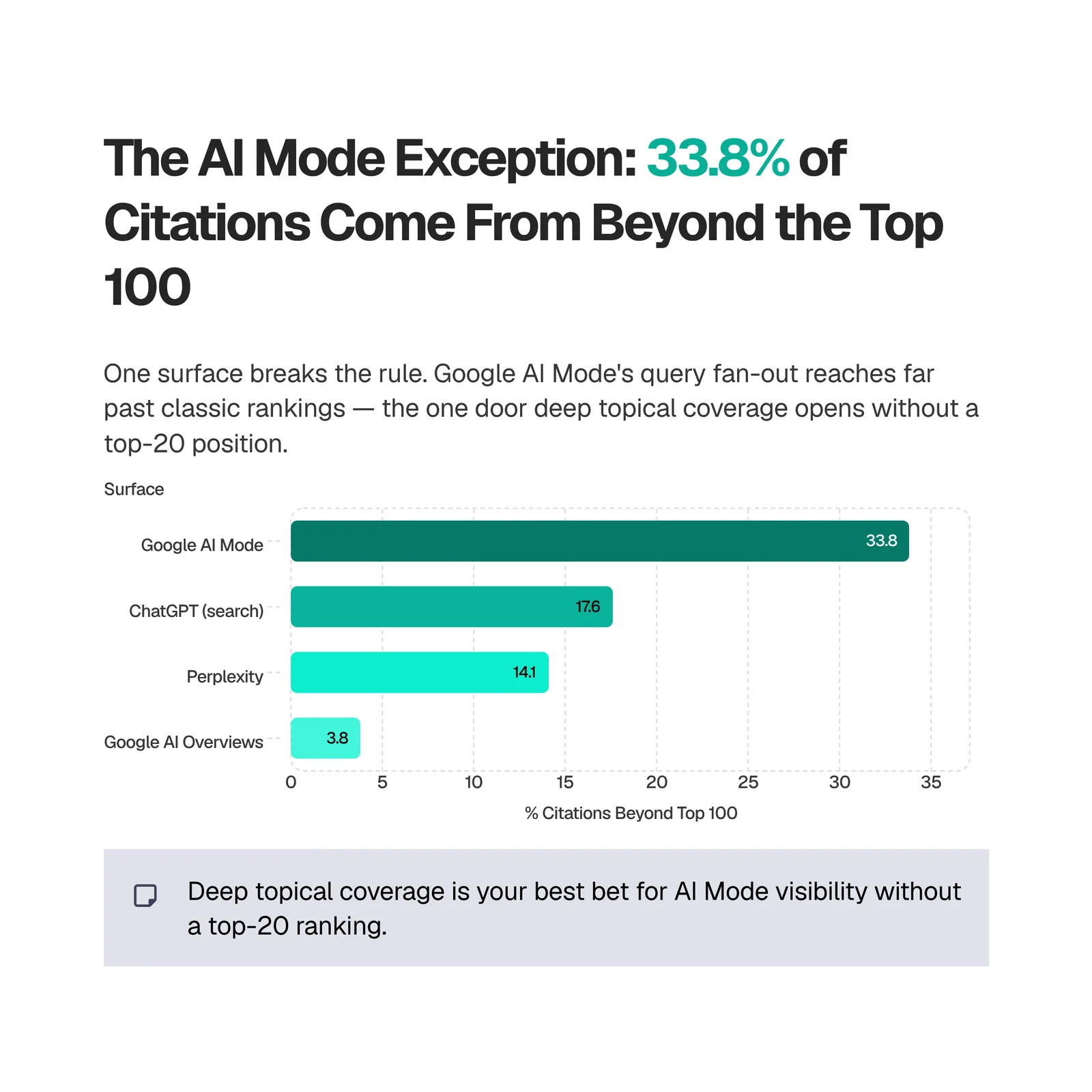
| Google AI Mode | 58.2% | 33.8% | 5.6 |
| ChatGPT (search mode) | 54.7% | 17.6% | 2.5 |
Read down the first column and the ranking requirement loosens as you go. AI Overviews are almost closed to anything outside the top 20. Google AI Mode is the exception in the other direction: 33.8% of its citations came from pages beyond the organic top 100, a second door that deep topical coverage opens without classic rankings.
The second lever is how many citation slots a surface hands out at all. Perplexity averages 8.3 cited URLs per answer against ChatGPT's 2.5, roughly 3.3× more room to compete for. Gemini sits at 6.2 and Claude at 2.2 (July 2026). On the two-slot surfaces you are fighting incumbents; on the eight-slot ones a strong niche page can still break in.
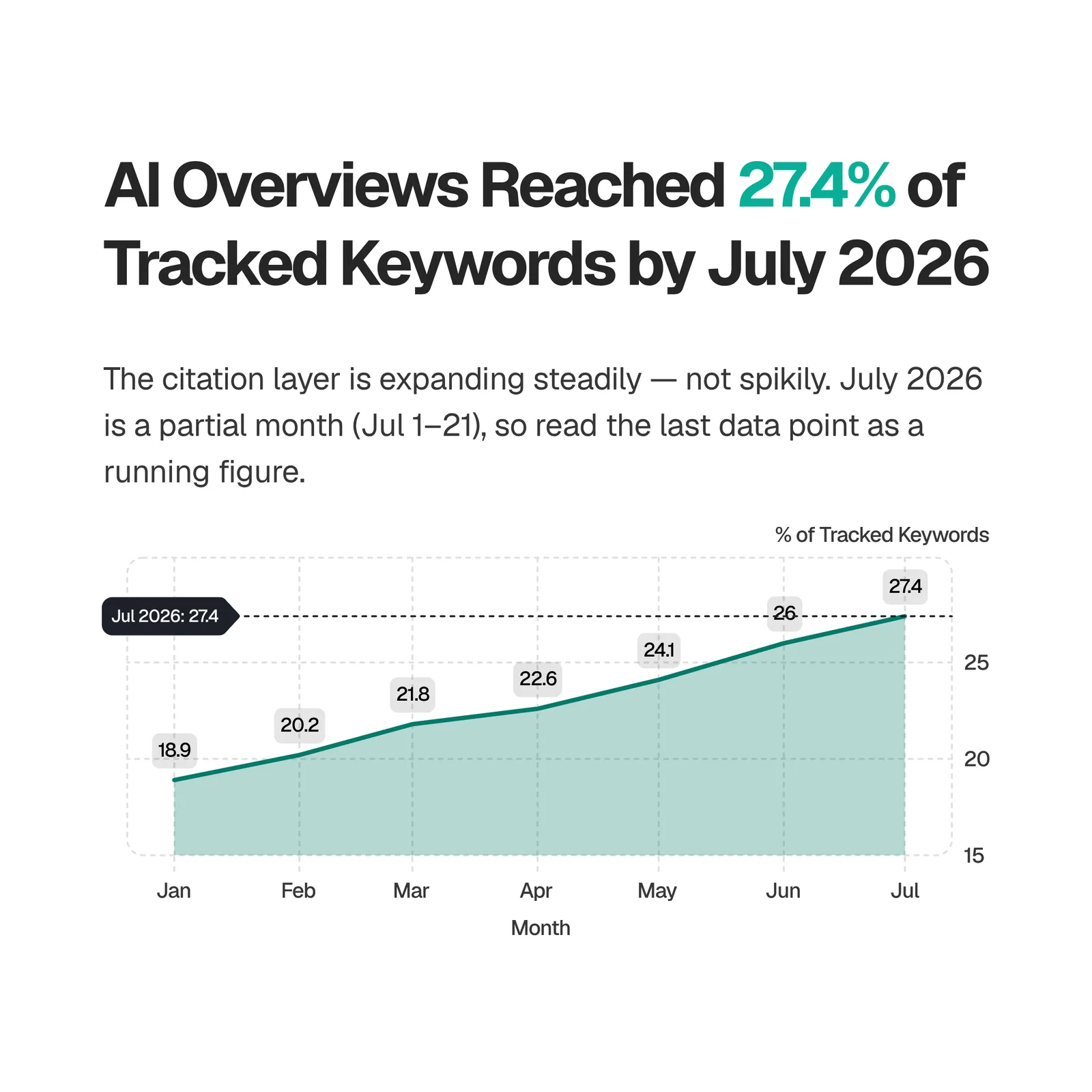
The surface is also expanding. AI Overviews appeared on 27.4% of the keywords we track by July 2026, up from 18.9% in January. July is a partial month in our data (July 1 to 21), so treat it as a running figure rather than a closed one.
🔑Key Takeaway: Links don't buy the AI citation. They buy the top-20 ranking that makes you eligible for it. If you want to see which answer engines already name you, run an
AI visibility audit before you rebuild your outreach plan around brand mentions.
What does link building cost in 2026, and what does it return?
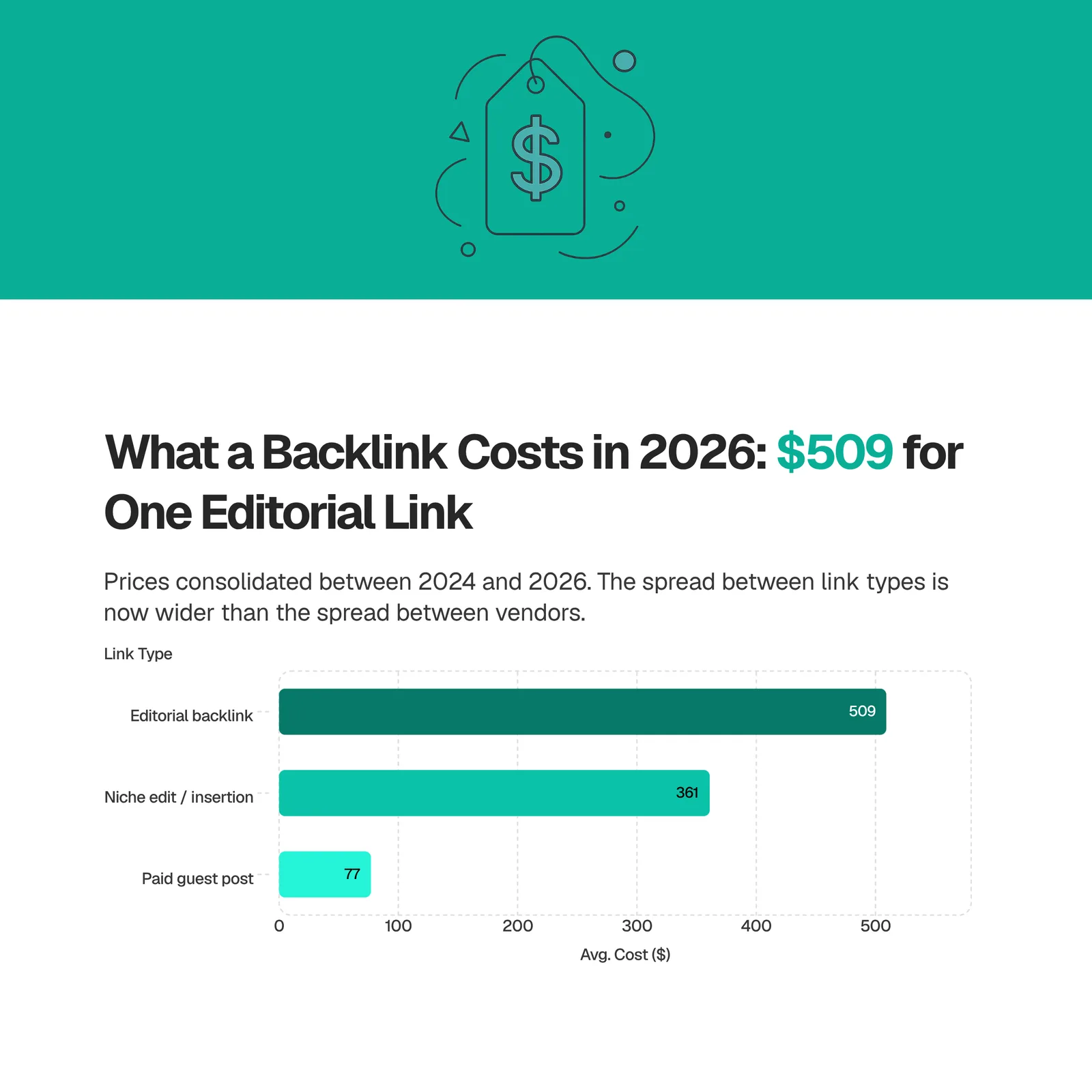
One good editorial backlink now averages $509, well below the $1,000-per-link figure that circulated in 2024. Prices have consolidated, and the spread between link types is now wider than the spread between vendors.
What one link costs
| Link type | Average price (2026) | Sample |
|---|
| High-quality editorial backlink | $509 | Buyer survey, editorial.link |
| Niche edit / link insertion | $361 | 450 responding sites |
| Paid guest post placement | $77 | 180 responding sites |
The distribution matters more than the average. Reporter Outreach's 2026 survey found 76% of SEOs pay $300 or more per link, 47% pay $500 or more, and 16% pay above $1,000. Loopex Digital puts the 2026 average at $509 and expects roughly 81% growth over the next two to three years.
What teams are budgeting
The average minimum monthly budget to compete in a genuinely competitive niche is $8,406. 58% of teams raised their link building budget for 2026 versus 2025, and only 14% cut it. Agencies put about 32.1% of total SEO budget into link acquisition; in-house teams put in 36%. Over 60% of businesses outsource the work entirely (Search Logistics).
📊By the Numbers: The global link building services market was worth $25.97 billion in 2025 and is
projected to reach $57.07 billion by 2030. That's the market pricing in exactly the opposite of "links are dead."
What it returns
SEO campaigns that include link building return a median 748%, about $7.48 per $1 spent, with break-even averaging seven to nine months across industries per First Page Sage's 2026 study. On the practitioner side, 78.1% of SEO professionals report satisfying ROI.
The catch is measurement. 40% to 45% of marketers can't assess link building efficiency at all, which means a large share of that 78.1% is a feeling rather than a number.
Which link building tactics actually work in 2026?
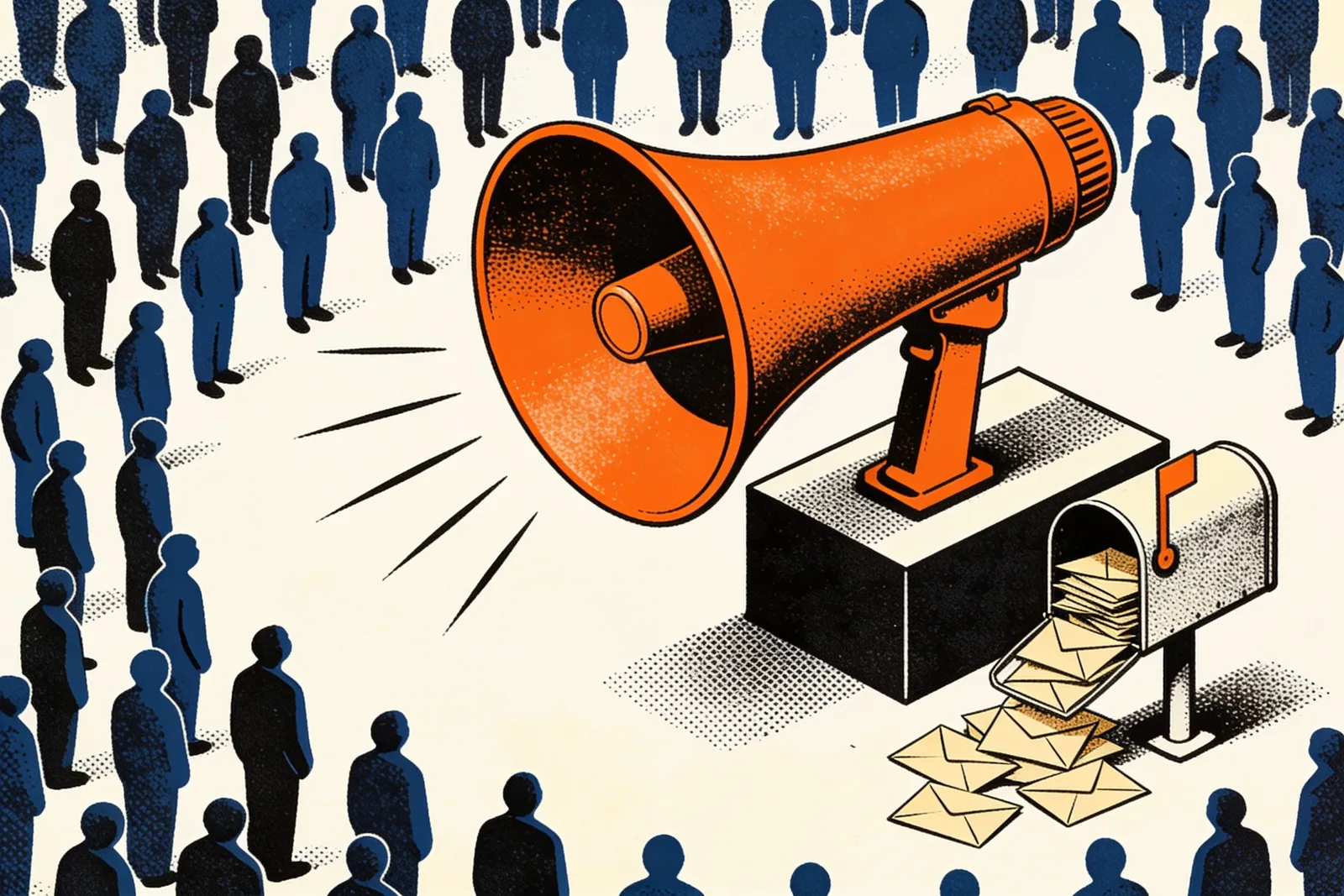
Digital PR overtook guest posting as the highest-performing tactic, and it isn't close. The tactics people use most and the tactics that work best are now two different lists.
| Tactic | Named best-performing | Share who use it |
|---|
| Digital PR | 34% (48.6% in Aira's survey) | — |
| HARO / journalist requests | 21% | — |
| Guest posting | 18% | 68% |
| Niche edits | — | 55% |
| Press releases | — | 52% |
Guest posting is used by 68% of link builders and named best-performing by 18%. That gap is the story of 2026 link building: the default tactic has the worst returns, because everyone runs it and publishers have priced it accordingly.
What makes digital PR work is not the pitch. Over 90% of the most effective campaigns are built on original data or expert commentary, and Google's John Mueller has said publicly that digital PR can matter more for SEO than technical optimization. If you have proprietary numbers, you have link inventory. If you don't, you're buying placements.
📌Pro Tip: Before commissioning a survey, check what you already measure. Product usage data, support-ticket patterns, and internal benchmarks are all publishable, and they cost nothing to acquire.
How much of your link equity are you already wasting?
Every number above is about links you don't have yet. Our audit data keeps surfacing a cheaper problem: the links you already earned, pointing into dead ends.
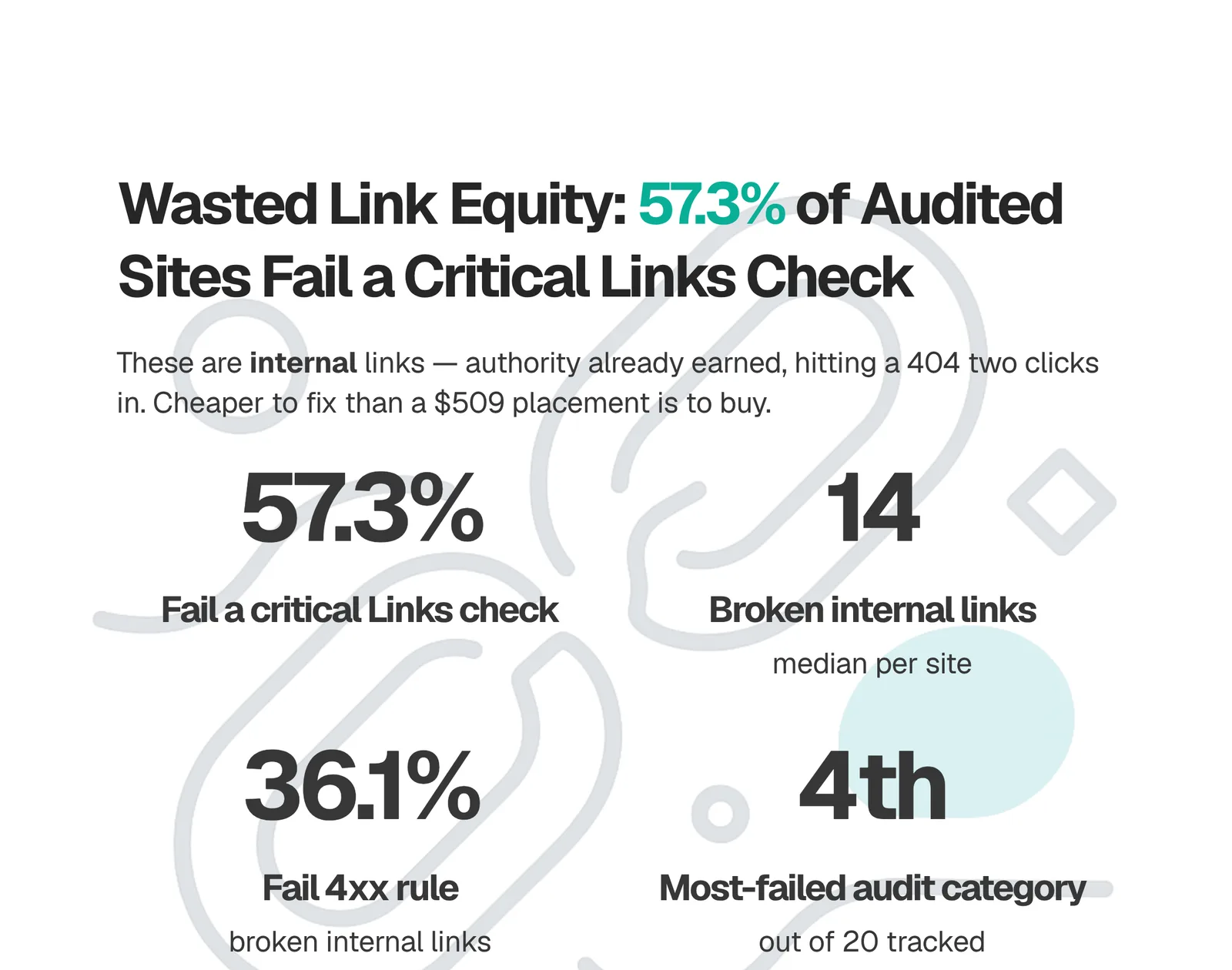
Links is the fourth most-failed category in our audit engine. 57.3% of the sites we audit trip at least one critical Links check, most often broken internal links, with a median of 14 per site (H1 2026). Broken internal links returning 4xx is the sixth most-failed individual rule across the 100K+ audits we ran in the same period, hitting 36.1% of sites.
I want to be precise about what that measures, because it's easy to misread. These are internal links, not backlinks. Nobody's backlink profile is 57% broken. What the audit engine sees is authority arriving at a domain and then hitting a 404 two clicks in, which is a much cheaper thing to fix than a $509 placement is to buy. It's also consistent with 42% of SEO experts splitting their time equally between internal and external link work.
🚩Red Flag: If you're buying links while your top-linked pages route into 4xx errors, you're paying retail for equity you then throw away.
Check for broken internal links before the next outreach invoice goes out.
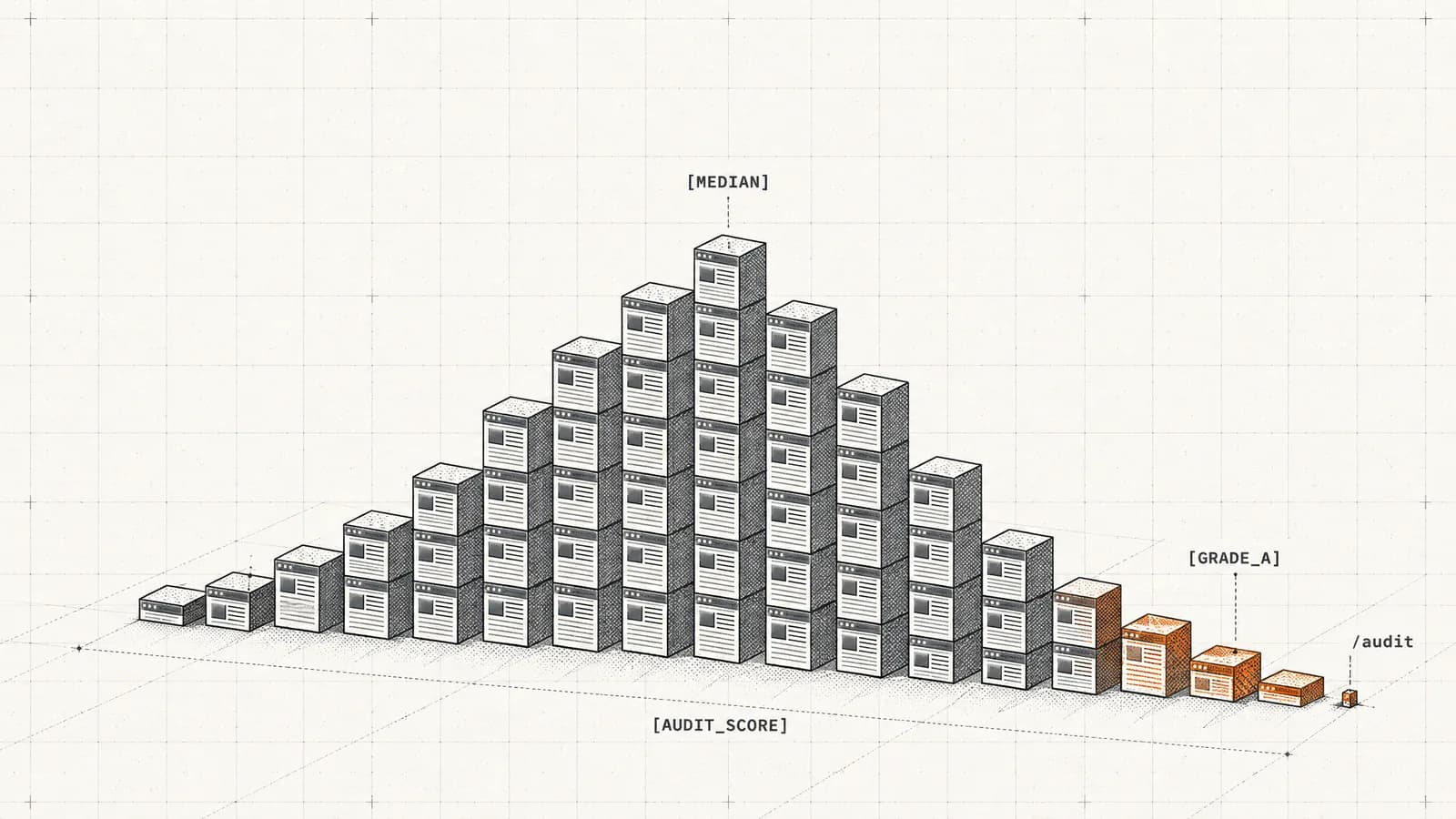
There's a demand signal in the same data. Backlink checking is the second most common thing the DIY SEO web does with our tools: the Free Backlink Checker accounts for 16.9% of all runs across our 37 free tools, behind only the audit tool at 38.2%, from more than 500,000 runs in 2026. The sites people bring to those tools score a median 63 against 71 for sites under continuous monitoring, an eight-point gap between the DIY web and the measured web. The free SEO audit produces the same score for your own baseline.
What is link building?
Link building, at its heart, is the process of acquiring hyperlinks from other websites that point back to your own.
Each of these links serves as a pathway, a signpost that directs the traffic and tells search engines about the content and validity of the web page.
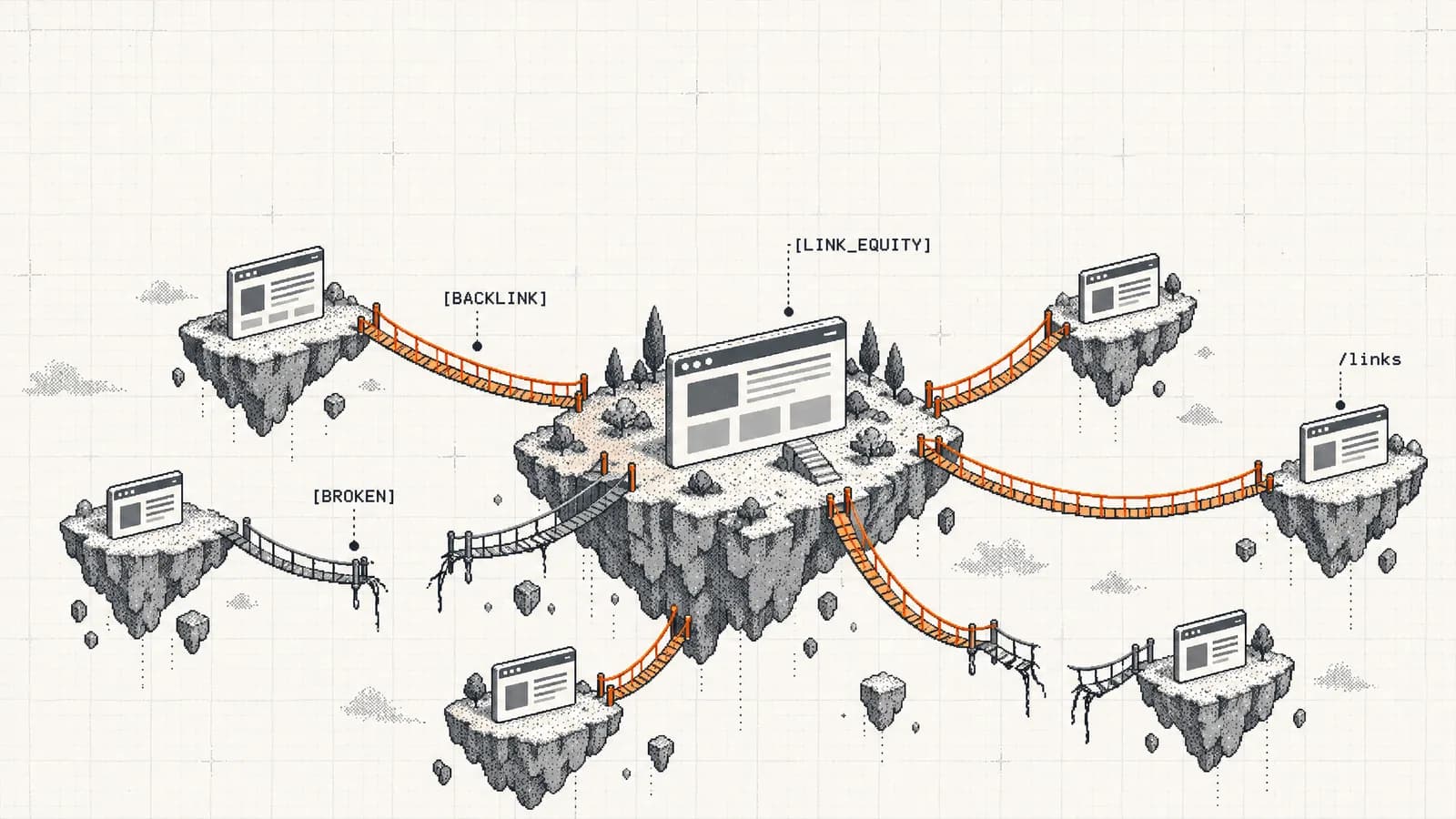
To simplify, imagine the Internet as a sprawling city. Your website is a store within this city, and links are the roads that lead customers to your doorstep. In the grand scheme of SEO, these roads are essential for both user navigation and page rankings.
Think of link building as the process of constructing these roads, establishing connections that lead potential customers straight to your website, and improving your search engine visibility.
Why is link building important for SEO?
Considering the sheer volume of websites vying for attention, it's no wonder search engines like Google pay serious attention to the links.
In a sea of information, they act as endorsements, testifying to the value, trustworthiness and relevance of your content.
Here's why link building holds such high importance in SEO:
🌟 Relevance and Quality: When high-quality websites link to your site, search engines interpret this as a sign of trust and relevancy in your niche. The more relevant and high-quality links you have, the better your chances of ranking higher.
🌟 Traffic Increase: The beauty of backlinks is not limited to SEO. They also contribute to a direct increase in web traffic. When a visitor on another website clicks on a link that directs to your site, you gain additional traffic. It's a win-win scenario!
🌟 Building Relationships: Link building often involves outreach to relevant websites and blogs in your industry. This outreach frequently relates to the promotion of something that you've just created, such as a piece of content or an infographic. A common goal of outreach is getting a link, but this process can also help you build long-term relationships with key influencers in your industry. And these relationships can mean that your business becomes highly regarded and trusted.
🔎 You can easily use SEOmator's Free Backlink Checker Tool to view high-quality backlinks of your website or any specific web page. It helps you find out which websites are linking to your site, and how they are impacting your search engine rankings.
What are the metrics to measure link quality?
Having a large number of backlinks can be beneficial, but quality supersedes quantity every time.
That being said, having a large number of high-quality backlinks definitely won't hurt and could further elevate your website's rank.
The key is to balance between acquiring new high-quality backlinks and maintaining existing ones to boost your site's search performance.
Here are the key metrics that can help assess link quality:
✅ Relevance: Quality begins with relevance. A link from a website in the same or closely related industry carries more weight than a random link. For example, if you're running a digital marketing agency, a backlink from a reputable marketing website would be highly relevant and considered high-quality.
✅ Authority: Link authority refers to the influence a website has over its particular niche. Backlinks from authoritative websites can significantly boost your ranking power.
✅ Traffic: A quality link should bring in relevant traffic. After all, the fundamental purpose of a link is to guide visitors from one web page to another. If a backlink brings you a steady stream of visitors, that's a strong quality signal.
✅ Do-follow status: Backlinks with do-follow status tell search engine bots to follow the link, passing on the link juice and contributing to the authority of the linked page.
✅ Referring domain diversity: Fifty links from one publisher move less than five links from five publishers. Count distinct domains before you count links, and check a domain's authority score before you commit budget to a placement.
✅ Anchor text fit: An anchor that describes the destination reinforces relevance. An anchor stuffed with exact-match commercial keywords, repeated across dozens of placements, is the pattern spam classifiers were built to catch.
💡Quick Insight: These six metrics are also the scoring criteria for a proper audit. Use the
free backlink checker to inspect linking domains and anchor text, then assess the links against these criteria.
Frequently asked questions about link building statistics
How many backlinks do you need to rank on Google?
There is no threshold number. SEO.ai's analysis found 92% of pages on Google's first page carry at least one backlink, which sets a floor rather than a target. Across the SERPs we track, what separates page one from page two is far more often referring-domain count than raw link volume. Benchmark against the pages currently ranking for your term, not against an industry average.
Do backlinks still matter in 2026?
Yes. They correlate less strongly with AI citation than brand mentions do, but they still drive the classic ranking that most AI citations are drawn from. Aira's State of Link Building report found 94% of marketers expect links to influence Google rankings five years out. The shift is in emphasis, not in whether links work.
What percentage of pages have zero backlinks?
66.31% of pages have no backlinks, based on Ahrefs' Content Explorer analysis of roughly one billion pages. If you have seen 96.55% quoted for this, that number measures pages receiving zero search traffic and has been misattributed to backlinks across dozens of roundups.
How long does it take for backlinks to impact rankings?
89.2% of SEOs report ranking improvements within six months of acquiring links (Loopex Digital), and First Page Sage's 2026 study puts financial break-even at seven to nine months. Movement on low-competition terms can show inside four to six weeks. Anything promising results in days is describing a link that won't last.
How much does professional link building cost on average?
$509 for a single high-quality editorial link in 2026. At the program level, uSERP's survey of 800 SEO professionals found 46.5% of teams allocate $5,000 to $10,000 a month. Competitive niches average an $8,406 monthly minimum. Agency retainers typically bundle strategy, outreach, and content into that figure.
What is the ROI of link building campaigns?
Median SEO ROI including link building lands at 748%, roughly $7.48 back per $1 spent. The comparative case is stronger than the absolute one: HubSpot benchmarks SEO at $31 per lead against $181 for PPC, a 5.8× multiplier that compounds every month organic carries the load instead of paid.
Which types of backlinks improve rankings the most?
Editorial, in-content, do-follow links from relevant sites with real traffic. Placement matters too. SE Ranking's distribution data shows roughly 63% of backlinks point at homepages, which leaves the internal pages that actually target commercial keywords under-linked on most sites. Deep links to those pages are usually the cheaper win.
How can I measure the success of a link building campaign?
Track four things monthly: new referring domains, the rankings of the specific URLs you built to, organic sessions on those URLs, and assisted conversions. 40% to 45% of marketers report they can't assess link building efficiency, almost always because they measured link count instead of the pages links were pointed at.
Methodology and sources
First-party figures. SEOmator crawling and analytics data, January to July 2026: 100,000+ websites audited, 50M+ pages crawled, 1M+ keywords and prompts tracked monthly, and 500,000+ free-tool runs. Shares are of the SEOmator panel, roughly 60% B2B SaaS, 20% e-commerce, and 20% mixed. July 2026 is partial (July 1 to 21), so July movements are running figures, not closed months. Audit-category and rule figures describe internal link health, not backlink profiles.
External figures. Drawn from 57 sources gathered in August 2026 and filtered three ways: the original researcher is named even where the accessible copy is a secondary roundup, figures older than 2024 are excluded unless no newer measurement exists, and any number we could trace to a conflation of two separate findings was corrected in place rather than republished. Competitor-owned research is cited by name without a link.
Wrapping up
The 2026 numbers point at one change worth acting on. Link building didn't get less important, it got more expensive and more indirect: $509 a link, a 3.43% reply rate, and a citation layer that mostly rewards pages already ranking. That combination punishes volume strategies and rewards original data worth linking to.
So do the cheap work first. Fix the internal 4xx errors, count referring domains rather than links, and find out which of your pages the answer engines already cite. Then spend. SEOmator's backlink software maps referring domains, anchors, and follow status for any domain you point it at.