


· 23 min read
How to Do an SEO Audit of Any Website (2026 Guide)
Learn how to do an SEO audit of any website in 2026 — technical, on-page, off-page, and AI-search checks — then run a free audit to fix issues fast.
The median site we audit scores 71/100 — a C+. See what 100,000+ SEO audits reveal about the issues failing most sites, plus how often to audit in 2026.

Nick Sawinyh · Founder & CEO (2014–2026), SEOmator
Founded SEOmator in 2014 and led it as CEO until September 2026

Quick Answer: Across the 100,000+ websites we audited in the first half of 2026, the median site scored just 71 out of 100 — a C+, and only 6.8% earned an A. Performance fails on 71.2% of sites; AI/GEO readiness, new since 2024, already fails on 54.6%. Regular SEO audits catch these before they cost you rankings.
I'm Nick, and I've spent 12 years in SEO. I built SEOmator's audit engine because I kept watching good sites lose rankings to the same fixable problems — a slow mobile page, a duplicate title, a broken link nobody noticed. This is the statistical breakdown I wish I'd had: what our engine actually finds across the sites we audit, which issues are most common, and how often you should run a check in 2026.
Key findings — SEOmator audit engine, 100K+ sites / 50M+ pages, H1 2026:
- The median health score is 71/100 (C+). Only 6.8% of sites earn an A; 10.3% fail outright at 0–49.
- Performance is the most-failed category — 71.2% of sites have a critical failure, and 58.4% fail mobile LCP specifically.
- A missing or duplicate meta description is the second most-failed rule, tripping 52.4% of sites.
- Broken internal links fail on 36.1% of sites — a median of 14 dead links per site.
- AI/GEO readiness already fails on 54.6% of sites, but it's the fastest-improving category (58.1% → 52.8% since January).
- Free-tool audits score a median 63 (D+) — a full 8 points below the 71 of sites under continuous monitoring.

Regular SEO audits play an indispensable role in this process. They're the key to a site's full potential — keeping performance sharp and staying ahead in a fast-moving search arena. In my experience, the sites that treat auditing as a habit are the ones that compound gains, and this post walks through the impact audits have on performance, backed by real-world examples and our own data.
To fully appreciate the value of SEO audits, it's essential to understand what they entail and how they directly influence website performance. Let's explore the fundamental aspects of SEO audits and their strategic significance in digital marketing.
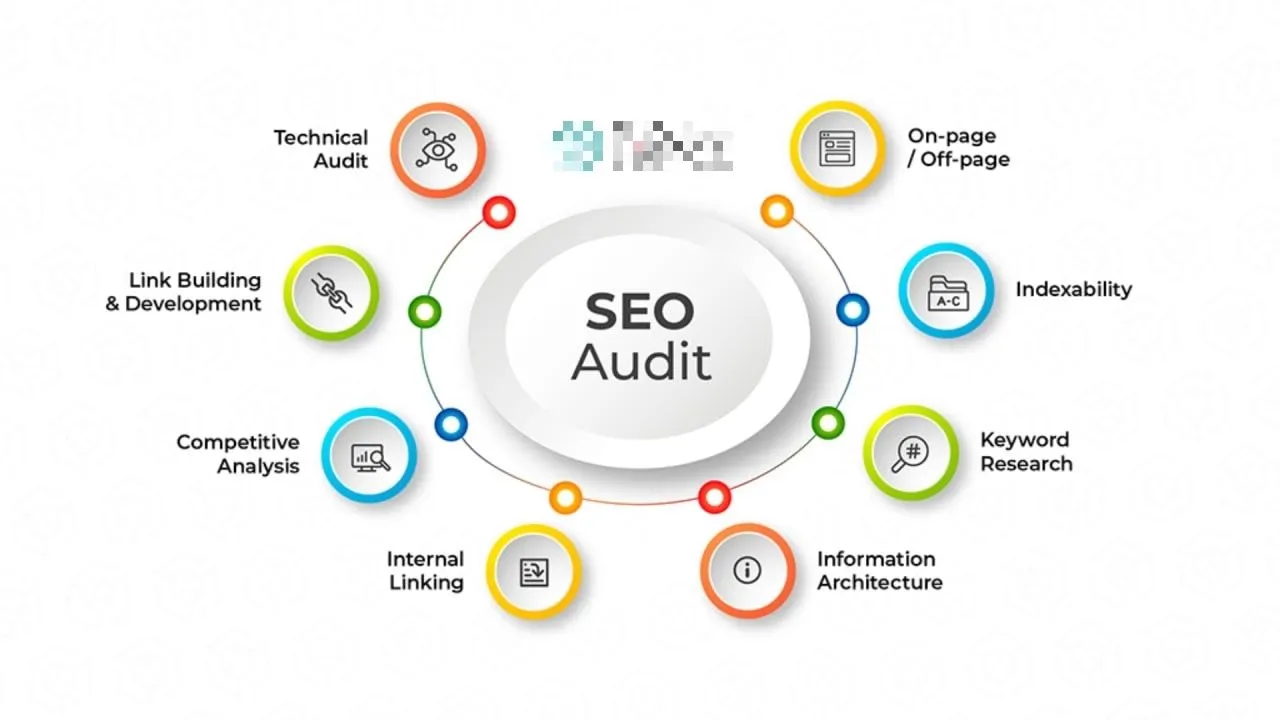
An SEO audit is a full evaluation of a website's search engine optimization factors, covering both technical and content-related elements. The goal is to identify strengths, weaknesses, and opportunities for improvement to enhance the site's visibility in search engine results.
Common components of a full SEO audit include:
In my experience, a thorough audit serves as a roadmap for optimization, pinpointing exactly where to focus efforts for maximum impact. And when you run enough of them, patterns emerge.
Here's the part most "why audits matter" articles can't tell you, because they don't have the data: what a representative site actually scores.
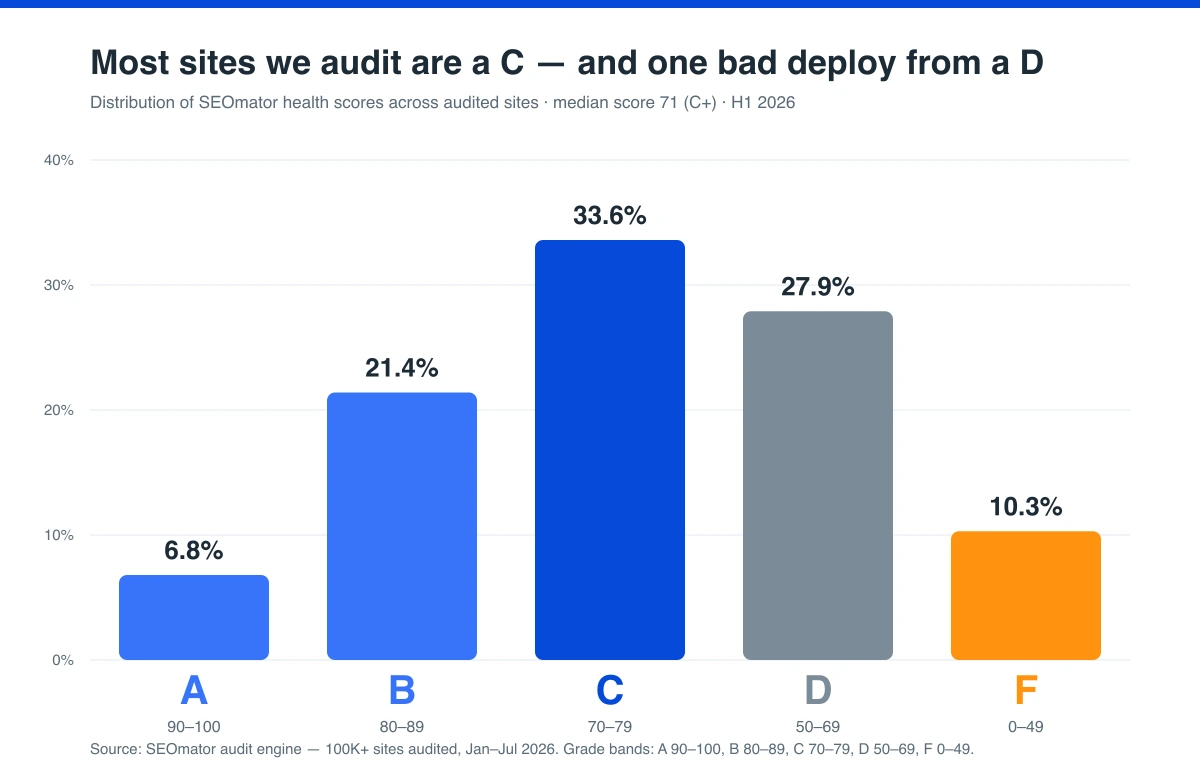
Across our panel, the median site lands at a 71 — a C+. Two out of three sites grade a C or lower, and one in ten is already failing at 0–49. This isn't the consumer internet at large; it's the business web — our customer base runs roughly 60% B2B SaaS, 20% e-commerce, and 20% mixed. That's the point: even sites with budgets and teams sit at a C.
The encouraging half of the story: scores are moving up. The median climbed from 69 in January to 72 by July 2026, and the sites that improve fastest are, without exception, the ones being watched. That's the whole argument for regular audits in one number.
Regular SEO audits are directly linked to improved website functionality and performance metrics. By systematically identifying and addressing issues, audits facilitate a healthier, stronger online presence.
How regular audits improve site functionality:
Statistics Alert: Websites optimized through regular audits experience a 32% higher conversion rate due to improved user experience. Additionally, 53% of mobile users abandon sites that take longer than 3 seconds to load.
Data backing the correlation between audits and performance metrics:
What I keep seeing is that neglecting regular audits leads to missed opportunities and declining performance.
From a digital marketing standpoint, SEO audits are not just technical check-ups but strategic tools that drive marketing efforts and business growth.
The strategic role of SEO audits in digital marketing:
Expert Insight: In my experience, using audits to guide targeted marketing lets businesses focus resources on high-impact areas, and the results follow.
Using audits for targeted marketing efforts:
By incorporating SEO audits into the digital marketing framework, companies can achieve a cohesive and efficient strategy that drives success.
Examining real-world examples illustrates the tangible impact of regular SEO audits on businesses across various industries. These are publicly reported engagements — useful as illustrations of what's possible, not guarantees of your own result.
Company: Edelweiss Bakery (Florida-based artisan bakery)
Situation Overview and Audit Process
Edelweiss Bakery faced low online visibility despite having a loyal local customer base. They wanted to expand their reach and attract new customers through their website.
Key Findings:
Results Achieved and Lessons Learned
By addressing the issues uncovered in the audit:
Key Lesson: Regular audits can transform a website's performance, even for small businesses with limited online presence.
Company: Healthspan (Leading health supplement provider)
Initial Challenges and Audit Implementation
Healthspan experienced a significant drop in search visibility due to a Google Penguin penalty related to poor-quality backlinks and over-optimization.
Key Findings:
Outcome and Performance Improvements
Post-audit actions led to substantial recovery and growth:
Key Lesson: Addressing issues identified in an SEO audit can recover lost traffic and revenue, particularly after algorithm penalties.
Analyzing these case studies reveals common elements contributing to success:
Practical Insights for Application:
To maximize the benefits of SEO audits, it's essential to approach them strategically. Implementing best practices ensures audits are thorough, actionable, and sustainable.
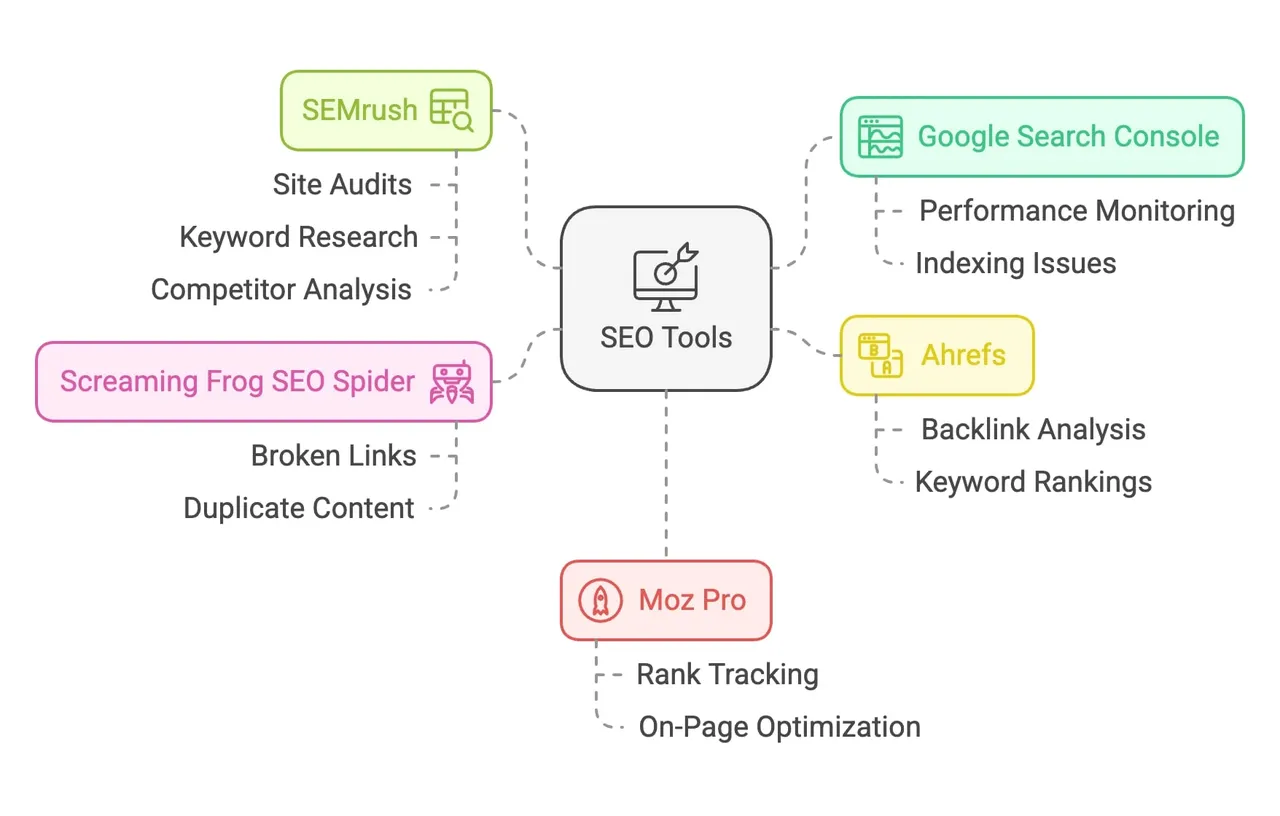
Using the right tools improves the efficiency and effectiveness of your SEO audits. If you're an agency weighing options, see our roundup of the best SEO audit tools for agencies.
Recommended Tools and Their Uses:
There's a real, measurable gap between a quick free check and a monitored, full-report audit — because both run through our engine. The 500,000+ people who ran one of our free tools this year score a median 63 (D+), a full 8 points below the 71 (C+) median for sites under continuous monitoring. Same checks, worse results: the DIY web is in visibly rougher shape than the sites someone is actively watching.
Expert Tips for Maximizing Tool Benefits:
Pro Tip: One approach I rely on is scheduling automated reports from these tools for regular monitoring.
Consistency is key to sustaining SEO performance improvements.
How Often to Conduct Audits:
Creating a Sustainable Audit Strategy:
Warning: Inconsistent audits can result in missed issues that negatively impact performance.
Understanding the statistics behind SEO performance provides valuable insights into how audits impact key metrics. Let's look at the areas where SEO audits make the biggest difference.
Regular SEO audits directly influence website traffic and how users interact with your site.
Analyzing Traffic Changes Post-Audit:
User Behavior Insights from Audit Data:
Statistics Alert: Websites optimized through audits experience a 32% higher conversion rate due to improved user experience.
SEO audits are instrumental in improving your website's position in search engine results pages (SERPs).
Examples of Audit-Driven Ranking Enhancements:
Key Statistics in Ranking Improvements:
Expert Insight: In 12 years of doing this, the pattern I trust most is that consistent audits are what keep a site climbing SERPs and holding high rankings.
Beyond attracting visitors, SEO audits help convert them into customers or leads.
Audit Impacts on Conversion Rates:
Data-Driven Strategies for Conversion Improvement:
SEO audits offer numerous benefits that extend beyond immediate performance metrics. They are essential for long-term success and competitiveness.
One of the primary benefits of SEO audits is uncovering and resolving issues that might otherwise go unnoticed. If you want to know what your audit will probably flag before you run it, this is the most useful data on the page — the categories our engine fails most often, ranked by the share of sites with at least one critical failure.
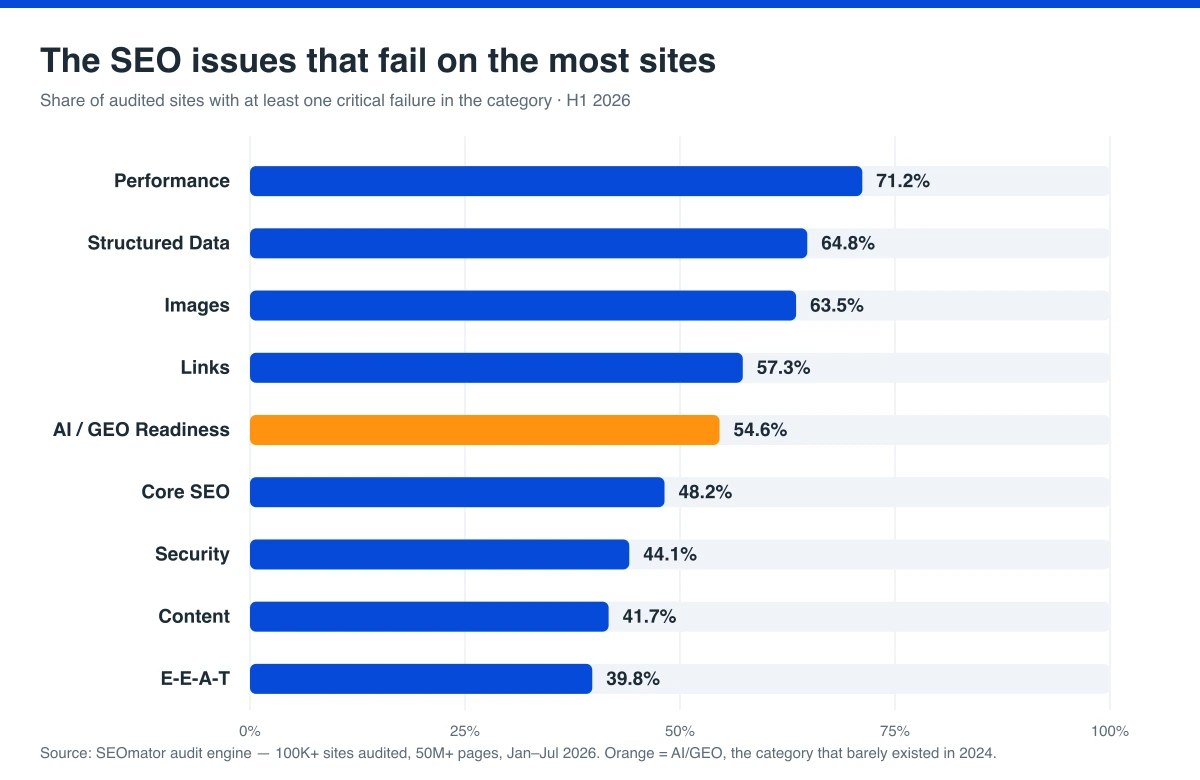
| Category | % of sites failing | Most common failure inside it |
|---|---|---|
| Performance | 71.2% | Mobile LCP above 2.5s (58.4% of all sites) |
| Structured Data | 64.8% | Missing or invalid Organization / Product schema |
| Images | 63.5% | Missing alt text (median: 19% of a site's images) |
| Links | 57.3% | Broken internal links (median: 14 per site) |
| AI / GEO Readiness | 54.6% | No llms.txt, AI bots blocked, weak semantic HTML |
| Core SEO | 48.2% | Duplicate or missing title tags |
| Security | 44.1% | Missing HSTS (38.6% of all sites) |
| Content | 41.7% | Thin pages (<300 words) left indexable |
| E-E-A-T | 39.8% | No author bylines on content pages |
Source: SEOmator audit engine, 100K+ sites, Jan–Jul 2026.
None of the top of that list is exotic. Performance, structured data, images, and links fail on a majority of sites — the unglamorous hygiene that's easy to defer and easy to forget. The one genuinely new line is AI/GEO readiness at 54.6%, a category that barely existed two years ago; it flags a missing llms.txt file, AI crawlers blocked by default, or markup too thin for an answer engine to parse.
Common Problems Identified Through Audits:
Real-World Examples of Problem-Solving and Outcomes:
Case Study: By fixing technical SEO issues identified in an audit, a company saw a 14.6% annual revenue growth.
SEO audits contribute significantly to enhancing the user experience, which is essential for retaining visitors and encouraging conversions.
The Role of Audits in UX Improvements:
Case Studies Showing UX and SEO Success Stories:
Regular SEO audits help businesses stay competitive by continually improving their online presence.
Competitive Analysis Through Audits:
Practical Examples of Competitive Advantages Gained:
Goal: Use SEO audits not just to keep up with competitors but to surpass them by identifying unique opportunities.
Here are the essential insights from this breakdown of SEO audit data:
Regular SEO audits aren't just a recommended practice — they're how a site stays out of the C+ median and moves toward the A that only 6.8% of sites reach. They matter for site functionality, search rankings, user experience, and conversions, and after 12 years and an engine that's now seen 100,000+ sites, the pattern I trust most is boring: find the issues, fix them in order of impact, re-check, repeat.
By systematically identifying and addressing issues, you position your website to capitalize on opportunities that drive growth and success. The statistics and case studies we've explored demonstrate the tangible benefits of audits, from a median score climbing 69 → 72 this year to real recovery after Google penalties.
Implementing regular SEO audits empowers you to:
I've learned this firsthand and I'm eager to pass it on to you—regular SEO audits are a cornerstone of sustainable digital success.
I encourage you to:
The fastest place to start: run a free SEO audit — it's the same 251-rule engine the data in this article came from, and it'll score your site in under a minute.
To round out the picture, here are the questions I hear most often about SEO audits — the ones that come up again and again from teams staring at their first audit report.
1. What is an SEO audit and why is it important for my website?
An SEO audit is a full evaluation of your website's alignment with search engine optimization best practices. It examines technical infrastructure, on-page elements, and off-page essentials to identify issues hindering your site's performance in search results.
In my experience, regular SEO audits matter because they:
By addressing the findings of an SEO audit, you can significantly improve your site's visibility, traffic, and conversions.
2. How often should I conduct an SEO audit on my website?
Frequency of SEO audits depends on several factors, including the size of your website, the frequency of content updates, and the competitiveness of your industry. In my experience, it's advisable to conduct:
Regular audits ensure your website remains optimized amid ever-changing search engine algorithms.
3. Can I perform an SEO audit myself, or should I hire a professional?
While there are tools that can help you run a basic SEO audit, I've found that a professional can provide deeper insights and more thorough solutions.
In my experience, professional audits often yield better results because of the depth of analysis required.
4. What are the most common issues found during an SEO audit?
Common issues uncovered during SEO audits include:
The same defects dominate at scale: the takeaways from auditing over a million websites put redirect chains, broken HTTP-to-HTTPS handling, and hreflang errors at the top of the list. Addressing these issues can lead to significant improvements in search rankings and user experience.
5. How do SEO audits improve user experience on my website?
SEO audits enhance user experience by:
I've experienced that websites offering superior user experience tend to rank higher because search engines prioritize sites that satisfy user intent.
6. Will conducting an SEO audit guarantee higher search rankings?
While an SEO audit is a critical step toward improving your search rankings, it's not a guarantee on its own. Success depends on:
What I've learned is that regular audits combined with strategic implementation significantly enhance the likelihood of higher rankings.
7. How long does it take to see results after implementing SEO audit recommendations?
The timeframe for seeing results can vary:
In my experience, patience and consistency are key. Monitoring progress through analytics tools helps track improvements over time.
8. What tools are essential for conducting an effective SEO audit?
Essential tools include:
One approach I rely on is combining these tools for a complete view of the website's SEO health — or running our free SEO audit tool for all 251 checks in a single pass.
9. How important are backlinks in an SEO audit?
Backlinks remain a significant ranking factor. An SEO audit evaluates:
By analyzing your backlink profile, you can develop strategies to earn high-quality links and disavow harmful ones.
10. What's the difference between a technical SEO audit and a content audit?
Technical SEO Audit:
Content Audit:
I recommend running both audits together — technical and content — for a complete optimization strategy.
11. How do SEO audits help with local SEO efforts?
SEO audits enhance local SEO by:
These steps improve visibility in local search results, which is essential for businesses serving specific geographic areas.
12. Can SEO audits help recover from a Google penalty?
Yes, SEO audits are instrumental in:
For example, Healthspan successfully recovered from a Google Penguin penalty by conducting an audit and implementing corrective actions, leading to a 144% increase in organic revenue.
13. How does mobile optimization factor into an SEO audit?
Given that 63.31% of all web traffic now comes from mobile devices, mobile optimization is critical.
An SEO audit examines:
I've experienced that sites optimized for mobile not only rank better but also provide a superior user experience, leading to higher engagement and conversions.
14. What role do keywords play in SEO audits?
Keywords are central to connecting user queries with your content.
An SEO audit assesses:
By refining your keyword strategy, you can improve visibility for queries that matter most to your business.
15. Is it necessary to audit my competitors as part of my SEO audit?
Yes, competitor analysis is a valuable component.
Benefits include:
In my experience, analyzing competitors provides actionable insights that can inform your SEO strategy and help you gain a competitive edge.
The first-party figures in this article come from SEOmator's own audit engine — 251 rules across 20 categories, including audits run through the open-source @seomator/seo-audit CLI. They're aggregates across the sites we audited from January to July 2026: 100,000+ websites and more than 50 million pages crawled.
A few honest caveats. These shares describe our panel — roughly 60% B2B SaaS, 20% e-commerce, and 20% mixed businesses — so they reflect the business web rather than the consumer internet at large. July is partial (through July 21), so where a trend matters we've used the fuller range. Grade bands are A 90–100, B 80–89, C 70–79, D 50–69, F 0–49. The industry case-study figures (traffic and revenue lifts) are publicly reported engagements, cited as illustrations, not our own measured results.
Source: SEOmator crawling and analytics data, Jan–Jul 2026 (100K+ websites audited, 50M+ pages crawled with our 251-rule, 20-category audit engine).
Who wrote it, what changed and how to tell us about a mistake.

Nick Sawinyh
Founder & CEO (2014–2026), SEOmator
Founded SEOmator in 2014 and led it as CEO until September 2026
Nick Sawinyh founded SEOmator in 2014 and led it as CEO until September 2026. He built it to make technical SEO auditing accessible to teams without a dedicated SEO engineer, and the articles below are the ones he wrote here about search strategy, algorithm shifts, and what actually moves rankings — usually with the audit data to back it up.
Published · Updated
Spot a mistake or a number that has gone stale? Tell us. We correct it and log the change in the History above. Report an error →
SEOmator Rank Tracker
Technical fixes are invisible until positions move. Track the keywords a fix was meant to affect and watch whether it actually landed.
SEOmator Rank Tracker· 23 min read
Learn how to do an SEO audit of any website in 2026 — technical, on-page, off-page, and AI-search checks — then run a free audit to fix issues fast.

· 8 min read
An SEO audit for charities covers 16 areas from site indexing to local SEO. With organic search driving 44% of nonprofit website traffic and only 0.16% of visitors donating, a thorough audit helps maximize every visitor's potential to support your cause.

· 12 min read
Median loaded latency is 257ms — the INP budget is 200ms. Before your JavaScript runs a single line, the network has already spent the whole allowance. The speed numbers that actually decide your Core Web Vitals.


