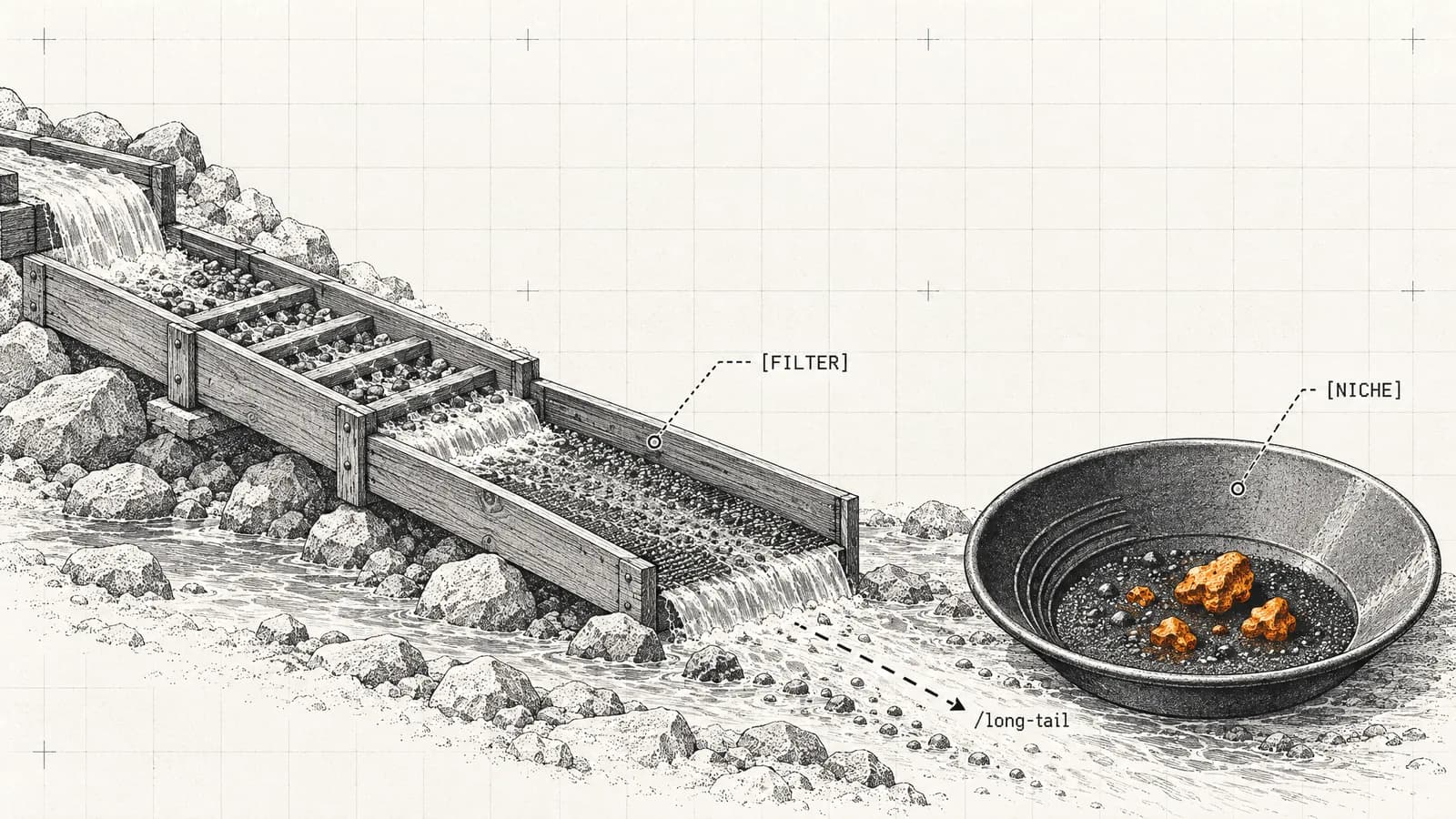
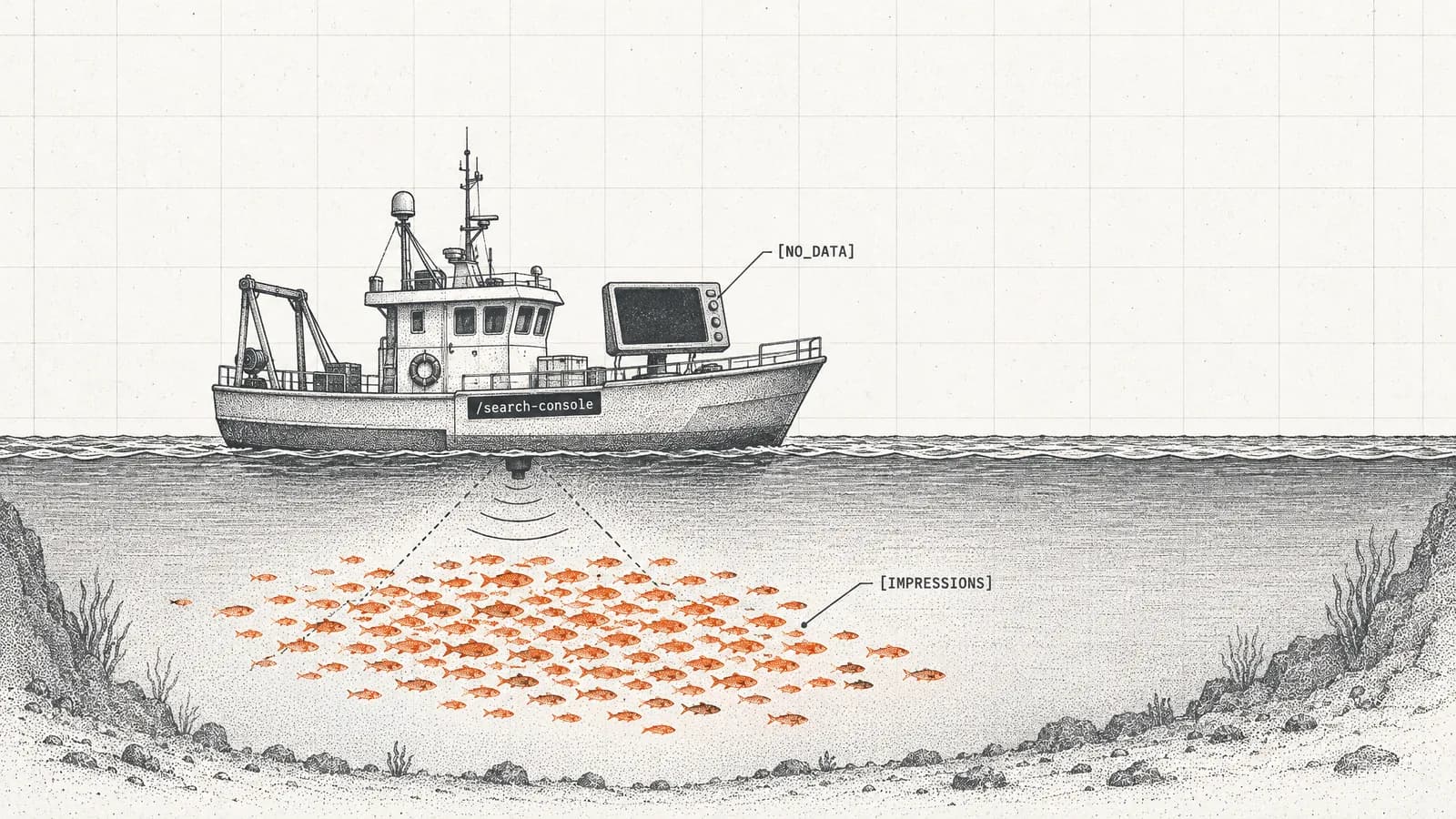
SEO keywords are grouped three ways: by length (short-, mid-, long-tail, like "running shoes" vs "womens trail running shoes"), by search intent (informational, navigational, commercial, transactional), and by role on the page (primary, secondary, semantic). In 2026 a fourth grouping matters — whether a keyword triggers an AI answer. Across the keywords we track, 27.4% did in July 2026.
That last grouping is the one most keyword guides still miss, and it's why this article was updated. The classic taxonomy sorts keywords by shape — how many words, how specific. That tells you how hard a keyword is to rank for. It no longer tells you where you'll compete, because the same query can now return ten blue links, an AI Overview, or a chat answer that cites two sources and sends nobody anywhere.
Looking for examples first? Jump to 56 SEO keyword examples by industry, each with its real US search volume and difficulty.
Every Type of Keyword at a Glance
| Grouping | Type | Example | What it's for |
|---|
| Length | Short-tail (head) | "tennis racket" | Reach; high volume, high competition |
| Mid-tail | "graphite tennis racket" | The practical middle ground |
| Long-tail | "head graphene 360 speed pro tennis racket" | Conversion; low volume, high intent |
| Intent | Informational | "how to restring a tennis racket" | Answers, guides, top-of-funnel |
| Navigational | "SEOmator login" | Getting to a known destination |
| Commercial | "best tennis rackets under $200" | Comparison, reviews, consideration |
| Transactional | "buy head speed pro online" | Product and checkout pages |
| Role on page | Primary | The one term the page targets | Title, H1, opening |
| Secondary | Supporting variants | Subheads, body |
| Semantic | Related terms and entities | Topical depth |
| Brand | Branded | "SEOmator pricing" | Retention, defence |
| Non-branded | "seo audit tool" | Acquisition |
| Place | Local / geo | "seo agency near me" | Map pack, local landing pages |
| Time | Seasonal / trending | "black friday tennis deals" | Content calendar |
| Zero-volume | "how to fix crawl budget on shopify" | Niche, genuinely low competition |
| Surface (2026) | AI-Overview triggering | "best crm for startups" | Citation, not just ranking |
| Discovery prompt | "what tool should I use to…" | Being named in an AI answer |
The rest of this article works through each grouping with examples, and ends with how to decide which ones your site should actually chase.
SEO keyword examples by industry
Each keyword type above is easier to spot in a real niche. Below are 56 examples from eight kinds of business, seven per niche. Each one comes with two numbers: its average monthly US search volume and a 0–100 difficulty score. We pulled both on 26 September 2026 from SEOmator's keyword data, the same database our free keyword research tool runs on.
"Head term" means the broadest phrase in a niche. For a pizzeria that's one word; for project management software it's three. That's why word count on its own is only a rough guide to keyword type.
B2B SaaS (project management software)
| Type | Example keyword | Searches/mo | Difficulty |
|---|
| Head term | project management software | 165,000 | 51 |
| Long-tail | project management software for small teams | 170 | 30 |
| Informational | what is a gantt chart | 8,100 | 45 |
| Commercial | best project management software | 3,600 | 34 |
| Comparison | asana vs monday | 1,600 | 5 |
| Navigational | asana login | 49,500 | 46 |
| Branded | trello pricing | 2,900 | 2 |
E-commerce (running shoes)
| Type | Example keyword | Searches/mo | Difficulty |
|---|
| Head term | running shoes | 301,000 | 43 |
| Long-tail | womens trail running shoes | 5,400 | 1 |
| Informational | how often to replace running shoes | 2,400 | 20 |
| Commercial | best running shoes for flat feet | 9,900 | 10 |
| Comparison | hoka vs brooks | 6,600 | 0 |
| Transactional | running shoes sale | 12,100 | 0 |
| Branded product | nike pegasus 41 | 60,500 | 15 |
Local service (dentist)
| Type | Example keyword | Searches/mo | Difficulty |
|---|
| Head term | dentist | 1,000,000 | 65 |
| Local (near me) | dentist near me | 1,830,000 | 49 |
| Local (explicit) | dentist in austin tx | 6,600 | 15 |
| Short-tail service | cosmetic dentist | 90,500 | 24 |
| Commercial | best dentist near me | 33,100 | 28 |
| Informational | teeth whitening cost | 8,100 | 15 |
| Transactional | book dentist appointment | 320 | 6 |
Restaurant (pizzeria)
| Type | Example keyword | Searches/mo | Difficulty |
|---|
| Head term | pizza | 4,090,000 | 40 |
| Local (near me) | pizza near me | 11,100,000 | 12 |
| Local (implicit) | pizza places open late | 5,400 | 0 |
| Long-tail | gluten free pizza near me | 60,500 | 0 |
| Commercial | best pizza in brooklyn | 14,800 | 6 |
| Transactional | order pizza online | 9,900 | 69 |
| Informational | how to make neapolitan pizza dough | 390 | 22 |
Real estate
| Type | Example keyword | Searches/mo | Difficulty |
|---|
| Head term | homes for sale | 368,000 | 76 |
| Local (explicit) | homes for sale in austin tx | 22,200 | 27 |
| Long-tail | first time home buyer programs texas | 6,600 | 33 |
| Informational | how much house can i afford | 90,500 | 47 |
| Commercial | best mortgage lenders | 12,100 | 22 |
| Transactional | sell my house fast | 9,900 | 48 |
| Navigational | zillow | 20,400,000 | 71 |
Law firm (personal injury)
| Type | Example keyword | Searches/mo | Difficulty |
|---|
| Head term | personal injury lawyer | 201,000 | 28 |
| Local (near me) | personal injury lawyer near me | 301,000 | 59 |
| Local (explicit) | divorce lawyer houston | 4,400 | 28 |
| Commercial | best personal injury lawyer | 14,800 | 15 |
| Informational | how much do personal injury lawyers charge | 480 | 0 |
| Question | do i need a lawyer for a car accident | 260 | 0 |
| Navigational | morgan and morgan | 110,000 | 22 |
Gym and fitness
| Type | Example keyword | Searches/mo | Difficulty |
|---|
| Head term | gym | 1,830,000 | 50 |
| Local (near me) | gym near me | 1,830,000 | 48 |
| Long-tail | gyms with pools near me | 40,500 | 11 |
| Informational | how to build muscle | 90,500 | 53 |
| Comparison | planet fitness vs la fitness | 1,900 | 0 |
| Navigational | planet fitness hours | 165,000 | 2 |
| Seasonal | new year gym deals | 110 | 11 |
Food blog (chicken recipes)
| Type | Example keyword | Searches/mo | Difficulty |
|---|
| Head term | chicken recipes | 246,000 | 19 |
| Mid-tail | crockpot chicken recipes | 246,000 | 9 |
| Long-tail | easy chicken recipes for dinner | 27,100 | 11 |
| Question | how long to bake chicken breast at 400 | 12,100 | 3 |
| Seasonal | thanksgiving side dishes | 40,500 | 1 |
| Commercial | best air fryer | 74,000 | 40 |
| Niche | one pan chicken orzo | 480 | 1 |
What the numbers show
Put numbers next to the examples and a few patterns appear that a plain list can't show.
Comparison queries are the cheapest wins in the set. Every "X vs Y" query we pulled scored 5 or lower on difficulty, including "hoka vs brooks" at 6,600 searches a month. There were five of them; the two that didn't make the tables are "jira vs asana" and "zillow vs redfin", both at 0.
📊By the Numbers: All five comparison keywords in our 26 September 2026 pull scored 5 or lower on a 0–100 difficulty scale, while still drawing 720 to 6,600 US searches a month.
"Near me" often out-searches the head term. In three of the four local niches, the "near me" version got more searches than the bare head term: 11.1 million a month for "pizza near me" against 4.09 million for "pizza". Gym was the exception, with a tie at 1.83 million. Treat the low difficulty on some of these rows with care, though. "Pizza near me" scores 12 because the score measures the organic results, and a map pack sits above them. We cover what that changes in local SEO vs global SEO.
Word count doesn't predict volume. "Crockpot chicken recipes" is searched as often as "chicken recipes" (246,000 a month each) at about half the difficulty, 9 against 19. Meanwhile "project management software for small teams" gets 170.
Seasonal averages hide the spike. Search volume here is a 12-month average. "Thanksgiving side dishes" is listed at 40,500, but it hit about 450,000 in November 2025. "New year gym deals" shows 110 and jumps to 720 in December and January. Plan those pages around the peak month, not the average; our guide to finding trending keywords covers the timing.
Tools disagree about intent. Our own keyword data labels four of the five comparison queries "informational". We'd call them commercial, because the person typing "hoka vs brooks" is choosing a shoe. That's the practical case for the tip in the search-intent section below: read intent off the results page, not off a tool's label.
If I had to pick one row type from these tables for a new site to target first, it would be the comparison query: real demand, and difficulty close to zero.
What Is a Keyword for SEO?
The term 'keyword' in SEO refers to the words, phrases, or sentences that people use to search for information online. They are essentially the bridge that connects a searcher's query to the most relevant content on the web.
Think of keywords as cues that provide search engines with insights about the content of a webpage. The primary function of keywords is to guide search engine algorithms to track, index, and rank your website's content.
When utilized correctly, keywords can significantly enhance the visibility and organic reach of your content among the vast sea of information on the internet.
The Role of Keywords in SEO
In the SEO world, keywords are often referred to as the heart of SEO. Here's why the type matters as much as the term itself:
Relevance: Keywords help ensure your content is relevant and easily accessible to your target audience. By using relevant keywords in your content, you're telling search engines what your content is about.
Rankings: Optimal keyword usage can improve your website's ranking on search engine result pages (SERPs). The higher your content ranks, the greater visibility and traffic it gets.
Better user experience: By using the right keywords, you provide a smooth and hassle-free experience to your audience. They can easily find what they're looking for on your site.
Why You Should Care About Keywords?

Understanding and using keywords appropriately is a fundamental part of building a successful SEO strategy. Here are a few reasons why you should care about keywords:
Driving Organic Traffic
Proper keyword usage can attract and direct organic traffic to your website. The more organic traffic your site generates, the more potential sales and conversions for your business.
Understanding Audience Preference
Tracking and analyzing keywords used by your target audience gives you insight into their preference and behavior, enabling you to create content that resonates with them.
Competitive Edge
Considering the high competition in digital platforms, efficient keyword use can give you an edge over your competitors. By targeting unique and less-competitive keywords, you can rank high in SERPs, boosting your brand presence and reputation.
Breaking Down the Different Types of Keywords in SEO
Having got a basic understanding of keywords and why they matter, let us now look at the various types of SEO keywords. Each keyword type has unique features and benefits, and understanding them will equip you with the necessary knowledge for a stronger SEO strategy.
Today, we will dive into three major classifications: The Broad Categories, The Flat Classification, and The Nested Classification of SEO keywords — plus a fourth that didn't exist when this guide was first written: the surface classification, by what the search engine actually does with the query.
How Many Types of Keywords Exist in SEO?
The world of SEO keywords is as vast as it is complex. Different types of keywords serve various purposes and strategies in SEO.
On the surface level, we recognize the obvious categories such as short-tail keywords and long-tail keywords. But the classification of SEO keywords doesn't stop there.
We can split them into different groups, looking from different angles, and understanding each classification can help a marketer tailor a well-rounded SEO strategy. There is no single correct count, because these groupings overlap — one keyword is simultaneously long-tail, informational, and non-branded. What follows are the groupings that actually change what you do.
The Broad Categories of SEO Keywords: Short-Tail, Mid-Tail, and Long-Tail
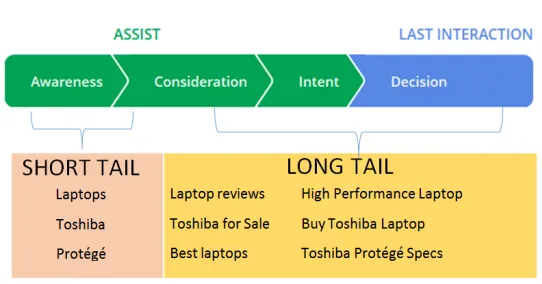
There are multiple types of SEO keywords, each serving a different purpose in attracting online traffic. This is the oldest way to sort them, and still the most useful starting point. Here are the prominent ones:
Short-Tail Keywords
Short-tail keywords, also known as head keywords, are keywords that include no more than two words.
They are fairly broad and general terms, often used by users at the beginning of their research process. For instance, a user who's considering buying a tennis racket might simply start by searching for "tennis racket."
Short-tail keywords are high on competition due to their broad nature, but they also offer a high search volume. Though ranking for these keywords might be a hard task for a newer website, established sites can fight for these positions and secure significant traffic.
If you're contemplating a short-tail keyword strategy, make sure you're ready for some intense competition. It might take a good deal of time and effort to see your webpage on the first page of SERPs, but once you've made it, the rewards are worth the struggle. It's worth running a keyword competition check before you commit a quarter to one.
Mid-Tail Keywords
Sitting between the two extremes are mid-tail keywords: roughly three to four words, more specific than a head term but not yet a full sentence. "Graphite tennis racket" or "tennis racket for beginners" are mid-tail. Most sites find their realistic wins here, because head terms are locked up by incumbents and the true long tail is too thin to move revenue on its own.
Long-Tail Keywords
Long-tail keywords are the opposite of their short-tail counterparts. They typically consist of four or more words and are considerably more specific. Owing to their precision, they are less competitive, but they also yield lower search volume. The value of long-tail keywords lies in their high conversion rate.
For instance, someone searching for "head graphene 360 speed pro tennis racket" is more likely to make a purchase than the user who merely searched for "tennis racket."
The reason is simple: long-tail keywords indicate a user who has done their research and is now ready to make a decision. So while you attract less traffic with long-tail keywords, the traffic you do get will be higher-quality, conversion-ready visitors.
⚠️Common Mistake: Treating the widely-repeated "long-tail converts 2.5× better" figure as a law. Conversion rate depends on your offer and page, not on word count. Use length to estimate competition, and intent to estimate conversion.
A related type worth knowing: zero-volume keywords — terms your keyword tool reports as having no measurable search volume, which nonetheless get searched by exactly the people you want. They're the far end of the long tail, and they're often the only uncontested ground a new site has.
Keyword Types by Search Intent (The Flat Classification)
In the flat classification, we categorize keywords based on the searcher's intention, and it tells you what kind of page to build. Here, we typically have four types of keywords:
Informational keywords: These keywords indicate that the searcher is looking for information. They usually start with "how," "what," "why," etc. An example would be "how to repair a punctured tire."
Navigational keywords: These denote that the searcher is trying to reach a specific website. For instance, typing "Facebook login" clearly shows that one is trying to navigate to the login page of Facebook.
Commercial keywords: These indicate that the searcher is in the buying process's consideration stage. These keywords can often be a combination of generic and long-tail keywords. For instance, "best smartphones under $500" shows that the searcher is considering buying a smartphone.
Transactional keywords: These keywords indicate that the searcher intends to purchase. They contain very specific commands, such as "buy iPhone 12 online."
This classification helps you in content creation, letting you know the intent behind a search term. Knowing this allows you to tailor your content effectively, matching it with the user's inquiries, and solving their problems.
📌Pro Tip: Don't guess intent — read it off the SERP. Search the term and look at what already ranks. If the top ten are all comparison posts, the query is commercial no matter how informational it sounds.
The Nested Classification of SEO Keywords: TOFU, MOFU, BOFU
The nested classification categorizes keywords by the degree of influence they have on the buyer's decision process. Here we have:
TOFU (Top of the Funnel) Keywords: These are awareness-stage keywords. They align with broad and generic keywords that attract a wide audience. For instance, "weight loss tips" could be a TOFU keyword.
MOFU (Middle of the Funnel) Keywords: These are consideration-stage keywords, mirroring long-tail keywords. An example could be "best workout routines for weight loss."
BOFU (Bottom of the Funnel) Keywords: These are decision-stage keywords, quite specific. For instance, "Buy Jillian Michaels weight loss program."
The nested classification helps you target your audience at different stages of the buyer's journey, enabling you to map out content and SEO strategies that cover the whole path.
The Keyword Types the Old Taxonomy Misses
Here's what changed since this article first ran in 2023, and why length and intent alone no longer describe the job.
We track over a million keywords and LLM prompts every month and archive the SERP for every tracked keyword. That lets us cut the data a way volume tools can't: by what the search engine actually does with a query.
AI-Overview-Triggering Keywords
Across the keywords we track, 27.4% returned an AI Overview in July 2026 (July 1–21), up from 18.9% in January. The growth is steady rather than spiky — this is a trend, not a spike.
The important part is that the rate depends on the keyword type. In the same July snapshot, SaaS and comparison-style queries triggered an AI Overview about 34% of the time, while e-commerce product queries triggered one about 19% of the time. A 15-point spread between two keyword categories is a bigger practical difference than most volume tools will ever show you.
Our tracked keyword mix leans B2B — software, comparison, and "best X for Y" queries — which is exactly why comparison terms over-index here. Read the direction rather than the absolute number if you sell to consumers.
📊By the Numbers: 27.4% of the keywords we track returned an AI Overview in July 2026, up from 18.9% in January — but the split by type is the real finding: ~34% for SaaS and comparison queries versus ~19% for e-commerce product queries.
Practically: a comparison keyword is now partly a citation target, not only a ranking target. You can check which of your keywords trigger AI Overviews before deciding how to write the page.
Discovery-Prompt Keywords
The second new type isn't typed into a search box at all — it's asked of an assistant. And the gap between the two shapes is enormous.
Across the prompts we track, a brand gets mentioned in 92–97% of branded prompts (where the user already names a company) but only 11–18% of discovery prompts (where the user describes a need without naming anyone). Perplexity is the most generous discovery surface at 18.4%; Claude the least at 11.3%.
That maps onto the old taxonomy neatly: a branded prompt is the AI-era navigational keyword, and it's close to solved. A discovery prompt is the AI-era commercial keyword, and it's wide open. As the dataset puts it: you don't have a brand-visibility problem, you have a discovery-prompt problem.
How many chances you get depends on the engine. Perplexity cites an average of 8.3 URLs per answer and Gemini 6.2, while ChatGPT in search mode cites about 2.5 and Claude 2.2 (July 2026). More citation slots is how a smaller site breaks in — on a two-slot answer, incumbents win by default.
🔑Key Takeaway: Branded queries are close to solved across every engine we track (92–97%). Discovery prompts — where someone describes a need without naming a brand — sit at 11–18%. That gap is where the work is.
Keep this in proportion, though: AI engines sent about 1.19% of all sessions across the sites we track in July 2026 — roughly double January's 0.62%, but still a small channel. Optimize for it because it's growing fast and cheap to address, not because it's replacing search yet. Our AI search optimization guide covers the tactics.
Branded vs Non-Branded Keywords
Branded keywords contain your company or product name — "SEOmator pricing," "SEOmator vs Screaming Frog." They convert well because the searcher already knows you, but they measure demand you've already earned rather than new demand.
Non-branded keywords describe the problem instead — "seo audit tool," "how to find broken links." They're harder and convert worse per visit, but they're the only ones that grow the top of your funnel.
Most reporting problems come from mixing the two into one "organic traffic" number. If branded terms grow while non-branded flatlines, your SEO isn't working — your marketing is. We go deeper on the split in branded vs non-branded keywords.
Local and Geo-Targeted Keywords
Any keyword can carry a location modifier, and doing so changes the SERP completely — usually introducing a map pack that pushes organic results down.
- Explicit geo: "seo agency berlin," "plumber in leeds"
- Implicit geo ("near me"): "coffee shop near me" — the location comes from the device, not the words
- Service-area: "emergency plumber covering north london"
If you serve customers in physical places, these deserve their own landing pages rather than a single page listing every city.
Primary, Secondary, and Semantic Keywords
This grouping is about the role a term plays on a given page rather than what it looks like.
- Primary keyword: the one term the page is built to rank for. It belongs in the title, the H1, and the first hundred words.
- Secondary keywords: close variants and subtopics that earn subheadings and body coverage.
- Semantic keywords: the related terms and entities a genuinely knowledgeable page would naturally contain.
About "LSI Keywords"
Older guides — including earlier versions of this one — described Latent Semantic Indexing (LSI) keywords as a live Google ranking input. They aren't. Google's John Mueller has said plainly that there's no such thing as LSI keywords. LSI is a document-analysis technique from the late 1980s built for small, static text collections, and Google doesn't use it to rank pages.
The underlying idea is sound; the label is wrong. What Google actually uses to understand meaning is natural language processing, word embeddings, and its Knowledge Graph of entities. So the instruction isn't "add LSI keywords" — it's "cover the topic and its related entities properly."
⚠️Common Mistake: Buying or generating a list of "LSI keywords" to sprinkle into a page. There's no such ranking factor, and the sprinkling behaviour it encourages looks a lot like keyword stuffing.
Match Types Are a PPC Concept, Not an SEO One
You'll often see exact match, phrase match, and broad match listed among "types of SEO keywords." They don't belong there, and the confusion causes real strategy errors.
These are Google Ads match types — settings that tell the ad auction how loosely a paid keyword may match a query:
| Match type | What it controls | Example: tennis racket |
|---|
| Exact | Shows for that query and close variants only | "tennis racket", "tennis rackets" |
| Phrase | Shows when the meaning is included | "buy tennis racket online" |
| Broad | Shows for related searches and synonyms | "best rackets for tennis beginners" |
There is no equivalent control in organic search. You cannot set your blog post to "phrase match" — Google decides which queries your page is relevant to, using the semantic understanding described above. (Google also retired the separate Modified Broad Match type back in 2021, folding its behaviour into phrase match.)
Keep the concepts, file them correctly: match types are how you manage paid keywords; intent and semantics are how you manage organic ones. If you're splitting budget between the two, our SEO vs PPC statistics breakdown has the comparative numbers.
A Real-Life Example of Different Keyword Types
Let's say the primary keyword you chose for your content about digital marketing services is "Digital Marketing."
Short-tail: "Digital Marketing" — precisely the primary keyword.
Mid-tail: "Digital Marketing Services" — more specific, still broad enough to carry volume.
Long-tail: "Affordable Digital Marketing Services in Canada."
Informational: "What does a digital marketing agency do?"
Commercial: "Best digital marketing agencies for SaaS."
Transactional: "Hire a digital marketing agency."
Branded: "SEOmator digital marketing reporting."
Local: "Digital marketing agency in Toronto."
Semantic: using terms like "SEO," "PPC," and "content marketing" could reflect that your content is about digital marketing.
Notice the older version of this list included "exact match," "broad match," and "phrase match" entries. Those have been dropped for the reason given above — they described how you'd bid on the term, not what kind of keyword it is.
With a firm grasp of the various types of keywords and their respective examples, you're well-positioned to optimize your SEO strategies.
Good vs Bad Keyword Examples
Good keyword usage requires relevant terms, alignment with user intent, and a fine balance between competition and search volume. Here are some examples of good and bad keywords for a pet store:
Good keyword examples:
- "Luxury pet collars Toronto": this long-tail keyword targets local customers who are willing to spend on luxury pet items.
- "Handmade pet accessories": this keyword might attract those looking for unique, high-quality pet items.
Bad keyword examples:
- "Pet": this short-tail keyword is far too broad, and you'll likely be lost amid heavy competition.
- "Green pet collar with paisley print": this is overly specific, and the search volume will be very low.
How Different Keyword Types Influence SEO Rankings
Different types of keywords hold the power to boost your content visibility, position your brand better on the SERPs, and attract potential customers to your website — but only if you pick them deliberately.
The right mix of short-tail and long-tail keywords caters to a wider audience, increasing your chances of reaching potential clients at all stages of their purchasing journey. Meanwhile, transactional and branded keywords draw in users who know precisely what they're looking for, leading to high-quality leads. Semantic keywords provide better context, aiding search engines in understanding your content.
Best Practices for Utilizing Different Keyword Types in SEO
As we conclude our journey through the world of SEO keywords, here is a workable order of operations:
- Mix and match keyword types for a well-rounded SEO strategy, rather than betting everything on one grouping.
- Understand the search intent behind keywords. Decide what page you're building first; the keyword type follows.
- Check the SERP before writing. If an AI Overview owns the top of the page, your goal is being cited in it, not just ranking under it.
- Take the mid-tail. Head terms rarely pay back for smaller sites; the true long tail rarely moves revenue alone. Look for low-hanging-fruit keywords first.
- Separate branded from non-branded reporting so growth in one doesn't hide stagnation in the other.
- Use a research tool such as SEOmator's free keyword tool or Google Keyword Planner to find relevant keywords with good search volume.
- Keep one primary keyword per page. Stacking several is how pages end up ranking for none.
- Incorporate keywords naturally in your content. Forced or unnatural keyword placement may lead to keyword stuffing, affecting your SEO negatively.
- Monitor your keyword performance and pivot if necessary. SEO is a continuous, evolving process. Re-check which of your terms have started returning AI answers.
💡Quick Insight: The fastest-growing tool across our 37 free tools this year is the AI Visibility checker — 3.4× the monthly runs in July versus January. People are shifting from "what's the volume?" to "does the answer engine know me?"
Understanding types of keywords in SEO is a central pillar of laying out effective SEO strategies, but like most things SEO, it's an ongoing endeavor. Keep exploring, keep experimenting, keep testing, and most importantly, keep learning.
Frequently Asked Questions
What is an example of an SEO keyword?
Any phrase people type into a search engine can be an SEO keyword. "Running shoes" is a short-tail example with about 301,000 US searches a month; "best running shoes for flat feet" is a commercial long-tail example with about 9,900; "how often to replace running shoes" is informational, with about 2,400 (US, September 2026). The examples by industry section has 56 more.
What are some good SEO keywords?
Good SEO keywords match what your page offers and are realistic for your site to rank for. In our September 2026 pull, comparison queries stood out: "hoka vs brooks" drew about 6,600 US searches a month at a difficulty of 0. A huge head term like "pizza", at 4.09 million searches, is rarely a good target for a single site.
How many types of keywords are there in SEO?
There's no single fixed number, because keywords are grouped along several axes at once. The practical answer is three classic groupings — length (short, mid, long-tail), intent (informational, navigational, commercial, transactional), and page role (primary, secondary, semantic) — plus branded, local, and seasonal cuts. In 2026 add a surface grouping: whether the keyword returns an AI answer.
What are the 3 types of keywords?
When people say "three types," they usually mean by length: short-tail (1–2 words), mid-tail (3–4 words), and long-tail (4+ words, highly specific). Some sources instead mean the three main intents behind commercial searching — informational, commercial, and transactional.
What are the 4 types of keywords by search intent?
Informational ("how to restring a tennis racket"), navigational ("SEOmator login"), commercial ("best tennis rackets under $200"), and transactional ("buy head speed pro online"). Intent decides what kind of page you should build.
What are the types of keywords in Google Ads?
Google Ads uses match types, not keyword types: exact match, phrase match, and broad match. They control how loosely a paid keyword may match a query. They have no equivalent in organic SEO — you can't set an organic page to a match type.
Are LSI keywords a real thing?
No. Google has confirmed it does not use Latent Semantic Indexing to rank pages, and John Mueller has said there's no such thing as LSI keywords. The useful underlying idea — that related terms and entities help a search engine understand your topic — is real, and is better called semantic keywords.
Which types of keywords drive the most conversions?
Transactional and branded keywords convert best per visit because the searcher has already decided. Commercial keywords convert next best and carry far more volume, which usually makes them the better investment. Informational keywords rarely convert directly but build the audience the others harvest.
Are long-tail keywords still worth targeting in 2026?
Yes, with one adjustment. They remain the most reachable ground for smaller sites. But long informational questions are exactly the shape of query that now returns an AI answer, so treat them as citation targets as well as ranking targets, and expect fewer clicks per impression than the same keyword delivered in 2023.
What's the difference between branded and non-branded keywords?
Branded keywords contain your company or product name and measure demand you've already earned. Non-branded keywords describe the problem and are the only ones that grow new demand. Report them separately — combining them hides whether your SEO is actually acquiring anyone.
Do keyword types affect whether I get an AI Overview?
They do. Across the keywords we track, 27.4% returned an AI Overview in July 2026, but the rate varies sharply by type — roughly 34% for SaaS and comparison queries versus 19% for e-commerce product queries.
How do I know which type a keyword is?
Search it and read the results page. The format that dominates the top ten tells you the intent Google has assigned, which matters more than your own reading of the words. If comparison posts rank, it's commercial; if product pages rank, it's transactional.
Methodology
Figures attributed to keywords or prompts we track come from SEOmator's own measurement network: our rank tracker archives the SERP for every tracked keyword, and our prompt tracker runs over a million customer keywords and LLM prompts monthly through ChatGPT, Claude, Perplexity, Gemini, and Google AI Mode, parsing each answer for brand mentions and cited URLs. Figures labelled July 2026 cover July 1–21 and are a partial month. Our tracked keyword set is weighted toward B2B software, comparison, and "best X for Y" queries, so treat the comparison-query numbers as directional if you sell to consumers.
Search volumes and difficulty scores in the examples-by-industry tables are US Google figures pulled on 26 September 2026 from SEOmator's keyword data, the same database our free keyword research tool runs on. Volume is a 12-month average, so seasonal terms peak well above their listed number. Difficulty is a 0–100 estimate of how hard the organic top 10 is to reach. Both are estimates, not counts.
You may also read: