Optimizing for AI-Driven Search: Strategies in the Age of SearchGPT
Published
Imagine a search engine that understands intent like a human—welcome to the era of AI-driven search. As artificial intelligence continues to evolve, it's transforming how search engines interpret queries and deliver results. Traditional SEO tactics, once the backbone of search rankings, are no longer sufficient in this rapidly changing landscape.
With AI-powered search engines like SearchGPT redefining user experience, SEO professionals must adapt to AI-driven search optimization to maintain and boost their rankings. In my role as an AI SEO Specialist over the past eight years, I've witnessed firsthand the shift from keyword-centric strategies to those that prioritize user intent and machine learning insights.
This guide explores actionable strategies and insights to optimize websites for AI-powered search engines, leveraging SearchGPT optimization strategies and AI-powered SEO tools. I'm excited to show you what worked for me and how you can elevate your SEO strategy in this new era.
Understanding AI-Driven Search Optimization
To effectively optimize for AI-driven search engines, it's crucial to understand how artificial intelligence influences search algorithms and user experience.
Defining AI-Driven Search
AI-driven search refers to the use of artificial intelligence technologies, such as machine learning and natural language processing, to improve search engine algorithms.
Influence on Search Engine Algorithms:
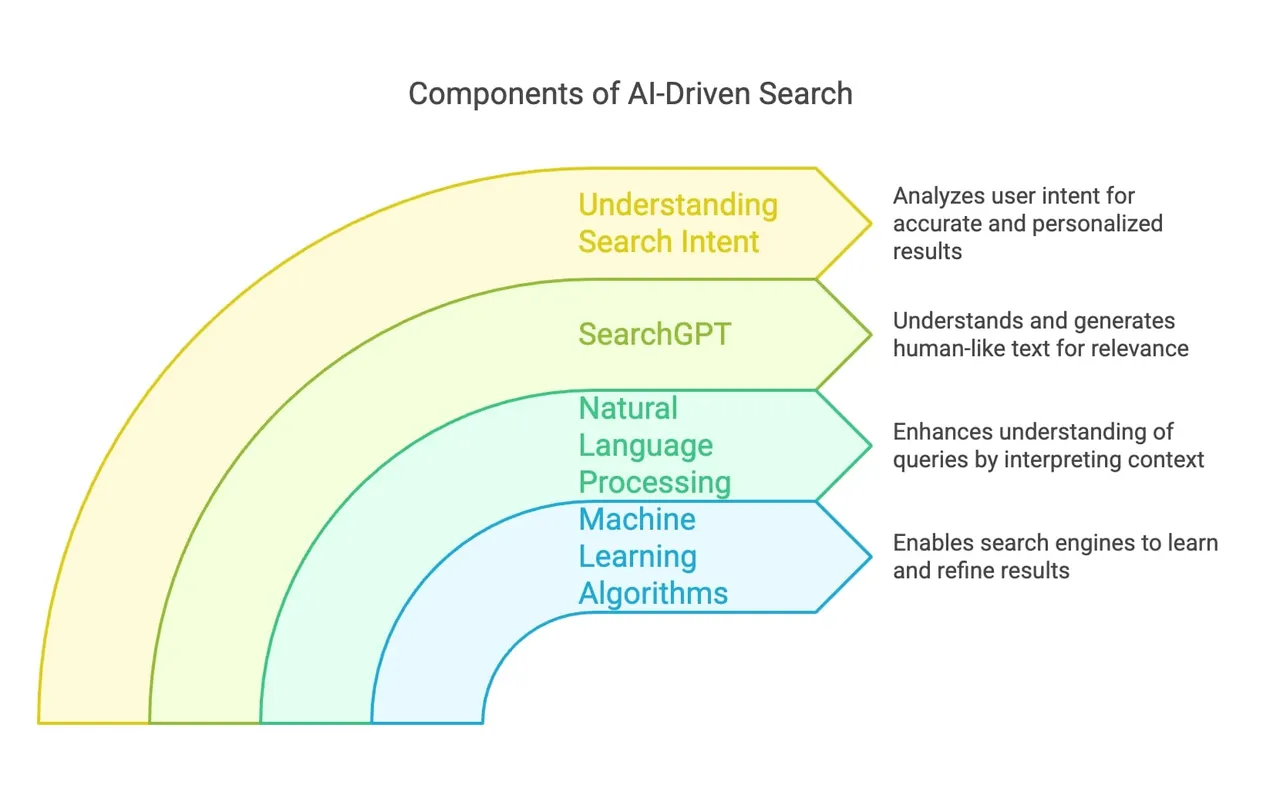
Machine Learning Algorithms: AI enables search engines to learn from user behavior and refine results over time.
Natural Language Processing (NLP): Enhances understanding of user queries by interpreting context and semantics.
Enhancing User Experience Through AI:
SearchGPT and Similar Technologies: Tools like SearchGPT understand and generate human-like text, improving the relevance of search results.
Understanding Search Intent: AI analyzes user intent to deliver more accurate and personalized results.
📊 Statistics Alert: 86% of SEO professionals have integrated AI into their strategies, highlighting the growing reliance on AI tools for effective optimization (SEOProfy, 2023).
From my direct experience, incorporating AI technologies into SEO practices has significantly improved the accuracy of keyword targeting and content relevance.
The Importance of AI in Modern SEO
The integration of AI in search has shifted the focus from traditional keyword-based strategies to intent-based optimization.
Shift from Keyword-Based to Intent-Based Searches:
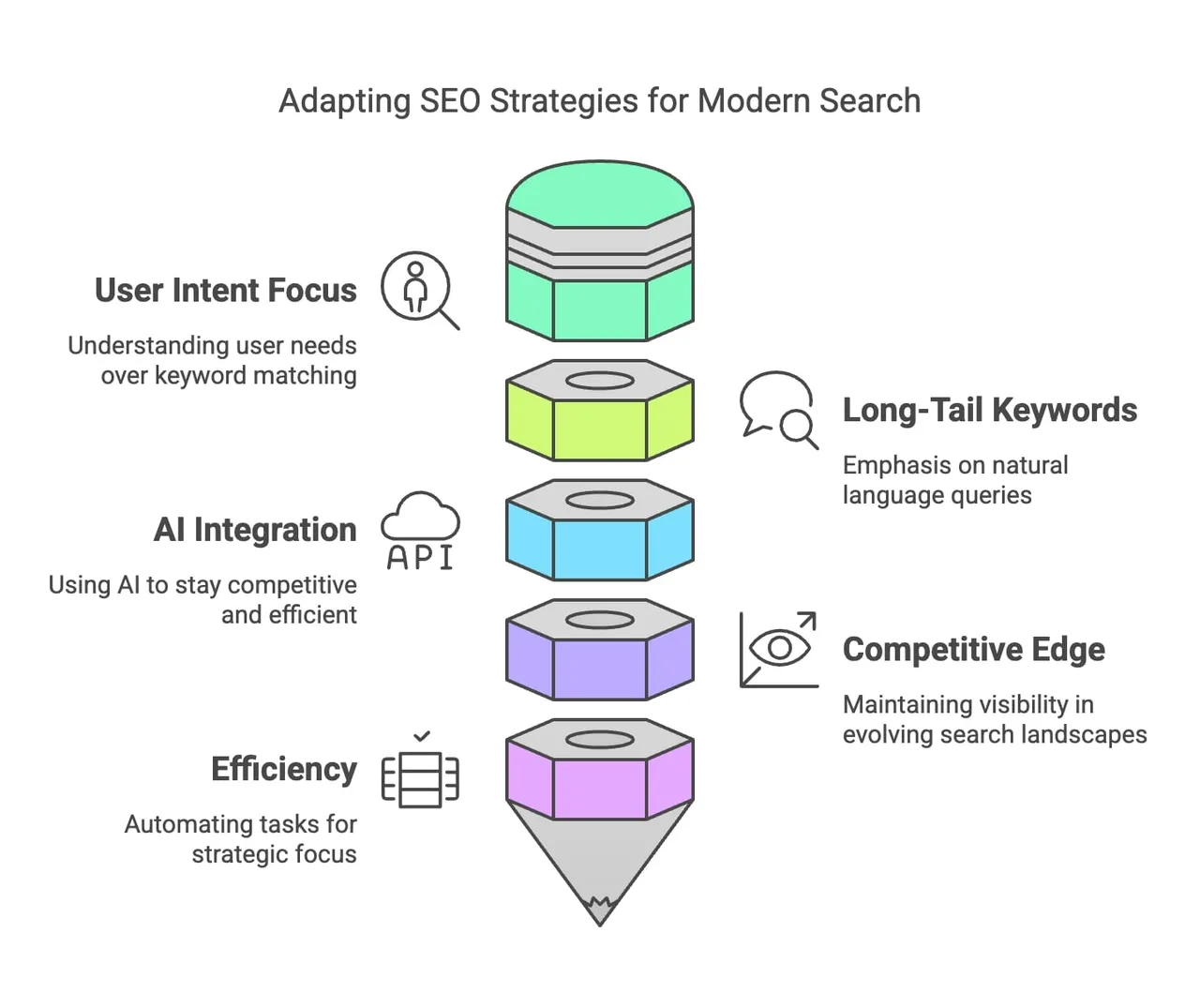
User Intent Over Keywords: Search engines prioritize understanding what users are looking for rather than just matching keywords.
Long-Tail Keywords and Phrases: Emphasis on natural language and conversational queries.
Necessity for SEO Professionals to Integrate AI Strategies:
Staying Competitive: With AI shaping search results, failing to adapt can lead to decreased visibility.
Efficiency and Effectiveness: AI-powered tools automate repetitive tasks, allowing professionals to focus on strategy.
💡 Expert Insight: What I've learned is that embracing AI not only streamlines SEO processes but also enhances the ability to meet user needs effectively.
Actionable Strategies for AI-Driven Search Optimization
Adapting to AI-driven search requires practical strategies and the right tools. Here are actionable steps to optimize your website effectively.
Leveraging AI-Powered SEO Tools
Utilizing AI-powered SEO tools is essential for gaining insights and automating optimization tasks.
Introduction to Leading AI-Powered SEO Tools:
BrightEdge: Offers data-driven recommendations and performance tracking.
Frase.io: Assists in content optimization by comparing against top-performing competitors.
SEO.ai: Provides AI-generated content and keyword analysis.
Practical Guidance on Using These Tools:
Keyword Research: Use AI tools to identify high-volume, intent-driven keywords.
Content Optimization: Receive suggestions for improving content structure and relevance.
Performance Tracking: Monitor the impact of optimizations on rankings and traffic.
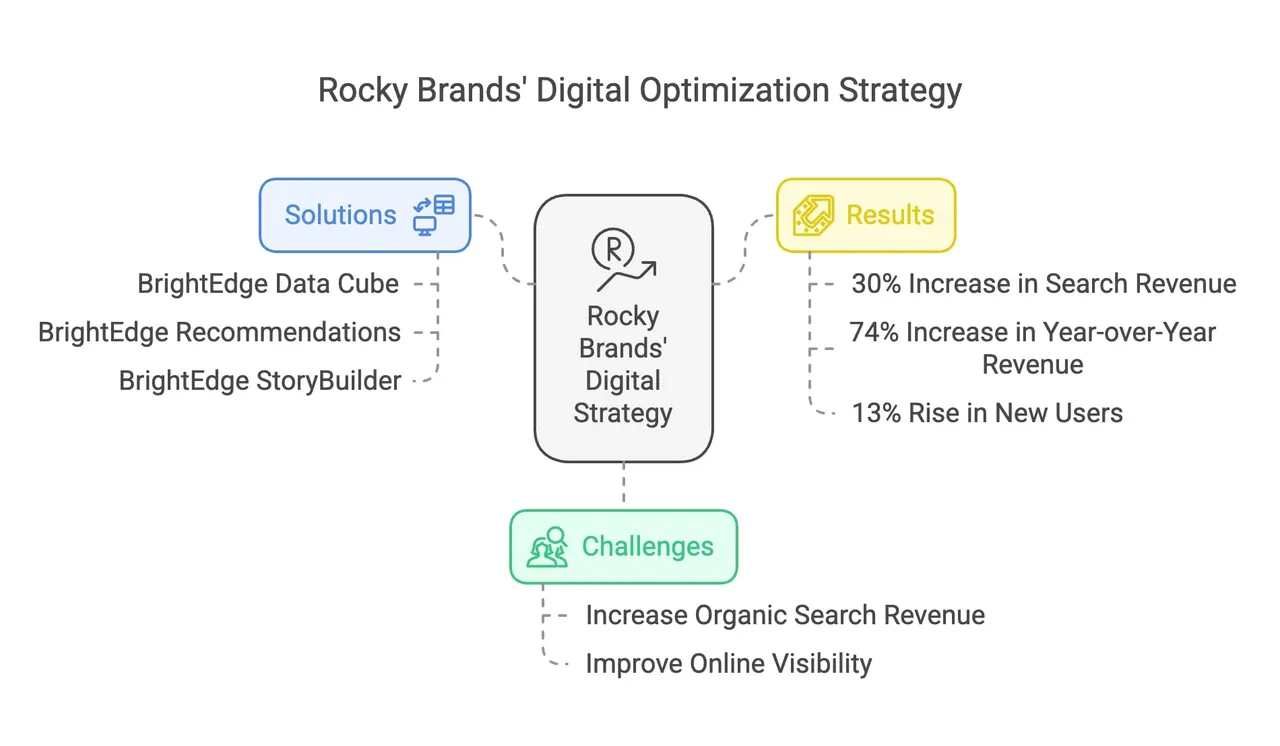
📈 Case Study: Rocky Brands achieved a 30% increase in search revenue by leveraging BrightEdge’s AI tools for content optimization.
📌 Pro Tip: An approach I use in my work is to integrate AI tools into my daily workflow, automating routine tasks and uncovering insights that manual analysis might miss.
Crafting Content for AI-Powered Search Engines
Creating content that resonates with AI-driven algorithms is critical for visibility and engagement.
Importance of Aligning Content with AI Algorithms:
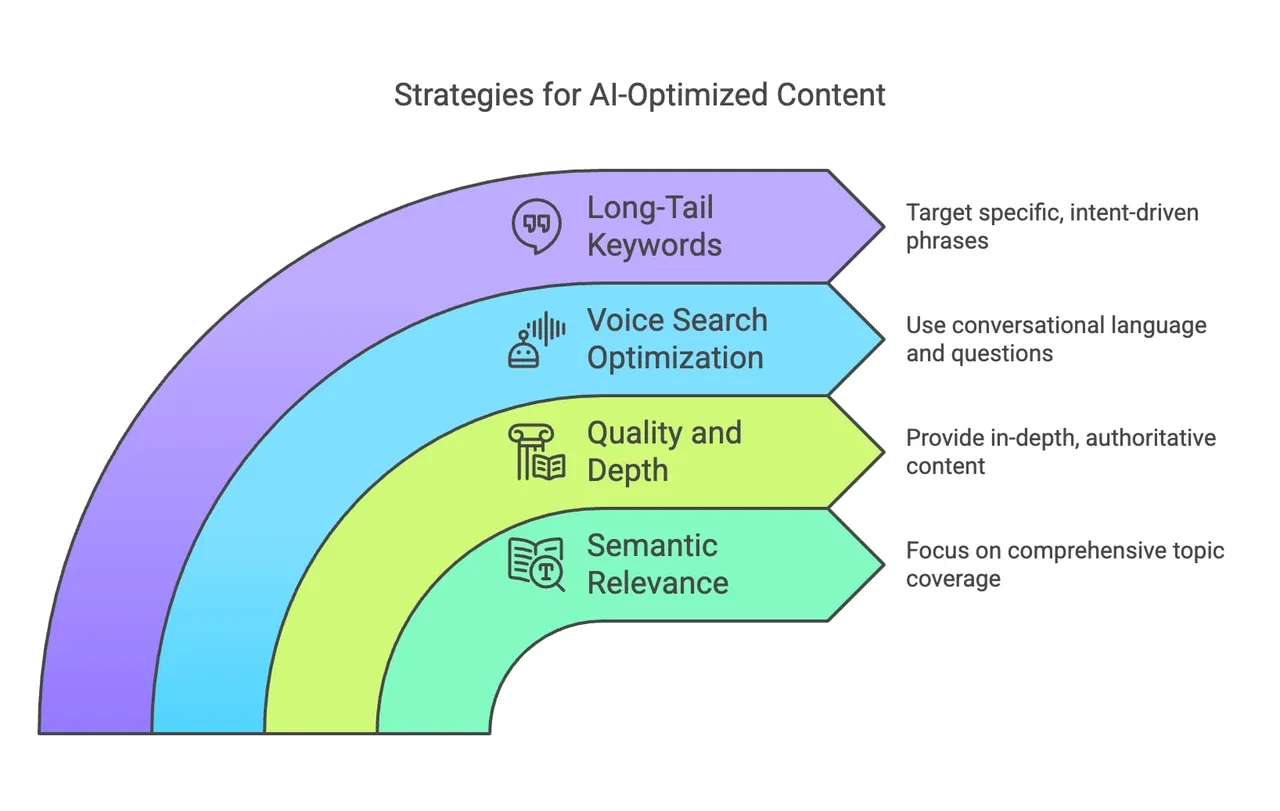
Semantic Relevance: Focus on topics comprehensively rather than isolated keywords.
Quality and Depth: AI favors in-depth, authoritative content that provides real value.
Techniques for Optimizing Content:
Voice Search Optimization:
Use conversational language and phrases that mimic how people speak.
Incorporate question-based subheadings to align with voice queries.
Long-Tail Keywords:
Target specific, intent-driven phrases with lower competition.
Enhance relevance for niche audiences.
💡 Expert Insight: Based on my eight years in this field, shifting to an intent-focused content strategy has resulted in higher engagement and better rankings.
Enhancing User Experience through AI
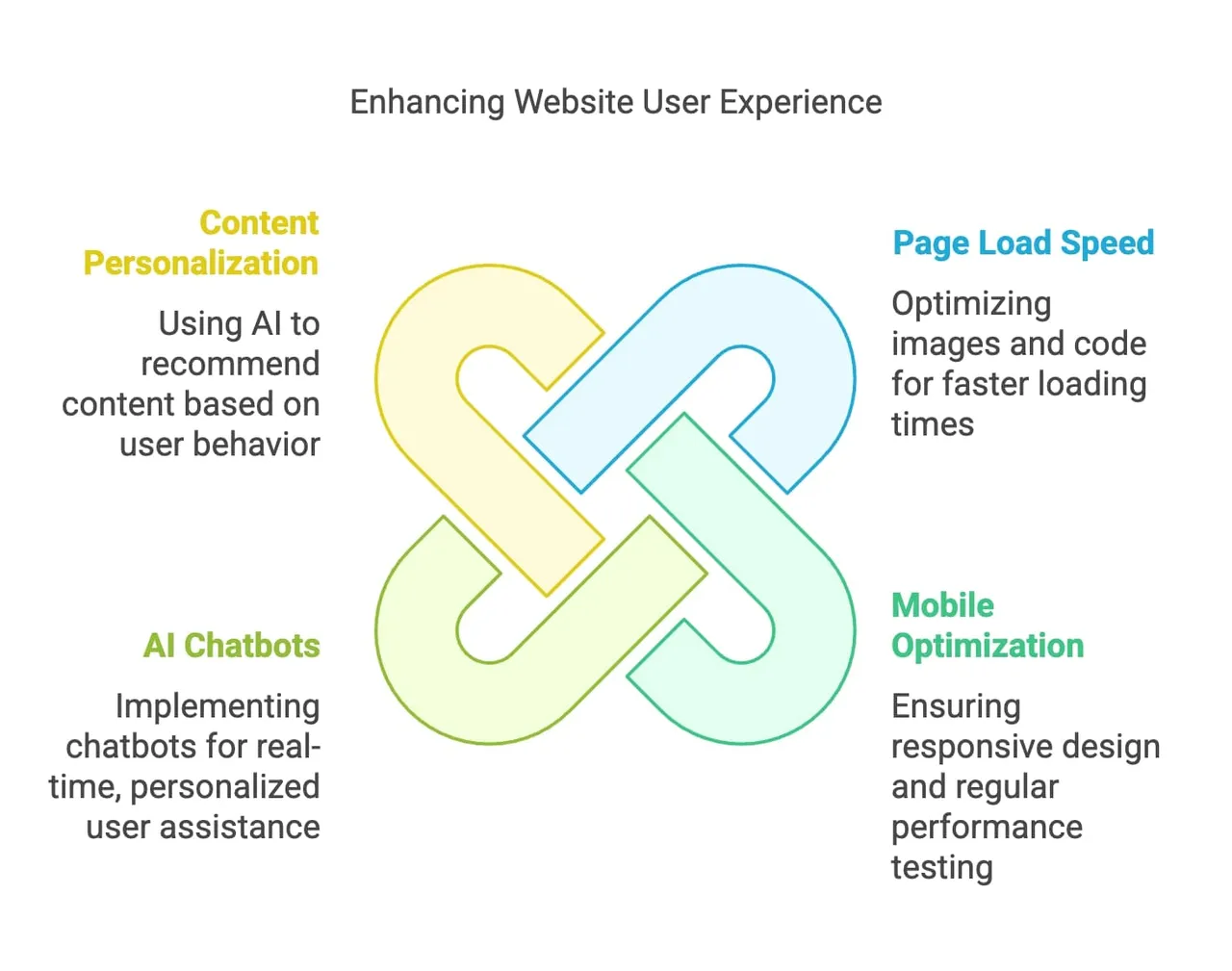
User experience (UX) is a critical factor that AI-driven search engines consider when ranking websites.
Use AI to recommend content based on user behavior.
Increase time on site and return visits.
📊 Statistics Alert: 90% of people find voice search easier than typing queries, emphasizing the need for voice-friendly content (WebFX, 2023).
⚠️ Warning: Neglecting user experience can significantly affect your search rankings. I must say, investing in UX improvements is not optional in the age of AI-driven search.
Case Studies and Real-World Examples
Real-world applications of AI-driven search optimization provide valuable insights into how these strategies can be effectively implemented. From my direct experience, analyzing these cases offers actionable lessons that can be applied to your own SEO efforts.
Success Stories of AI-Driven Search Optimization
Understanding how other companies have successfully navigated the AI landscape can illuminate best practices and innovative approaches.
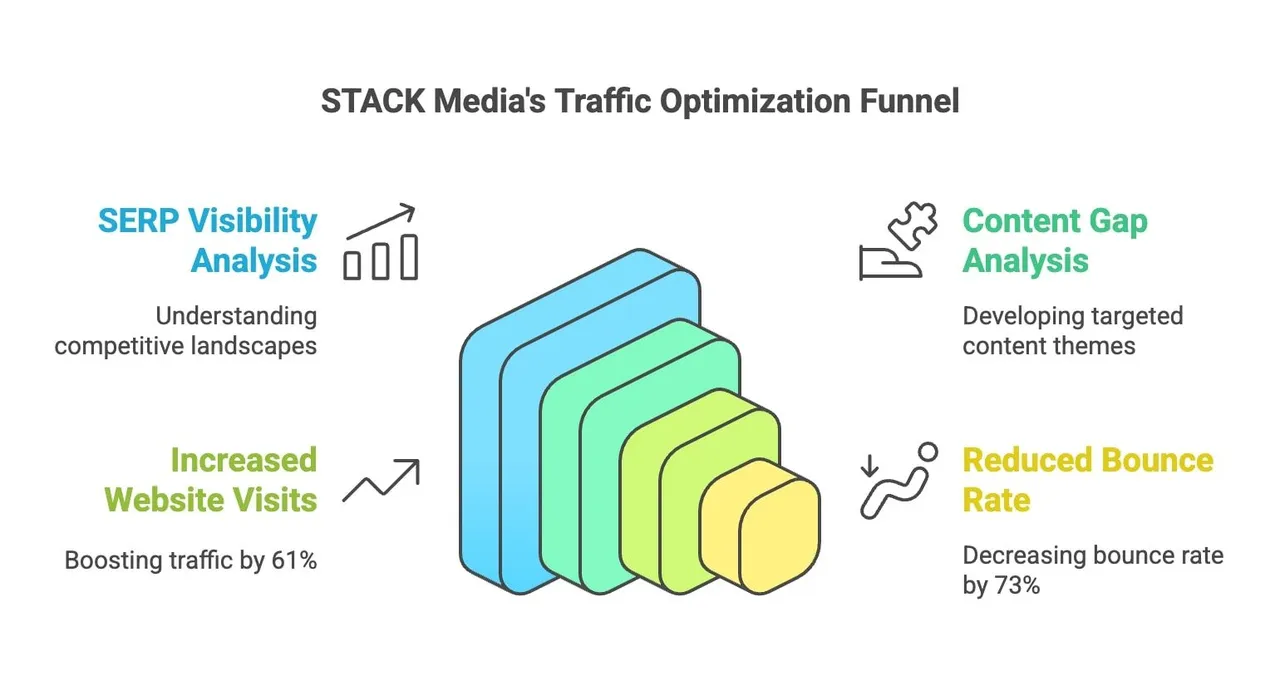
Challenge: Aimed to boost web traffic and reduce high bounce rates.
Solution:
Collaborated with BrightEdge to identify high-volume, intent-driven keywords.
Analyzed SERP visibility to understand competitive landscapes.
Conducted content gap analysis to develop targeted content themes.
Results:
Increased website visits by 61%.
Reduced the average bounce rate by 73%.
Lessons Learned:
Keyword intent analysis is crucial for attracting and retaining the right audience.
Content optimization based on AI insights enhances user engagement.
What I've learned in my current position is that combining AI tools with strategic planning leads to substantial improvements in SEO performance.
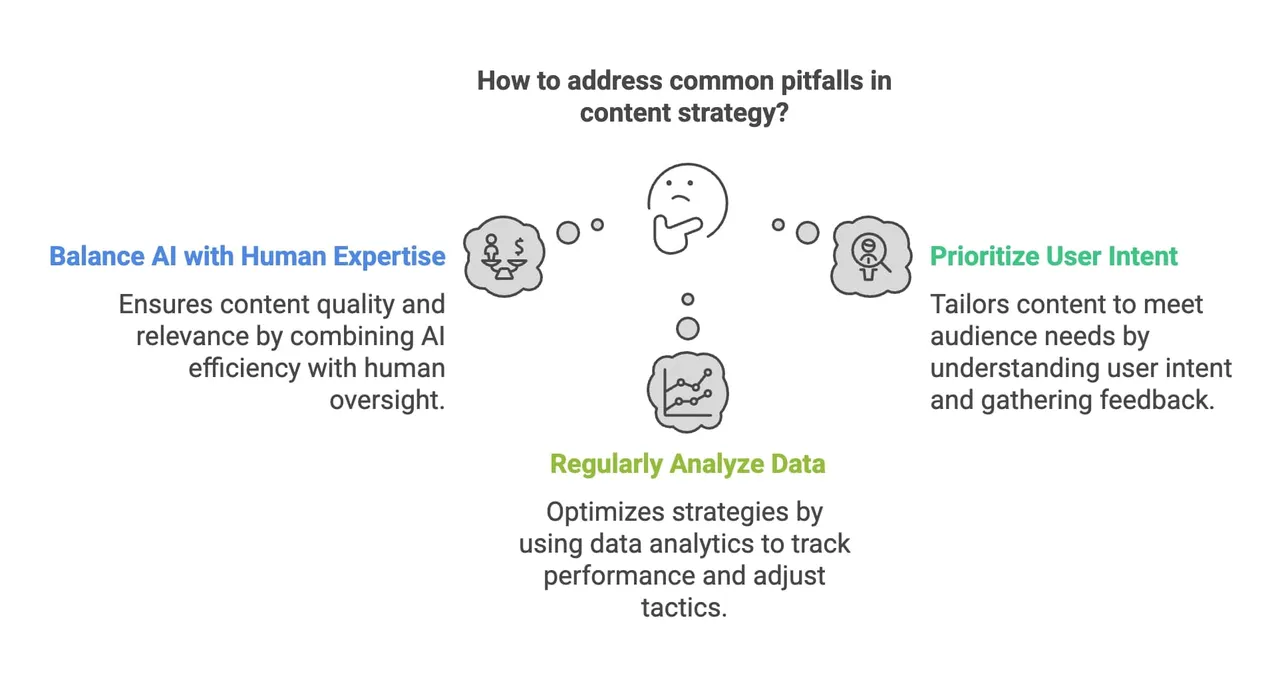
Common Pitfalls and How to Avoid Them
While AI-driven search optimization offers significant benefits, there are common mistakes that can hinder success. Being aware of these pitfalls helps in navigating the AI landscape more effectively.
Pitfall 1: Over-Reliance on Automation
Issue: Relying solely on AI-generated content without human oversight can result in generic or low-quality material.
Solution:
Balance AI with Human Expertise: Use AI for efficiency but ensure all content is reviewed by SEO professionals.
Quality Control: Implement a robust editing process to maintain content quality and relevance.
Pitfall 2: Neglecting User Intent
Issue: Focusing too much on algorithms and not enough on what users are actually searching for.
Solution:
Prioritize User Intent: Conduct thorough research to understand your audience's needs and tailor content accordingly.
Engage with Real Users: Gather feedback to refine your strategies and ensure they align with user expectations.
Pitfall 3: Ignoring Data Analytics
Issue: Failing to monitor performance metrics leads to missed opportunities for optimization.
Solution:
Regularly Analyze Data: Use AI-powered analytics tools to track key performance indicators (KPIs).
Adjust Strategies Accordingly: Be prepared to pivot tactics based on data insights.
⚠️ Warning: Ignoring these common pitfalls can negate the benefits of AI optimization. A real situation I encountered involved a client who saw initial gains with AI but plateaued due to neglecting ongoing data analysis.
Conclusion
Adapting to AI-driven search optimization is essential for staying competitive in today's digital landscape. Here are the main points to remember:
Embrace AI Tools: Integrating AI-powered SEO tools enhances efficiency and uncovers deeper insights.
Focus on User Intent: Craft content that aligns with what users are genuinely seeking.
Continuously Analyze and Adapt: Regular data analysis ensures your strategies remain effective and relevant.
I've learned this firsthand and I'm eager to pass it on to you: The synergy of AI technology and human expertise is the cornerstone of successful modern SEO.
Frequently Asked Questions (FAQs)
To provide further clarity on optimizing for AI-driven search engines, I've compiled answers to some frequently asked questions. In my role as an AI SEO Specialist over the past eight years, these are common queries I've encountered.
1. How does AI influence search engine algorithms?
AI impacts search engine algorithms by enhancing their ability to understand user intent and context.
Machine Learning: Search engines use machine learning to analyze patterns in user behavior, allowing for more accurate predictions of what users are seeking.
Natural Language Processing (NLP): AI enables the interpretation of conversational language, improving the relevance of search results for long-tail and voice queries.
From my direct experience, optimizing for AI-driven algorithms requires a focus on content quality and relevance rather than keyword density alone.
2. What are some effective AI-powered SEO tools I can start using?
There are several AI-powered SEO tools that can enhance your optimization efforts:
BrightEdge: Offers data-driven insights for keyword research and content optimization.
Frase.io: Assists in creating content that aligns with user intent and ranks well.
SEO.ai: Provides AI-generated content suggestions and keyword analysis.
An approach I use in my work is to integrate these tools into my SEO strategy to automate routine tasks and uncover deeper insights.
3. How can I optimize my content for voice search?
Optimizing for voice search involves adapting your content to match the conversational tone of voice queries.
Use Natural Language: Write content using natural, conversational language.
Incorporate Long-Tail Keywords: Focus on phrases and questions users might speak into a device.
Answer Questions Directly: Create FAQ sections that address common queries related to your industry.
I have found that tailoring content for voice search improves visibility and engagement, especially with the growing popularity of virtual assistants.
4. Is user experience (UX) really that important for SEO?
Absolutely, UX is a critical factor in SEO, especially with AI-driven search engines.
Page Load Speed: Faster sites rank higher as they provide a better user experience.
Mobile Optimization: With a significant number of searches conducted on mobile devices, a mobile-friendly site is essential.
Ease of Navigation: A well-structured site helps users find information quickly, reducing bounce rates.
In my opinion, investing in UX enhancements is one of the most effective ways to improve your SEO performance.
5. Can AI-generated content help or hurt my SEO efforts?
AI-generated content can be beneficial if used correctly.
Pros:
Efficiency: Speeds up content creation processes.
Data-Driven Topics: Identifies relevant topics based on user data.
Cons:
Quality Concerns: May lack the depth and nuance of human-written content.
Originality Issues: Risks of producing non-unique content if not properly managed.
What I've learned is that combining AI-generated content with human editing yields the best results, maintaining quality and relevance.
6. How often should I update my SEO strategies to keep up with AI advancements?
SEO is an ever-evolving field, and staying updated is crucial.
Regular Audits: Conduct SEO audits at least quarterly to assess performance.
Continuous Learning: Stay informed about AI developments and algorithm updates.
Adaptation: Be prepared to adjust strategies based on data insights and industry trends.
I personally believe that a proactive approach to learning and adaptation is key to maintaining SEO success in the AI era.
7. Are traditional SEO practices obsolete with the rise of AI-driven search?
Traditional SEO practices are not obsolete but need to be adapted.
Still Relevant: Elements like quality content, backlinks, and proper metadata remain important.
Enhanced by AI: AI tools can improve efficiency and effectiveness in these traditional areas.
From my direct experience, merging traditional SEO foundations with AI innovations produces the best outcomes.
8. What role does machine learning play in content optimization?
Machine learning analyzes vast amounts of data to identify patterns and preferences.
Content Recommendations: Suggests topics and formats that resonate with your audience.
Performance Prediction: Estimates how content changes might impact rankings and engagement.
An approach I use in my work is leveraging machine learning insights to tailor content strategies that align with user interests.
9. How can I measure the effectiveness of my AI-driven SEO efforts?
Measuring effectiveness involves tracking key performance indicators (KPIs) and using analytics tools.
Organic Traffic Growth: Monitor increases in organic search visits.
Engagement Metrics: Assess bounce rates, time on site, and pages per session.
Conversion Rates: Evaluate the impact on lead generation and sales.
My proven strategy for measuring success includes setting specific goals and regularly reviewing performance data.
10. Is investing in AI technology for SEO cost-effective for small businesses?
Yes, AI technology can be cost-effective for businesses of all sizes.
Affordable Tools: Many AI-powered SEO tools offer scalable pricing models suitable for small businesses.
Time Savings: Automating tasks reduces labor costs and frees up resources.
Competitive Edge: Enables small businesses to compete with larger competitors by optimizing efficiently.
I must say, the return on investment from AI tools often justifies the initial expense through improved performance.
11. How does AI affect local SEO strategies?
AI enhances local SEO by providing more personalized and relevant search results.
Contextual Understanding: AI recognizes location-based intent in queries.
Voice Search Optimization: Many local searches are performed via voice assistants.
Personalization: Delivers customized content based on user preferences and behaviors.
I've experienced significant improvements in local search visibility when integrating AI considerations into strategies.
12. What are the ethical considerations when using AI in SEO?
Ethical considerations include ensuring transparency, accuracy, and user privacy.
Quality Content: Avoid generating low-quality or misleading content with AI.
User Data Privacy: Adhere to regulations like GDPR when collecting and using data.
Algorithm Fairness: Be aware of biases in AI algorithms that could impact content delivery.
As far as I know, maintaining ethical standards fosters trust and long-term success.
13. Can AI help with backlink building strategies?
AI can assist in identifying opportunities and automating outreach.
Prospecting: AI tools can find relevant websites and contacts more efficiently.
Personalization: Craft tailored outreach messages using AI-generated insights.
Monitoring: Track backlinks and assess their quality over time.
What I've learned is that AI streamlines the backlink building process without compromising personalization.
14. How do AI chatbots impact SEO?
AI chatbots enhance user engagement, which can positively affect SEO.
Increased Time on Site: Interactive chatbots keep users engaged longer.
Improved UX: Provide immediate assistance, enhancing user satisfaction.
Data Collection: Offer insights into user questions and needs.
I have found that integrating chatbots contributes to better engagement metrics, indirectly boosting SEO.
15. Will AI eventually replace SEO professionals?
While AI automates certain tasks, it won't replace the strategic role of SEO professionals.
Human Insight: Strategic thinking, creativity, and understanding of human behavior remain uniquely human skills.
AI as a Tool: AI should be viewed as an assistant that enhances capabilities.
In my opinion, embracing AI as a complement to professional expertise leads to greater success.
ClaudeBot crawls 23,951 pages per referral. GPTBot: 1,276:1. I analyzed Cloudflare Radar data to measure which AI crawlers and LLM bots extract the most from publishers — and what it means for your GEO strategy.
Master ChatGPT for SEO with 50+ proven prompts for keyword research, content optimization, and competitor analysis. Based on real results from 150+ blog posts achieving 47% average traffic growth.




 Nick Sawinyh