
· 10 Min. Lesezeit
SEO-Audit-Statistiken 2026: Was 100.000+ Audits zeigen
Die von uns auditierte Median-Website erreicht 71/100 – ein C+. Was 100.000+ SEO-Audits über die häufigsten Fehler zeigen und wie oft Sie 2026 auditieren sollten.
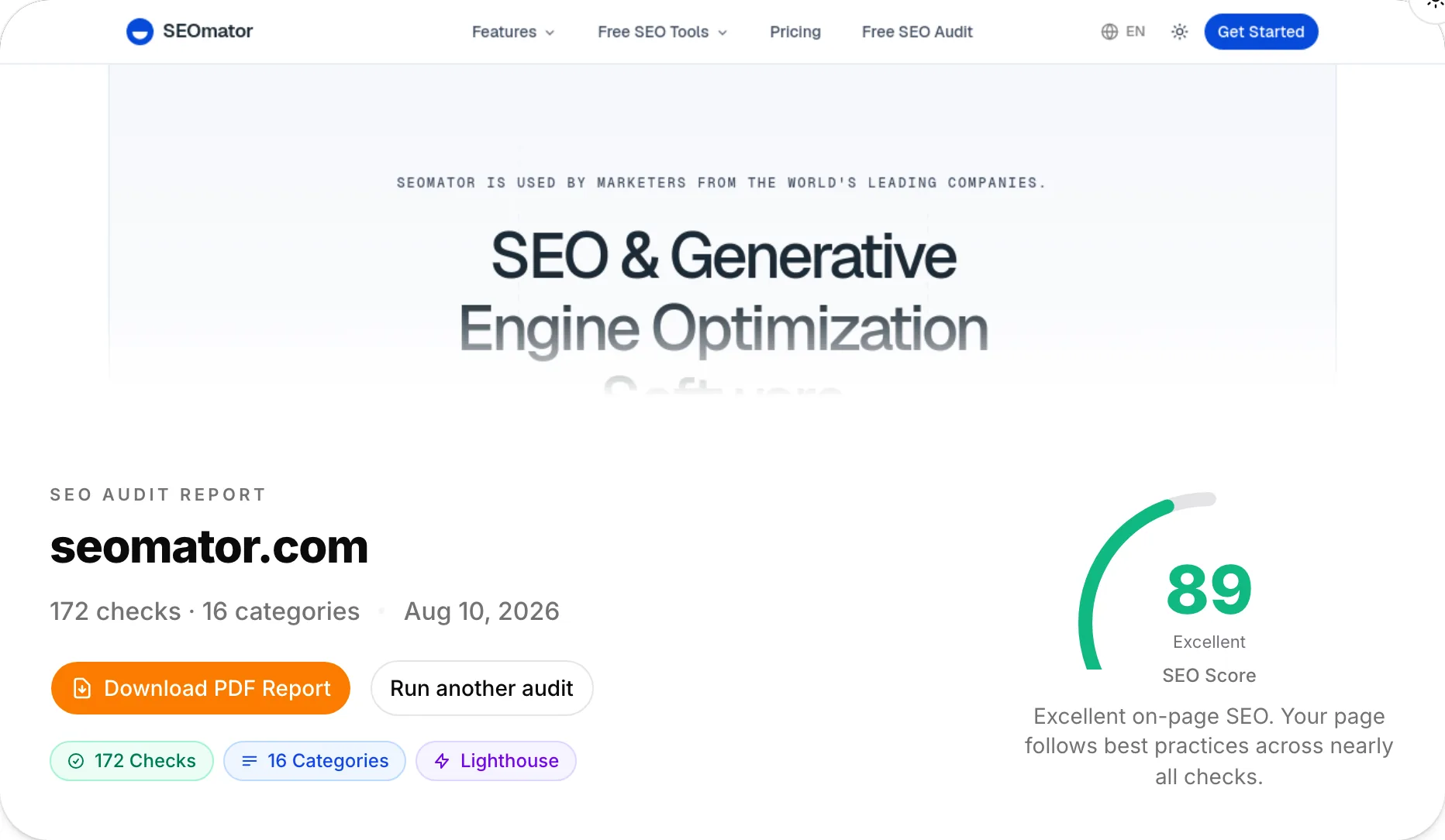
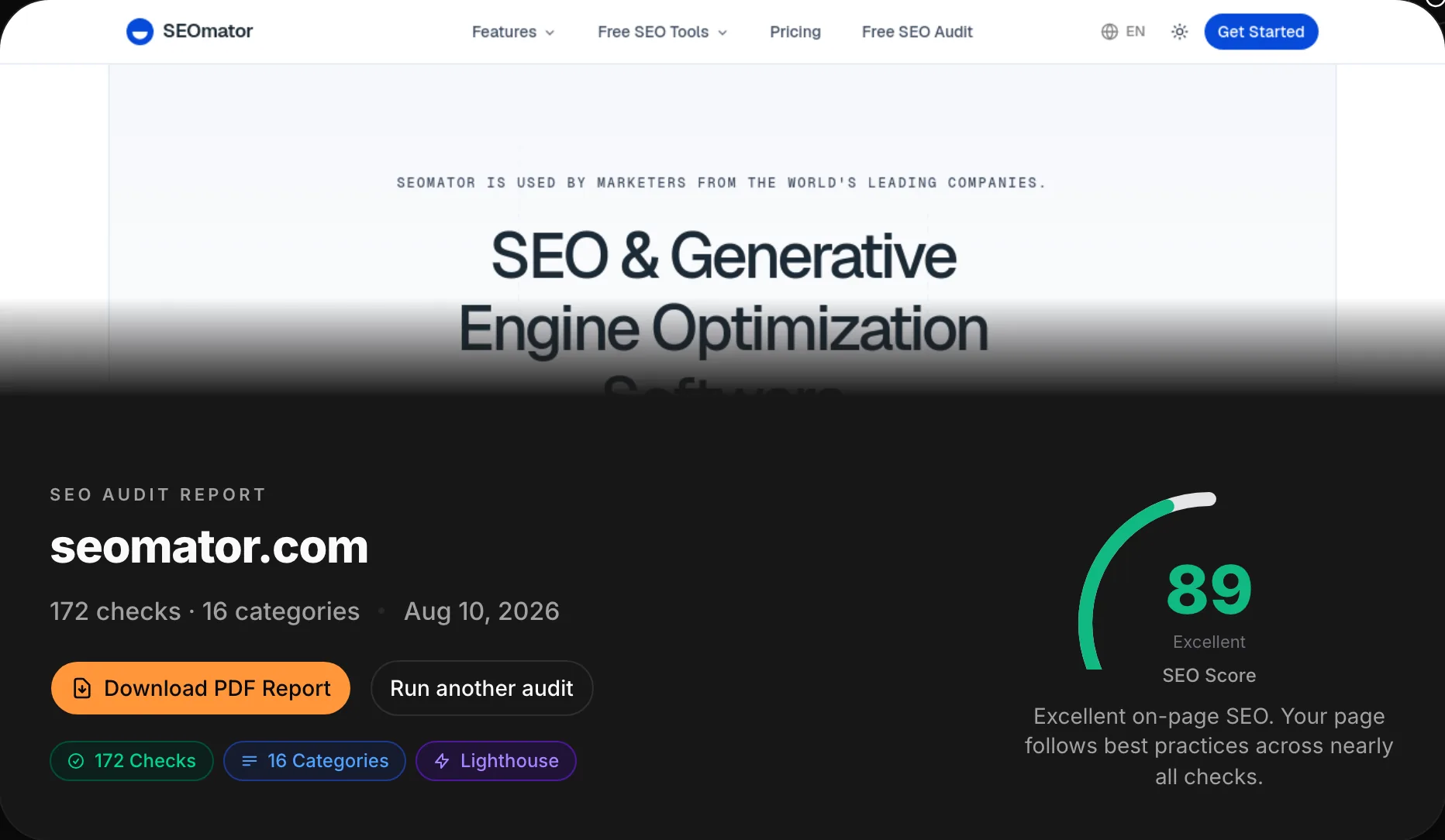
Das kostenlose SEO-Audit-Tool rendert Ihre Seite in einem echten Browser, prüft 172 On-Page-Regeln in 16 gewichteten Kategorien — technisches SEO, Inhalt, Links, strukturierte Daten, KI-Sichtbarkeit — und holt parallel Google-Lighthouse-Werte, in 15–30 Sekunden. Sie erhalten einen Score von 0–100, jede fehlgeschlagene Prüfung erklärt und einen PDF-Bericht. Kostenlos, ohne Anmeldung.
 Geprüft von Emre Elbeyoglu, Gründer & CEO
Kein Konto, keine E-Mail — der vollständige Bericht erscheint direkt hier.
Über 100.000 Websites 2026 in unserem Netzwerk geprüft · Median-Score 71/100
Sie geben eine URL ein, wir rendern die Seite in einem echten Headless-Browser, prüfen 172 On-Page-Regeln in 16 gewichteten Kategorien gegen das gerenderte HTML — nicht nur den Quelltext — und fragen parallel Google-Lighthouse-Werte ab. Die Kategoriegewichte stehen im Bericht, der Score ist also erklärbar statt eine Blackbox.
Jede öffentliche Seite — Ihre eigene oder die eines Wettbewerbers. Kein Konto, keine E-Mail, kein Tag zu installieren: Das Audit läuft auf unserer Infrastruktur, nicht in Ihrem Browser.
Ein Headless-Browser rendert die Seite und erstellt einen Screenshot, die Engine prüft 172 Regeln — vom Title-Tag bis zur llms.txt — und die Google-Lighthouse-Werte kommen parallel dazu. 15–30 Sekunden, ein Durchlauf.
Sie erhalten einen Score von 0–100 mit Noten je Kategorie, jede fehlgeschlagene Prüfung mit konkretem Änderungshinweis — und per Klick einen PDF-Bericht für alle, die die Fixes umsetzen.
Alles Unmarkierte läuft sofort und kostenlos, ohne Anmeldung. Die markierten Punkte schaltet ein kostenloses SEOmator-Konto frei.
Core SEO, Inhalt, Performance, Links, Bilder, Sicherheit, Barrierefreiheit, strukturierte Daten, Social Tags, E-E-A-T, URL-Struktur, Mobile, HTML-Validität, Weiterleitungen, Internationalisierung — und KI-Sichtbarkeit. Gewichtete Bewertung statt flacher Checkliste.
Fünf GEO-Checks prüfen, was KI-Suche liest: semantisches HTML, parsbare Inhaltsstruktur, KI-Crawler-Zugriff in der robots.txt, eine llms.txt-Referenz und ob Ihr JSON-LD zum sichtbaren Text passt.
Performance, Barrierefreiheit, Best Practices und SEO — direkt aus Googles Lighthouse, abgefragt während die On-Page-Regeln laufen. Labordaten zur Ladezeit stehen im selben Bericht.
Die Seite wird vor jeder Regel in einem Headless-Browser gerendert — per JavaScript eingefügte Titel, Links und Schema werden gesehen. Sie sehen exakt den Zustand, der analysiert wurde.
Jede Regel meldet Bestanden, Warnung oder Fehlschlag — mit dem Befund und dem, was zu ändern ist. Der Bericht liest sich als Fix-Liste, nicht als Note zum Raten.
Ein Klick macht aus Scores, fehlgeschlagenen Prüfungen und Lighthouse-Daten ein PDF für Entwickler oder Kunden.
Das kostenlose Audit liest eine Seite gründlich. Das Dashboard crawlt die ganze Website mit der vollen 251-Regel-Engine und findet auch die Seiten, an die Sie nicht gedacht haben.
Verfolgen Sie Ihren Score über Deployments hinweg und erkennen Sie eine Regression in der Woche, in der sie passiert — nicht ein Quartal später.
Priorisieren Sie Fixes nach den Seiten, die tatsächlich Klicks und Impressionen bringen — direkt aus Ihren eigenen Search-Console-Daten.
Mit einem kostenlosen SEOmator-Konto crawlen Sie die ganze Website, behalten die Audit-Historie und planen Wiederholungen.
Kostenlos registrieren Geprüft vonEmre Elbeyoglu · Gründer & CEO
SEOmator gehört mir seit 2023, und die Regel, die ich aus der ersten Version dieses Audits übernommen habe, lautet: Der Bericht muss sagen, was zu ändern ist, nicht nur, wie Ihr Score lautet. Ich lasse es nach wie vor auf jeder Website laufen, die ich übernehme, bevor irgendetwas anderes passiert — denn was es findet, sieht im Browser nie kaputt aus: eine robots.txt, die still einen Bereich blockiert, Meta-Descriptions, die in einem ganzen Template fehlen, interne Links, die auf 404 laufen. Zwei Grenzen gehören klar benannt. Das Tool prüft eine Seite pro Durchlauf, dafür gründlich — verwaiste Seiten oder site-weite Duplikate findet erst der vollständige 251-Regel-Crawl im Dashboard. Und die Lighthouse-Werte sind Labordaten: gut für die Diagnose, aber Google rankt mit Felddaten echter Chrome-Nutzer — also Richtung, nicht Urteil. Für eine Erstdiagnose in 30 Sekunden ist das genau die Prüfreihenfolge, die ich von Hand abarbeiten würde — deshalb arbeitet die Engine sie ab.
 Emre Elbeyoglu · Gründer & CEO
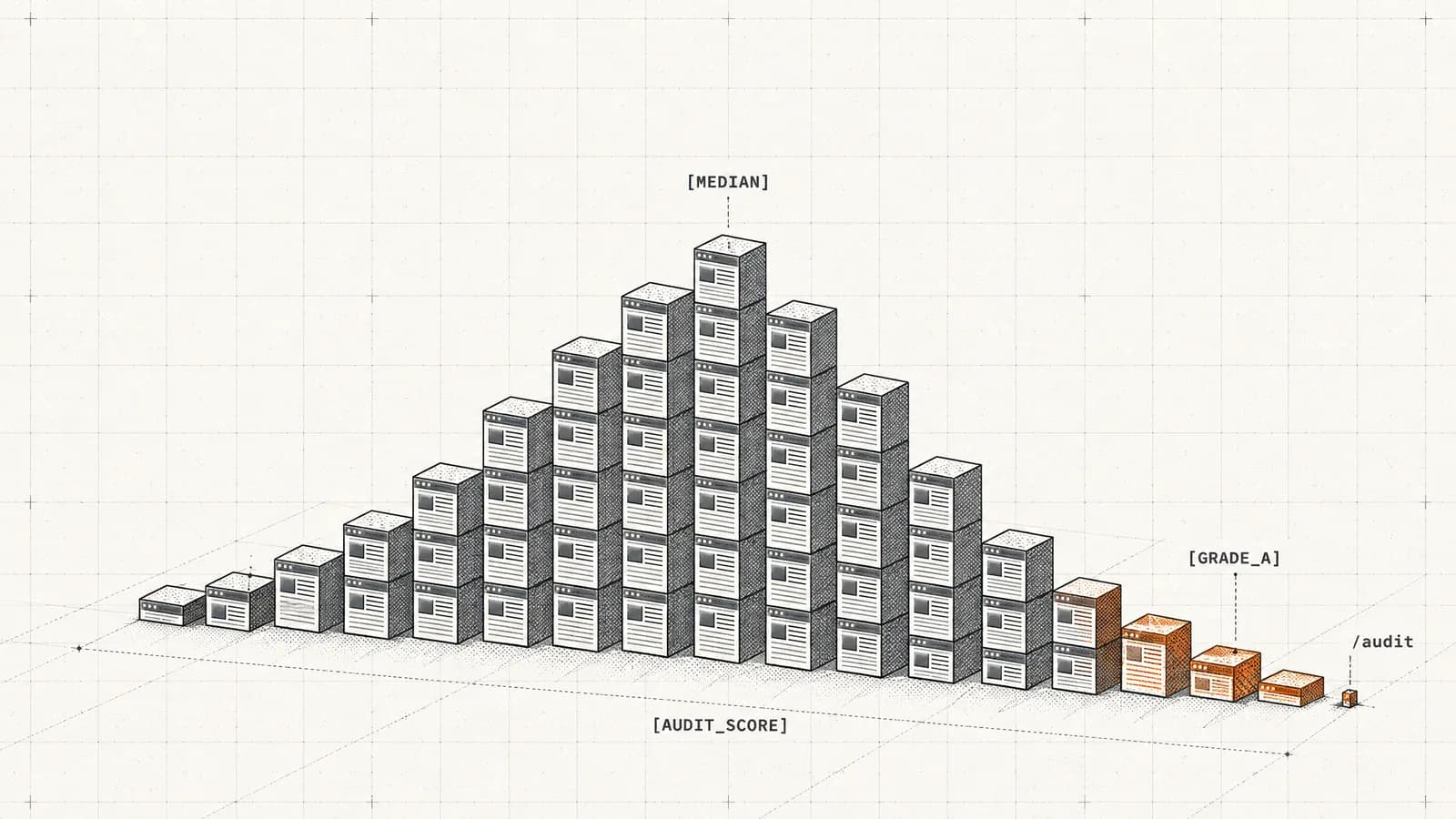
Über die Websites, die wir erfassen, liegt der Median-Score bei 71 — ein C+ — und nur rund 7% erreichen ein A (Jan–Jul 2026). Eine 68 heißt nicht, dass Ihre Website kaputt ist; sie heißt Durchschnitt — und Durchschnitt ist schlagbar.
Performance-, Structured-Data-, Bild- und Link-Regeln schlagen jeweils auf der Mehrheit der 100.000+ Websites fehl, die unser Netzwerk 2026 geprüft hat. Wenn Ihr Bericht sie markiert, haben Sie die häufigsten Probleme des Webs — und zugleich die Fixes mit den klarsten Anleitungen.
KI/GEO-Readiness scheitert bei 54,6% der Audits in unserem Netzwerk — die meistgescheiterte neue Kategorie 2026. Die meisten Websites haben KI-Crawler-Regeln in der robots.txt, aber deutlich weniger bestehen die tieferen Checks: semantisches HTML, parsbare Struktur, Schema, das zum sichtbaren Text passt. Das GEO-Audit prüft das im Detail.
Prüfen Sie Ihre Startseite, dann eine Seite je Template — eine Produktseite, einen Blogartikel. Ein fehlgeschlagener Check im Template wiederholt sich auf jeder daraus gebauten Seite; so findet ein Ein-Seiten-Audit site-weite Probleme.
19% der Domains, die unser kostenloses Audit nutzen, kommen innerhalb von 30 Tagen wieder — die Fix-und-Verifizieren-Schleife. Ein Fix ist nicht fertig, wenn er deployt ist; er ist fertig, wenn die Prüfung besteht.
Die Median-Scores in unserem Netzwerk unterscheiden sich je Segment: B2B-SaaS 74, E-Commerce 68, gemischte Unternehmen 70 (2026). Vergleichen Sie sich mit Ihrem Segment — die Jagd auf die perfekte 100 investiert dort, wo Ihre Wettbewerber nicht sind.
Das sind unsere eigenen Zahlen, keine Branchenumfrage: Aggregate aus jedem Lauf der SEOmator-Audit-Engine über die Websites, die wir zwischen Januar und Juli 2026 geprüft haben. Dieselbe Engine bewertet die Seite, die Sie oben eingeben.
Verteilung der Health-Scores, H1 2026
Die zehn Prüfungen, an denen Websites am häufigsten scheitern
Quelle: Aggregate der SEOmator-Audit-Engine, Januar–Juli 2026 (100.000+ geprüfte Websites, 50M+ gecrawlte Seiten). Jede Regel oben ist eine Prüfung im kostenlosen Audit — Ihr Bericht sagt Ihnen, welche davon Sie betreffen.
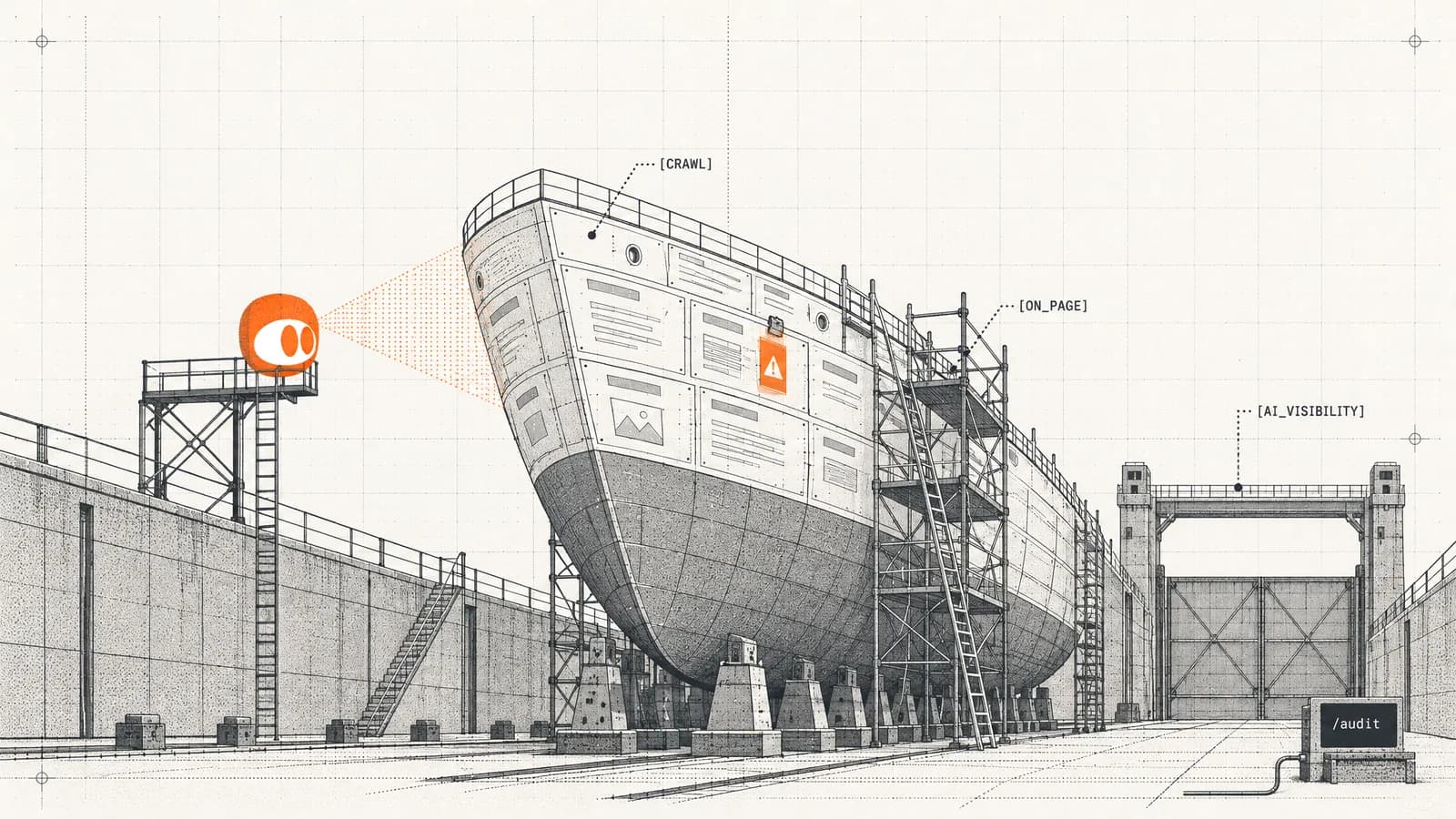
Ein SEO-Audit ist eine Messung: ein systematischer Durchlauf über alles auf einer Seite, das beeinflusst, ob Suchmaschinen und KI-Antwortsysteme sie finden, verstehen, ihr vertrauen und sie bevorzugen. Dieses Audit führt 172 automatisierte Regeln in 16 gewichteten Kategorien aus und liefert einen Score von 0–100, bei dem jeder Fehlschlag erklärt wird.
Genauso nützlich ist, was ein Audit nicht ist. Es ist kein Keyword-Tool — es sagt Ihnen nicht, worüber Sie schreiben sollen. Es ist kein Penalty-Scanner — manuelle Maßnahmen teilt Google über die Search Console mit, nicht über Scores. Und es ist kein Ranking-Versprechen: Ein Audit beseitigt Gründe zu verlieren; es kann keine Gründe zu gewinnen erfinden. Was es liefert, ist der überprüfbare Teil der Suchmaschinenoptimierung — und über die 100.000+ Websites, die unser Netzwerk 2026 geprüft hat, scheitern die meisten Seiten an mehr überprüfbaren Punkten, als ihre Betreiber glauben.
172 Regeln in 16 gewichteten Kategorien — und die Gewichte sind offengelegt, also genau der Teil, den die meisten Audit-Tools im Vagen lassen. Das Audit rendert Ihre Seite zuerst in einem echten Headless-Browser — per JavaScript eingefügte Titel, Links und Schema werden so gesehen, wie Google sie sieht — und bewertet dann das gerenderte Ergebnis:
| Kategorie | Gewicht |
|---|---|
| Core SEO | 15% |
| Inhalt | 12% |
| Performance | 12% |
| Links | 8% |
| Bilder | 8% |
| Sicherheit | 8% |
| Barrierefreiheit | 6% |
| Strukturierte Daten | 6% |
| Social Tags | 5% |
| E-E-A-T | 5% |
| URL-Struktur | 4% |
| Mobile | 3% |
| HTML, Redirects, KI, i18n | Rest |
Core SEO umfasst die tragenden Tags: Title, Meta-Description, Canonical, Viewport, H1, Indexierungs-Direktiven. Inhalt umfasst Textqualität, Lesbarkeit und Überschriftenstruktur; Performance umfasst DOM-Größe, render-blockierende Ressourcen, Komprimierung und Caching. Parallel zu den Regeln läuft Google Lighthouse — die Labor-Scores für Performance, Barrierefreiheit, Best Practices und SEO stehen im selben Bericht statt in einem zweiten Tool.
Der Gründer von SEOmator fand auf seiner eigenen Website 200+ Probleme, bevor die erste Version dieses Tools existierte: kaputte interne Links, fehlende Meta-Descriptions auf 40% der Seiten, doppelte Title-Tags und eine robots.txt-Regel, die still einen ganzen Bereich für Google blockierte. Im Browser sah nichts davon kaputt aus. Genau das macht SEO-Probleme teuer — sie sind unsichtbar auf der Ebene, auf der man seinen Tag verbringt.
Dieses Tool ist die produktisierte Version der Checkliste, die er damals gebraucht hätte, und es ist auch nach dem Eigentümerwechsel kostenlos geblieben: jede Prüfung automatisiert, jeder Fehlschlag erklärt, kostenlos und ohne Anmeldung — denn eine Diagnose, die Geld kostet, ist eine Diagnose, die die meisten Website-Betreiber auslassen. 2026 hat dieselbe Engine 100.000+ Websites in unserem Netzwerk geprüft (Januar–Juli) — deshalb kann dieser Leitfaden sagen, was draußen tatsächlich scheitert, statt was theoretisch scheitern könnte.
Der Median der Websites, die wir prüfen, liegt bei 71 von 100 — ein C+ — und nur rund 7% erreichen ein A (Jan–Jul 2026, über 100.000+ Audits). Entsprechend einordnen: Eine 68 ist keine Krise, sondern Mittelfeld, und alles über 80 liegt nahe am oberen Viertel des Webs, das wir sehen.
Die Notenbänder: A ist 90–100, B ist 80–89, C ist 70–79, D ist 50–69, F liegt darunter. Die vollständige Verteilung steht als Diagramm im Datenblock weiter oben — lesen Sie sie als Kurve, nicht als Zeugnis. Zwei Drittel der geprüften Websites landen bei C oder D, eine 74 liegt also wirklich über dem Durchschnitt, und eine Website mit 68 ist ein Deployment von einem D entfernt, nicht von der Katastrophe.
Zwei Vergleiche schärfen die Zahl. Websites, die über dieses kostenlose Tool geprüft werden, liegen im Median bei 63 (D+) — acht Punkte unter den 71 der kontinuierlich überwachten Seiten. Das selbst betreute Web ist sichtbar in schlechterem Zustand als das professionell beobachtete. Und Branchen unterscheiden sich: In unserem Netzwerk hält B2B-SaaS einen Median von 74, E-Commerce 68, gemischte Unternehmen 70 (2026). Messen Sie sich an Ihrem Segment, bevor Sie in Panik geraten — oder feiern.
Über die 100.000+ Websites, die unser Netzwerk von Januar bis Juli 2026 geprüft hat, scheitern vier Kategorien auf der Mehrheit der Seiten: Performance (71,2%), strukturierte Daten (64,8%), Bilder (63,5%) und Links (57,3%). Nichts Exotisches — und die einzelnen Regeln dahinter, gerankt im Datenblock weiter oben, bewegen sich von Monat zu Monat kaum.
Was die Rangliste nicht zeigt, ist die Tiefe. Alt-Texte fehlen bei median 19% der Bilder einer Website, nicht bei einem verirrten Logo. Defekte interne Links liegen bei median 14 pro Website. Und von den Websites, die überhaupt hreflang einsetzen, liefern 61% es ohne Rückverweise aus — ein Fehler, der in der Template-Abnahme unauffällig aussieht und im zweiten Markt still versagt.
Diese Stabilität ist eine gute Nachricht. Jeder Mehrheits-Fehlschlag entspricht einer konkreten Prüfung in diesem Audit, jede Prüfung erklärt, was zu ändern ist, und keiner der Fixes braucht ein Strategiemeeting. Wenn Ihr Bericht sie markiert, sind Sie in der Mehrheit — und ein Deployment davon entfernt, sie zu verlassen.
Security-Header, Weiterleitungsketten und Social Tags fühlen sich selten dringend an, weil nichts sichtbar kaputtgeht, solange sie falsch sind. Es sind auch die Prüfungen, die nach dem Launch niemand erneut verifiziert. Genau dafür ist ein regelbasiertes Audit da: Es stellt die langweiligen Fragen bei jedem Lauf neu — und langweilt sich nicht.
54,6% der Websites, die wir 2026 geprüft haben, scheitern an der KI/GEO-Readiness — die meistgescheiterte neue Kategorie der Engine, im ersten Jahr, in dem sie zählt. Es bessert sich langsam: Die Fehlerquote fiel von 58,1% im Januar auf 52,8% im Juli, während der Median-Score in denselben Monaten von 69 auf 72 stieg. In diesem Tempo bleibt die Kategorie bis weit ins Jahr 2027 ein Mehrheits-Fehlschlag. Das Detail ist interessanter als die Schlagzeile. In einem Scan über 109.440 Top-Domains mit denselben Checks schreiben 81% inzwischen KI-Crawler-Regeln in ihre robots.txt — und die meisten scheitern trotzdem an den tieferen Prüfungen. Das Web hat Regeln ohne Readiness: Meinungen über GPTBot, und Seiten, die GPTBot nicht parsen kann.
Dieses Audit führt fünf KI-Sichtbarkeits-Checks aus: semantisches HTML (sagen Ihre Elemente, was sie sind), eine Inhaltsstruktur, die eine KI in Antworten zerlegen kann, KI-Crawler-Zugriff in der robots.txt, eine llms.txt-Referenz und Schema-Drift — ob Ihr JSON-LD zum sichtbaren Text passt, denn Retrieval-Systeme vergleichen beides.
Eine ehrliche Anmerkung: llms.txt ist ein Vorschlag, kein Standard, und Google hat erklärt, die Datei nicht zu nutzen. Wir prüfen sie, weil KI-Assistenten und kleinere Crawler sie zunehmend lesen und sie zwanzig Minuten kostet — der llms.txt-Generator schreibt sie für Sie. Für die vollständige KI-Suche-Diagnose gibt es das GEO-Audit; ob KI-Assistenten Ihre Marke heute tatsächlich erwähnen, misst der AI Brand Visibility Checker direkt.
Gewichts-Reihenfolge schlägt Lese-Reihenfolge. Der Score ist gewichtet — eine gescheiterte Core-SEO-Prüfung (15%-Kategorie) kostet mehr als eine gescheiterte Mobile-Prüfung (3%). Fangen Sie an, wo die Gewichte sind: Titles, Descriptions, Canonicals und Indexierungs-Direktiven zuerst; Inhaltsstruktur und Performance danach; alles andere anschließend.
Drei Regeln machen die Arbeit kumulativ:
Dieses Tool liest eine Seite pro Durchlauf, dafür gründlich — und vier Problemfamilien sind für dieses Format strukturell unsichtbar, egal wie gut die Regeln sind:
Dafür ist der Site-weite Crawl im Dashboard da: die vollständige 251-Regel-Engine über jede Seite, plus Search-Console-Anbindung, damit Fixes nach den Seiten gewichtet werden, die tatsächlich Klicks bringen. Das kostenlose Audit ist die Diagnose; der Crawl ist das Monitoring. Und eine Zahl aus unseren eigenen Daten: 62% der Domains, die dieses kostenlose Audit nutzen, tun es zum ersten Mal — der Großteil des Webs wurde noch nie geprüft. Mit einer Seite anzufangen ist richtig. Dabei zu bleiben ist der Fehler.
19% der Domains, die dieses kostenlose Audit nutzen, kommen innerhalb von 30 Tagen wieder (2026) — und diese Schleife ist das Verhalten, das Websites mit sich bewegenden Scores von Websites unterscheidet, die Berichte sammeln. Ein Audit ist eine Messung; einmal genommen ist sie Trivia, monatlich genommen ein Trend.
Die Kadenz, die funktioniert: ein voller Durchlauf monatlich bei einer aktiven Website, plus ein gezielter Re-Check nach jedem größeren Release — neues Template, Migration, Redesign, CMS-Wechsel. Releases sind der Moment, in dem Regressionen hereinkommen, und die Woche nach einem Deployment ist der Zeitpunkt, an dem sich dreißig Sekunden Audit am meisten lohnen. Wer sich das nicht merken will: Geplante Wiederholungen und Score-Historie automatisiert ein kostenloses SEOmator-Konto — diese Seite bleibt trotzdem hier, wenn Sie die manuelle Version wollen.
Kein Audit-Tool kann ein Ranking versprechen — wer das tut, verkauft etwas anderes. Die Wirkung eines Audits ist subtraktiv: Jede behobene Prüfung nimmt Google — oder einer KI-Suchmaschine bei der Wahl ihrer Zitate — einen Grund, die Seite eines Wettbewerbers zu bevorzugen. Ob daraus Positionen werden, hängt von der Suchanfrage, dem Wettbewerb und dem Inhalt selbst ab.
Was wir aus dem Netzwerk sagen können: Die Fehlschläge sind konzentriert (die Mehrheit der Seiten scheitert an denselben wenigen Kategorien), die Fixes sind aufzählbar (172 Prüfungen, jede erklärt), und die Verifikation ist kostenlos (erneut ausführen, vergleichen, fertig). Konzentriert, aufzählbar, verifizierbar — diese Kombination macht die Audit-Fix-Verify-Schleife zur wirksamsten halben Stunde im technischen SEO, und deshalb gibt es den PDF-Export: Der Bericht ist dafür gebaut, der Person übergeben zu werden, die die Fixes umsetzt — Belege inklusive.
Führen Sie das Audit auf Ihrer Seite aus, lesen Sie die fehlgeschlagenen Prüfungen, beheben Sie die schwerste Kategorie, prüfen Sie erneut. Die Schleife ist das Produkt.
Führen Sie das Audit live im Pitch auf der Startseite des Interessenten aus. Der 0–100-Score plus Fehlerliste ist ein fertiger Projektumfang — und der PDF-Export das Handout.
Auditieren Sie vor und nach jedem Release. Der Score gibt Stakeholdern ohne SEO-Hintergrund eine Zahl zum Verfolgen, und die Kategorienoten zeigen dem Engineering, woher eine Regression kommt.
Starten Sie mit der Startseite, arbeiten Sie die fehlgeschlagenen Checks der Reihe nach ab, prüfen Sie in einer Woche erneut. Die Schleife kostet nichts — kein Testzeitraum, kein Kontingent.
Keine E-Mail-Schranke, kein Konto, kein Tageslimit zum Freischalten. URL eingeben, vollständiger Bericht — die meisten Audit-Tools verlangen vor dem ersten Ergebnis mindestens eine Adresse.
GEO-Checks — KI-Crawler-Zugriff, llms.txt, semantische Struktur, Schema-Abgleich — zählen im selben Durchlauf wie klassisches SEO. Für die Tiefenprüfung gibt es das GEO-Audit.
Geprüft wird der echte Browser-Render, per JavaScript eingefügte Titel, Links und strukturierte Daten zählen mit. Vergleichen Sie roh und gerendert mit dem Crawl-Test, wenn Zahlen überraschen.
16 Kategorien mit sichtbaren Gewichten — Core SEO 15%, Inhalt 12%, Performance 12% — der Score ist erklärbar, und die Notenbänder von A bis F sagen, wie dringend ein Befund ist.
Der PDF-Export bündelt Scores, fehlgeschlagene Prüfungen und Lighthouse-Daten in einem Dokument — gemacht für die Person, die die Fixes tatsächlich umsetzt.
Das Audit ist die Eingangstür zu einem Werkzeugkasten, den dieses Jahr 500.000+ Menschen genutzt haben — Speed-Test, Meta-Tags-Checker, Interne-Links-Checker, llms.txt-Generator und mehr.
Verifizierte Kundenbewertungen auf G2
“After spending a bit more time with it, I also liked how the audit brings together Lighthouse scores, technical checks and page-level metrics in one report. It makes it easy to get a quick health check of a site and then drill into the areas that need more attention.”
“I’ve used Seomator for SEO auditing for more than a year, and I appreciate how comprehensive its reports are. My favorite feature is the ability to save reports as PDFs, even on the free tier. I also find the free competitor keyword research useful, especially the option to select a country and language. Compared with similar tools I’ve tried, Seomator offers a good range of useful features for free.”
Ein SEO-Audit ist die systematische Prüfung von allem, was das Ranking einer Seite beeinflusst: technisches Fundament, Inhalt, Links, strukturierte Daten, Performance und — in jedem ernsthaften Audit 2026 — KI-Sichtbarkeit. Dieses Tool führt die Prüfung als 172 automatisierte Regeln in 16 gewichteten Kategorien aus und liefert einen Score von 0–100, bei dem jeder Fehlschlag erklärt wird.
Weil die Probleme, die Rankings kosten, im Browser selten sichtbar sind. Über die 100.000+ Websites, die unser Netzwerk 2026 geprüft hat, liegt der Median bei 71 von 100 Punkten — und die häufigsten Fehlschläge sind leise: langsame Antworten, fehlende strukturierte Daten, kaputtes Bild-Markup, Links, die Linkkraft verlieren. Ein Audit macht daraus eine Fix-Liste.
In den Audits unseres Netzwerks 2026 scheitern am häufigsten Performance-Regeln (render-blockierende Ressourcen, unkomprimierte Dateien), strukturierte Daten, Bild-Markup und Link-Qualität — jeweils auf der Mehrheit der Websites. Am schnellsten wächst KI/GEO-Readiness: 54,6% der geprüften Websites fallen durch, meist an semantischem HTML und Inhaltsstruktur, nicht an robots.txt-Regeln.
Für eine einzelne Seite deckt dieses Tool On-Page-, Technik- und KI-Sichtbarkeits-Checks ab, Google Lighthouse inklusive. Für Site-weite Crawls führt das SEOmator-Dashboard die vollständige 251-Regel-Engine aus. Allgemeine Alternativen sind die Google Search Console für die eigenen Index- und Suchdaten sowie kommerzielle Suiten wie Ahrefs, Semrush und Moz — die meisten verlangen dafür ein Konto oder einen bezahlten Plan.
Monatlich bei einer aktiven Website — und nach jedem größeren Release. Von den Domains, die unser kostenloses Audit nutzen, prüfen 19% innerhalb von 30 Tagen erneut: die Fix-und-Verifizieren-Schleife. Teams, die das Audit als Release-Verifikation begreifen statt als Jahres-Checkup, sind die, deren Scores sich bewegen.
Dieses Audit gewichtet 16 Kategorien: Core SEO (15%), Inhalt (12%), Performance (12%), Links (8%), Bilder (8%), Sicherheit (8%), Barrierefreiheit (6%), strukturierte Daten (6%), Social Tags (5%), E-E-A-T-Signale (5%), URL-Struktur (4%), Mobile (3%), dazu HTML-Validität, Weiterleitungen, Internationalisierung und KI-Sichtbarkeit. Ein Site-weites Audit ergänzt die crawl-abhängigen Elemente: verwaiste Seiten, Duplicate Content und interne Verlinkung.
Indirekt, aber verlässlich: Das Audit findet die konkreten Prüfungen, an denen Ihre Seiten scheitern, und jeder Fix nimmt Google oder einer KI-Suchmaschine einen Grund, den Wettbewerber zu bevorzugen. Kein Tool kann ein Ranking versprechen; was ein Audit liefert, ist die geordnete, überprüfbare Liste dessen, was eine Seite zurückhält — und einen Score, an dem Sie die Umsetzung messen.
Startseite plus eine Seite je Template prüfen statt zufälliger URLs; in Gewichts-Reihenfolge beheben — Core SEO und Performance bewegen den Score am stärksten; nach jedem Fix-Paket erneut prüfen; und das PDF exportieren, damit die Fix-Liste das Meeting überlebt. Für site-weite Probleme wie verwaiste Seiten und Duplicate Content vom Ein-Seiten-Audit zum vollständigen Crawl wechseln.
Nicht allein. Ein Sprachmodell kann Texte kommentieren, die Sie einfügen — aber es kann Ihre Seite nicht abrufen, kein JavaScript rendern, keine Response-Header lesen, keine Performance messen und keine robots.txt prüfen. Ein Audit ist Messung, nicht Meinung. Dieses Tool führt 172 gemessene Checks aus, darunter fünf KI-Sichtbarkeits-Regeln. Wer die Gesprächsform will: Der AI SEO Assistant von SEOmator verbindet echte Audit-Tools mit Chat — das Modell ruft Messungen auf, statt sie zu raten.
Dieses hier kostet nichts — kein Test-Abo, keine Karte, keine Anmeldung —, weil es eine Seite pro Durchlauf prüft. Professionelle Site-weite Audits werden nach Umfang berechnet und liegen typischerweise zwischen einigen hundert und mehreren tausend Euro. Der ehrliche Mittelweg: erst das kostenlose Audit ausführen, die Funde beheben — und für Tiefe (vollständige Crawls, Historie, Monitoring) erst zahlen, wenn die offensichtlichen Probleme erledigt sind.
Ja — die Mess-Hälfte ist hier automatisiert, die Urteils-Hälfte ist lernbar. Audit ausführen, die Erklärung jeder fehlgeschlagenen Prüfung lesen, beheben, was Sie verstehen, und zur Verifikation erneut prüfen. Der Leitfaden unten erklärt, was jede der 16 Kategorien misst — damit Sie einen kosmetischen Fehlschlag von einem unterscheiden können, der Rankings kostet.
Geben Sie oben Ihre URL ein — das Audit rendert die Seite, prüft 172 Regeln, holt Google-Lighthouse-Werte und liefert in 15–30 Sekunden einen benoteten Bericht, ohne Anmeldung. Für gezielte Anschlussfragen gehen die anderen kostenlosen SEOmator-Tools je eine Dimension tiefer: Ladezeit, Meta-Tags, interne Links, Crawlbarkeit und KI-Sichtbarkeit.
Vertiefende Beiträge aus dem SEOmator-Blog zu dem, was dieses Tool misst.
· 10 Min. Lesezeit
Die von uns auditierte Median-Website erreicht 71/100 – ein C+. Was 100.000+ SEO-Audits über die häufigsten Fehler zeigen und wie oft Sie 2026 auditieren sollten.
· 23 Min. Lesezeit
So führen Sie 2026 ein SEO-Audit jeder Website durch — technische, On-Page-, Off-Page- und KI-Such-Prüfungen — und beheben Probleme schnell mit einem kostenlosen Audit.
· 13 Min. Lesezeit
Sieben von neun SEO-Audit-Plattformen bieten White-Label-Reporting — aber fast nie in dem Tarif, den die Vergleichslisten nennen. Wir haben am 13. September 2026 die veröffentlichten Preisseiten aller Anbieter geprüft: Die Freischaltung kostet zwischen rund 50 $ und über 1.000 € pro Monat, und zwei populäre „White-Label"-Tools bieten die Funktion überhaupt nicht.
Führen Sie das kostenlose Audit aus, beheben Sie die Funde — und verfolgen Sie die Fixes mit Site-weiten Crawls, Historie und geplanten Wiederholungen.


